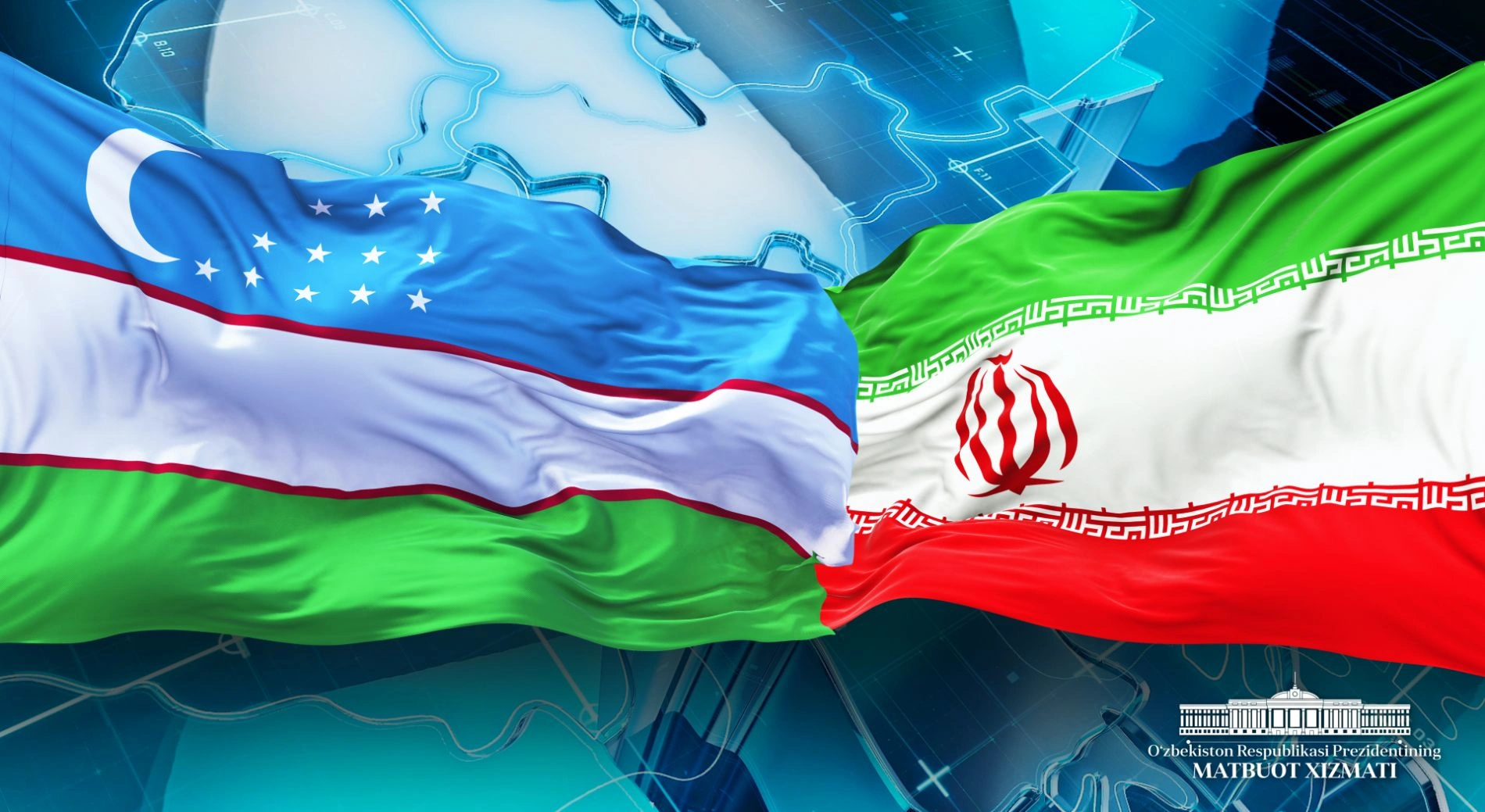
BAKU, Azerbaijan, December 17. Uzbekistan and
Iran are consistently enhancing their economic cooperation, with a
primary focus on expanding trade and investment flows. However, the
further evolution of their bilateral relations necessitates a shift
from mere trade growth to the establishment of more sustainable and
strategic partnership models. In this regard, the forthcoming
Uzbek–Iranian Business Forum and a series of B2B meetings are seen
as pivotal mechanisms for deepening business ties and launching
collaborative ventures.
Over the past five years, trade turnover between Uzbekistan and
Iran has risen from approximately $250 million to around $500
million. Concurrently, investment activities have surged: in 2025,
approximately 250 Iranian companies have either initiated or
expanded their operations in Uzbekistan, underscoring the growing
interest of Iranian businesses in the Uzbek market. In this
context, both sides have set a target of boosting mutual trade to
$2 billion annually.
"Iran and Uzbekistan are working towards an annual trade
turnover of $2 billion," declared the Ambassador of Uzbekistan to
Iran, Fariddin Nasriev. Speaking at a meeting with Iranian business
representatives and members of the local chambers of commerce and
industry in Markazi Province, he emphasized that the implementation
of this goal is a priority for the presidents of both nations.
Achieving this ambitious target, however, requires a fundamental
shift in the nature of their cooperation. The continued expansion
of economic ties will depend not only on increased investment
engagement and enhanced logistics frameworks but also on the
successful transition to joint projects and the localization of
production processes.
One of the factors that improved trade conditions was the Free
Trade Agreement between Iran and the Eurasian Economic Union, which
entered into force on May 15, 2025. The document provides Iran with
preferential access to approximately 90% of the commodity
nomenclature of the EAEU countries and reduces the average level of
import duties from 20% to 4.5%. For Uzbekistan, this expands trade
opportunities with Iran within the Eurasian space and reduces price
barriers for exporters.
In parallel, a bilateral preferential regime is also in effect,
within the framework of which ten types of Iranian and ten types of
Uzbek products are supplied without customs duties and taxes. The
expansion of this list reduces costs for business; however, its
effect remains limited without the deepening of production and
investment cooperation.
The transport component remains an important element of
cooperation. The abolition of the $400 fee for each entry of trucks
allowed for a noticeable reduction in the cost of transportation
and simplified logistics between the two countries. At the same
time, the further development of transport routes remains one of
the key conditions for increasing trade and transit volumes.
For Uzbekistan, which is landlocked, the Iranian direction is of
a strategic nature. It is through Iran that the country gains
access to port infrastructure and foreign markets. In this context,
the "North–South" international transport corridor is viewed as an
important element of the long-term logistics strategy and
diversification of foreign trade routes.
The use of Iranian ports, including Bandar Abbas, allows for the
formation of multimodal routes with subsequent delivery of goods by
rail to Uzbekistan. This increases the stability of foreign trade
supplies and reduces dependence on a limited number of transport
routes.
Simultaneously, financial transactions continue to represent a
significant constraint. Iran's exclusion from the SWIFT system
compels both parties to rely on barter trade mechanisms. While such
arrangements facilitate the maintenance of current trade volumes,
they inherently impose limits on growth and hinder the execution of
investment projects that require stable and transparent financial
systems.
In this context, the role of investment cooperation becomes
particularly crucial. The increasing presence of Iranian-owned
companies in Uzbekistan is viewed as a critical factor in
strengthening economic ties and transitioning to a more sustainable
partnership model, one that is less reliant on restrictions related
to financial settlements.
This economic collaboration is further supported by a robust
political dialogue. In May, the Intergovernmental Commission
convened for a regular meeting in Tehran, culminating in the
adoption of a comprehensive roadmap for cooperation covering the
period from 2025 to 2027. This strategic document is designed to
address and remove practical barriers in trade, investment,
transport, and agriculture, ultimately fostering a more conducive
environment for business growth.
In this logic, the Uzbek–Iranian Business Forum and B2B meetings
acquire important significance. The participation of more than 70
Iranian companies from the fields of agriculture, construction, the
food industry, logistics, and trade indicates the interest of the
parties in transitioning from a general agenda to specific
contracts and investment projects.
In general, Uzbek-Iranian cooperation is entering a stage of
choosing a further trajectory. If interaction remains predominantly
within the framework of the trade-barter model, growth rates will
remain moderate. With the transition to investment projects and the
development of logistics infrastructure, the target of $2 billion
in trade turnover may become achievable in the medium term.