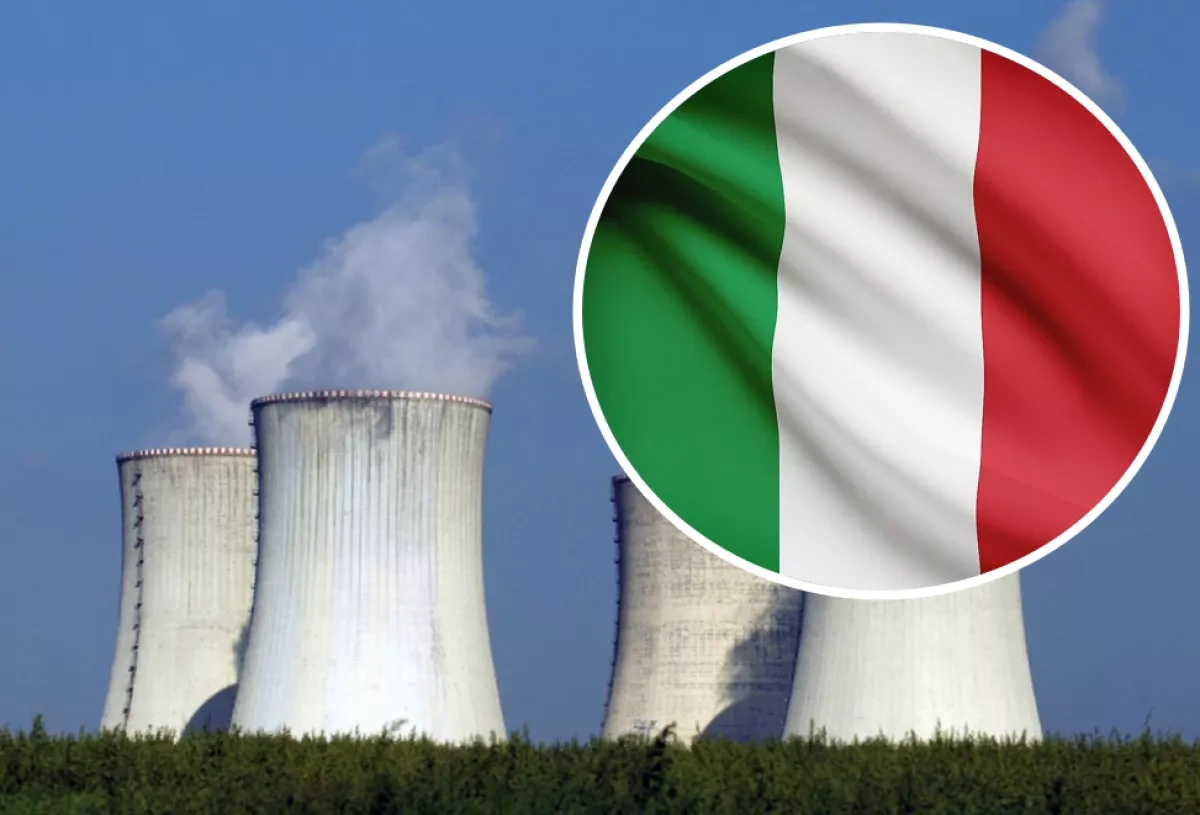
Italy’s Senate gave final approval this week to legislation paving the way for a return to nuclear power, nearly four decades after the Chernobyl disaster led the country to abandon atomic energy.
The measure represents a major step in Prime Minister Giorgia Meloni’s efforts to strengthen energy security while meeting the country’s climate targets, as Italian media highlight.
The bill, which had already been approved by the lower Chamber of Deputies, passed the upper house by 81 votes to 51, with seven senators abstaining. It establishes a legal framework for next-generation nuclear technologies and gives the government 12 months to prepare implementing decrees covering reactor licensing, safety standards, waste management and criteria for selecting future sites.
Environment and Energy Security Minister Gilberto Pichetto Fratin described the vote as a historic step for Italy.
“Nuclear isn’t a return to the past,” he said. “When integrated with renewables, it’s a winning technology, which can give extraordinary results for our energy security.”
The legislation does not itself authorize the construction of nuclear reactors. Instead, it establishes the regulatory foundation required before future projects can be proposed, assessed and approved.
The Senate vote puts Italy on a
Meloni’s government has argued that growing electricity demand, climate targets and energy security concerns highlighted by Russia’s war in Ukraine make a return to nuclear energy necessary as part of Italy’s power mix.
The government is not seeking to revive the large reactors used in the past, instead focusing on small modular reactors (SMRs) and other advanced technologies. Supporters of these technologies argue that they could offer greater safety, flexibility and faster construction.
Italy was once one of Europe’s nuclear pioneers, operating four reactors before a 1987 referendum effectively brought the program to an end following the Chernobyl disaster in what was then the Soviet Socialist Republic of Ukraine.
Since then, Italy has depended heavily on imported energy and has become one of Europe’s largest consumers of electricity generated by nuclear power plants in neighbouring countries.
By Nazrin Sadigova