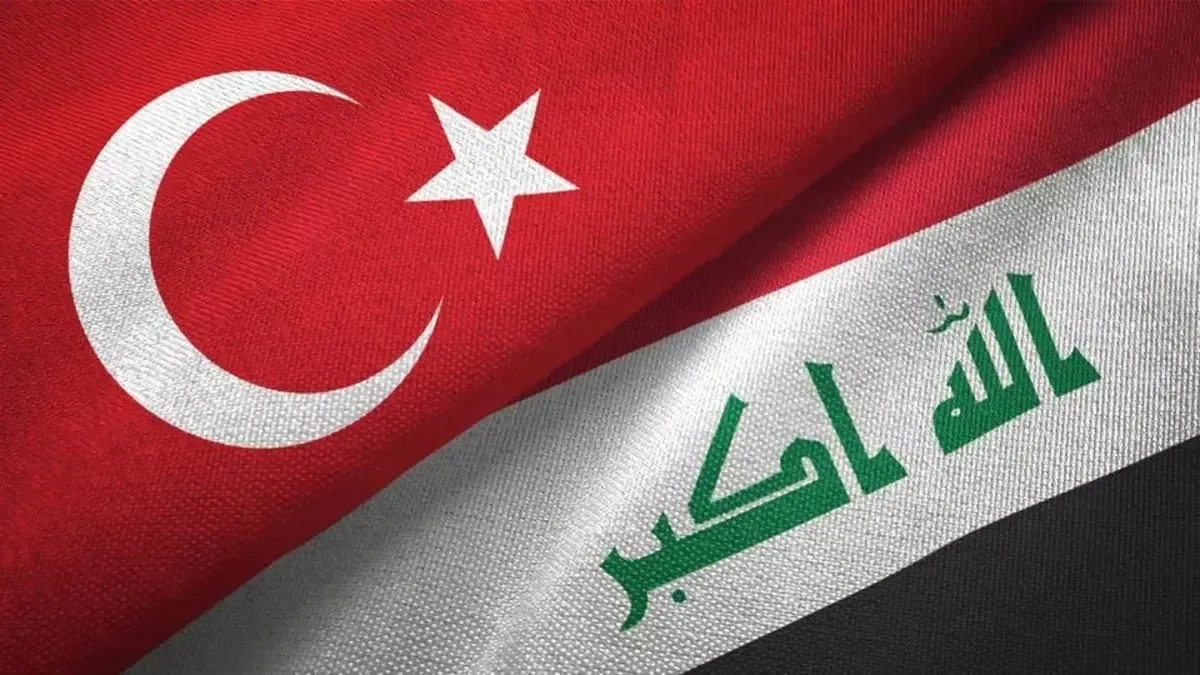
After years of strained relations, Türkiye and Iraq are firmly moving toward a rapprochement that could benefit both countries and the wider region. Developments in both Iraq and Türkiye have helped Baghdad and Ankara reconsider their relationship, with the recent joint announcement on the gradual handover of the Turkish military base in Bashiqa-Zilkan to Iraq’s federal government representing a major milestone in that process.
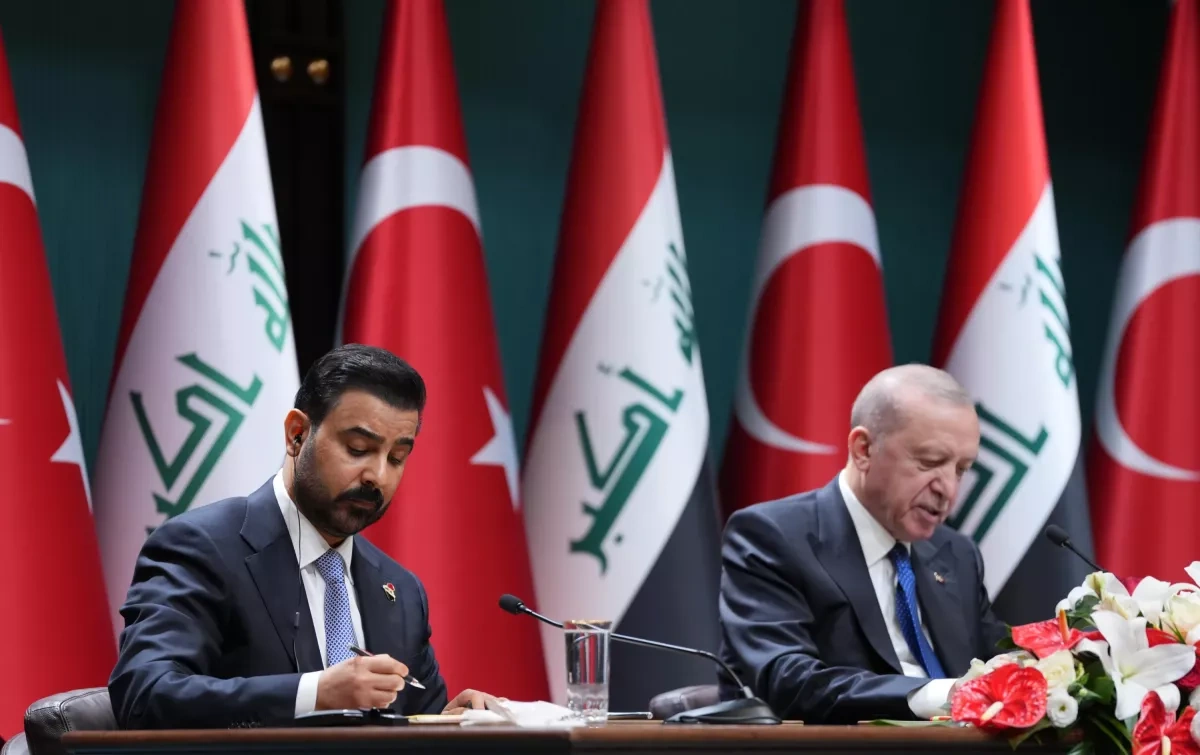
Although economic ties expanded considerably, security disagreements remained the dominant feature of the relationship. By September 2026, however, when the leaders of the two countries met in New York City on the sidelines of the 81st UN General Assembly and announced the handover of the Bashiqa-Zilkan base, bilateral ties had begun to take on a different character, as an analysis by the Arab Center Washington DC lays out.
For much of the post-2003 period, disputes over security, sovereignty and Türkiye’s relations with the Kurdistan Regional Government (KRG), which governs northern Iraq, shaped relations between Ankara and Baghdad.
The shift in positions toward each other reflected changes taking place on both sides. Former Iraqi Prime Minister Mohammed Shia’ al-Sudani took office in 2022 with a pragmatic, development-focused agenda, making the Development Road — a planned transport corridor linking Iraq’s Grand Faw Port with Türkiye and ultimately Europe — one of his government’s key projects.
According to the analytical piece, this approach increased Baghdad’s interest in improving ties with Türkiye, as Ankara’s cooperation was crucial to the project’s success.
Türkiye, in turn, began placing its security demands within a broader framework of economic and political cooperation.
The outbreak of the US war with Iran in 2026 has further increased Türkiye’s importance to Iraq. Disruptions to shipping through the Strait of Hormuz have highlighted Iraq’s reliance on Gulf export routes and increased the strategic importance of alternative routes through Türkiye. The Iran war has also complicated Baghdad’s longstanding effort to balance its relations with Iran and the United States, making its ties with Türkiye more valuable.
At the same time, Turkish and US interests in Iraq have increasingly converged, with both sides favouring a stronger central government capable of exercising greater control over armed groups.
Baghdad’s efforts to preserve this balance were reflected in the first foreign trips by Iraq’s new prime minister, Ali al-Zaidi. In July 2026, he travelled first to Washington and then Tehran before visiting Ankara on July 28. His Ankara trip also reaffirmed the bilateral agenda established under Sudani, suggesting continuity in Iraq’s approach to Türkiye despite the change in government. Together, these developments have resulted in a significantly deeper Türkiye-Iraq partnership.
Security architecture
Salim Çevik, the author of the piece by the Washington-based think tank, notes that the transformation in Iraqi-Turkish relations has been especially evident in the security sphere. For two decades, Türkiye’s military presence in northern Iraq was among the main sources of tension between Ankara and Baghdad.
Türkiye had repeatedly urged Baghdad to take a stronger stance against the PKK, but during Sudani’s premiership, the Iraqi government finally became more responsive to those demands. In March 2024, Iraq’s National Security Council designated the PKK a banned organization, while in August of the same year the two governments signed a security and counterterrorism memorandum establishing a joint coordination center and a high-level committee.
The PKK’s decision in May 2025 to dissolve and disarm could further accelerate this shift. The article points out, that the process presents questions that Türkiye cannot resolve on its own, including the future of disarmed fighters, security arrangements in areas vacated by the PKK, and the future of PKK-linked structures at the Makhmour refugee camp in Iraq's Kurdistan region and Sinjar. For years, Baghdad largely viewed the PKK as an issue between Türkiye and the Kurds and left its management to Erbil, the capital of Iraqi Kurdistan. Disarmament, however, makes Baghdad’s direct involvement increasingly important.
Stability through Interdependence
The Development Road is already beginning to reshape the nature of the Türkiye-Iraq relationship. The planned 1,200-kilometer road and rail corridor would link the Grand Faw Port in southern Iraq with Türkiye and then European markets. For Baghdad, the project offers the prospect of transforming Iraq from a country heavily reliant on oil exports into an integral part of a wider transit and logistics network. For Ankara, it supports Türkiye’s longstanding ambition to become a central hub for regional trade and connectivity.
The project also illustrates why the current rapprochement extends beyond a temporary political accommodation. Iraq provides access to the Gulf through its port, while Türkiye offers a route to European markets along with construction and logistics capacity. This type of interdependence was largely missing from the earlier security-focused relationship.
The Kirkuk-Ceyhan oil pipeline is another pillar supporting the positive dynamic in bilateral cooperation. It gives Iraq an export route to the Mediterranean that bypasses the Gulf, while Iraqi oil is important to Türkiye both as a source of crude and as part of Ankara’s ambition to become a regional energy hub. The two countries are now working toward a comprehensive energy agreement that would broaden cooperation beyond their existing pipeline relationship. The recent decision to bring Turkish Petroleum into production activities in Kirkuk also expands Türkiye’s role beyond trade and transit, making it a direct investor in Iraq’s energy sector.
By Nazrin Sadigova