BAKU, Azerbaijan, September 24. The Azerbaijan
Banks Association (ABA) has clarified public inquiries regarding
the risk-based approach applied to the number of payment cards and
payment accounts linked to electronic money, a source in the ABA
told Trend.
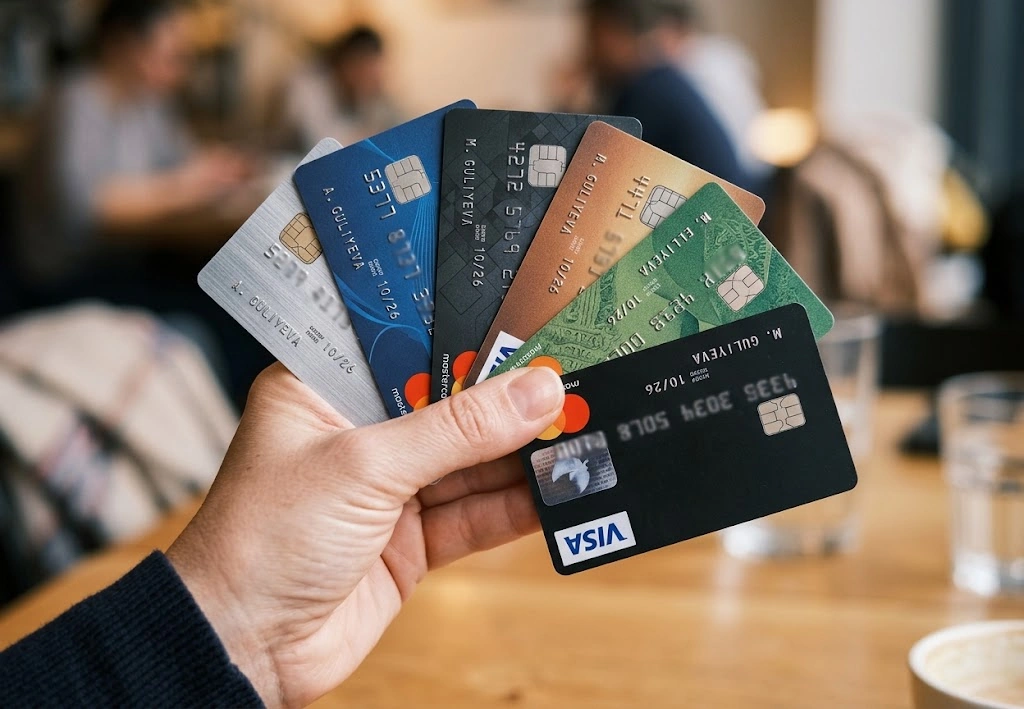
According to the ABA, the current approach stipulates that—with
the exception of payment cards intended for salaries, pensions, and
other social benefits, as well as those linked to business or
deposit accounts—each bank may issue one payment card in the
national currency and one in each foreign currency for every
specific payment card product it offers.
"This means a customer can obtain a separate payment card for
each distinct card product offered by the bank. The same approach
applies to foreign currencies," the ABA said.
According to the association, regarding payment accounts linked
to electronic money, the baseline approach allows for two accounts
in the national currency and one account for each foreign
currency.
The ABA pointed out that these limits serve as a baseline and
are applied within the framework of a risk-based approach;
therefore, they aren’t absolute or rigid.
"Banks or electronic money institutions may increase these
limits for a specific payment service user if the user provides a
reasonable explanation regarding the intended use of the payment
account linked to a payment card or electronic money, if the
transactions align with the information the institution holds about
the user, and if there is assurance that the account is not being
used for illegal purposes," the statement emphasized.
The ABA said that the primary objective of this approach is not
to restrict the needs of payment service users.
"The main goal is to contribute to the creation of a safe,
resilient, and sound payment ecosystem while ensuring more
effective risk management," the Azerbaijan Banks Association
added.
New limits on cash-in transactions for payment instruments have
also been implemented in Azerbaijan as of August 1. Under the
current rules, a maximum of five cash-in transactions per day is
permitted for each payment instrument, and a monthly cash-in limit
of 20,000 manat ($11,760) has been established. These restrictions
don’t apply to cash withdrawal transactions.
Based on the Central Bank of Azerbaijan’s data as of the end of
July, the number of payment cards in circulation through the
banking system and Azerpost LLC increased by 8.9%, reaching 22.78
million cards. The number of debit cards increased by 10.5%, while
the number of credit cards decreased by 4.6%. Since the beginning
of the year, the volume of domestic non-cash transactions has
increased by 13.9% compared to the same period last year. In July
2026, the volume of domestic non-cash payments made via cards
totaled 9.7 billion manat ($5.7 billion). Of the total volume of
non-cash payments, 8.45 billion manat ($4.9 billion) was attributed
to e-commerce, 1.25 billion manat ($0.74 billion) to POS terminals,
and 2 million manat ($1.1 million) to transactions via self-service
terminals and ATMs. Since the beginning of the year, the volume of
domestic non-cash transactions using payment cards has accounted
for 69.8% of the total volume of domestic card transactions.
Dynamic growth is being observed in the payment service networks
of banks and Azerpost LLC. Specifically, compared to the end of
July last year, the number of ATMs has increased by 4.4%, and the
number of POS terminals by 12.1%.