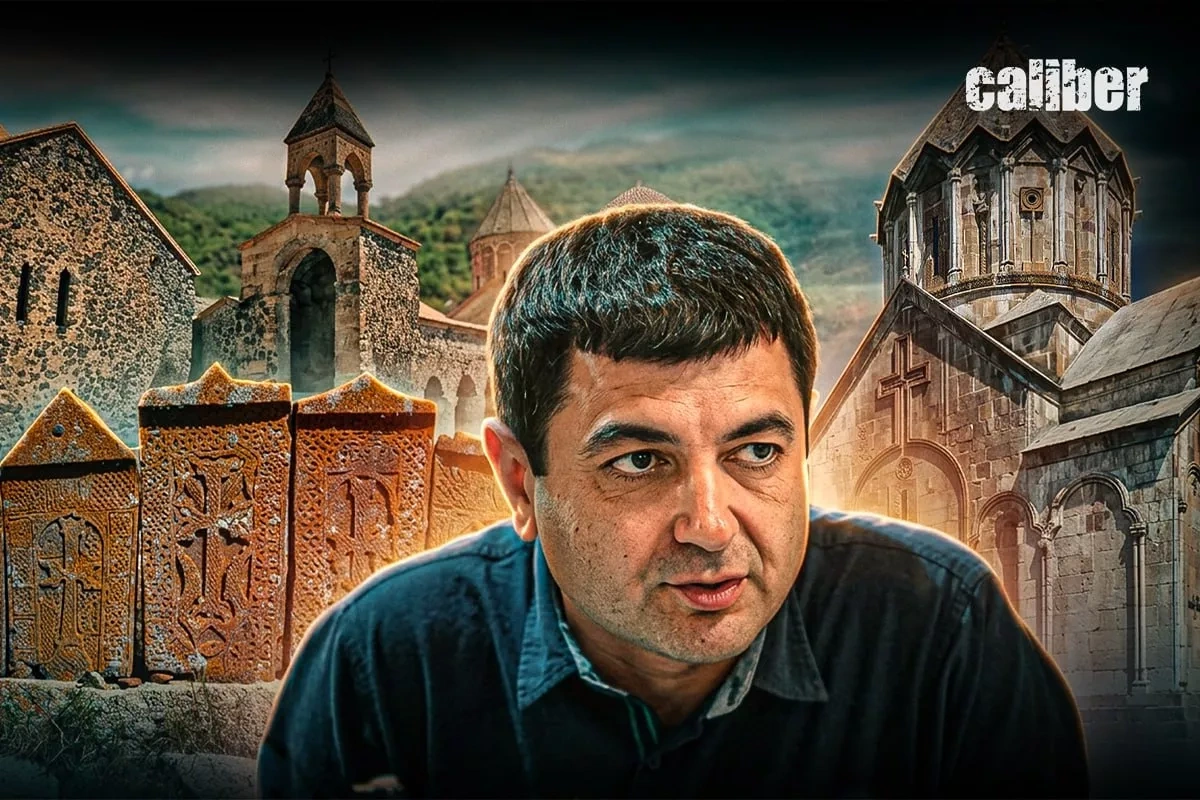
One of the main events of the past week was the high-profile exposure of Armenian pseudo-historical fabrications, whose origins date back to the 18th century — to the time when one of the first workshops for fabricating Armenian history was established on the island of San Lazzaro near Venice. We are talking about the Armenian Catholic monastery of the Mekhitarist Order, which was a long-term strategic project of the Vatican with far-reaching objectives. Few people at the time could have imagined why such an institution suddenly needed to be established under the immediate patronage and protection of the Roman Pontiff. After all, did European monarchs — and especially the Papal See — really have nothing better to do than concern themselves with the distant and little-known Armenians?
This was a time when the peak of the Ottoman Empire's power, at least on the European front, had passed, and the first signs of its falling behind the West were becoming apparent. The Mekhitarist Order was founded just 18 years after the signing of the Treaty of Karlowitz, which was a heavy blow to the Ottomans and brought an end to their unsuccessful campaign against Vienna. It was a turning point when Christian Europe could finally breathe a sigh of relief and cautiously begin thinking about revenge against the Turks.
A head-on confrontation with the Sublime Porte was extremely risky and, frankly, frightening. Not long before, the Turks had stood at the gates of Vienna, and all of Europe had been gripped by panic at the mere thought of a minaret being erected next to St Stephen's Cathedral. There was not enough military power for a direct assault. So the Vatican began thinking along much the same lines as their descendants often do today: creating a fifth column within the state that could begin destabilising it from within.
And the Christian population in the eastern regions of Anatolia was ideally suited to this role. But how could they be awakened? How could they be turned against the state? What could be used to fuel them?
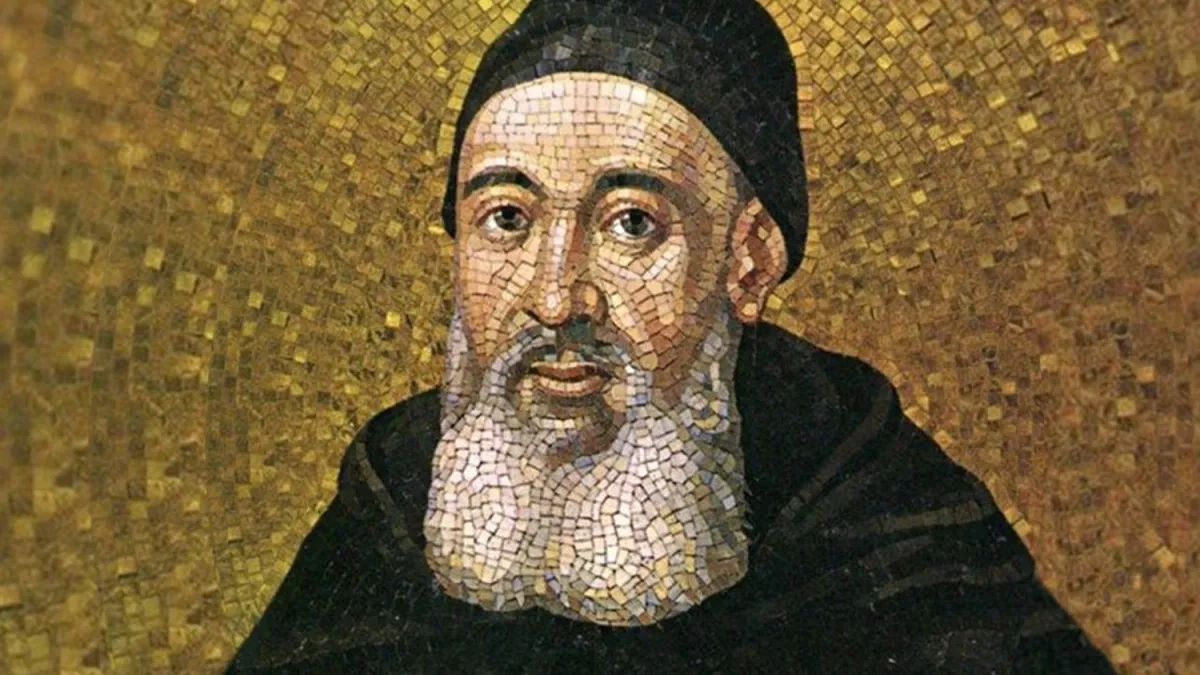
As early as 1717, an Armenian Catholic monk, Manuk di Pietro (Mekhitar of Sebaste), arrived in Venice at the invitation of the local rulers. He was tasked with establishing a monastery, naturally with funding from the Vatican. Why such generosity all of a sudden?
The answer lies in the monastery's functions: printing books, translating texts, collecting manuscripts and so on — all supposedly with a single aim: to concoct an “ancient” history of the Armenians, artificially glorify the Armenian people and, through the clergy, begin spreading these fake historical narratives among the Armenian population. By 1789, the monastery had its own printing press, which worked day and night producing books whose authenticity and reliability, needless to say, were not merely left unchecked — every effort was actively encouraged to be devoted to creating so-called sources (naturally, “out of thin air”) that credulous historians could later cite when writing their own works.
It was the largest workshop in history for producing and reproducing fake manuscripts and other forgeries, falsifying translations and, along the way, destroying genuine originals that could not be allowed to survive, lest they later expose all these fabrications. Historians began flocking here, working in libraries and taking “ancient” manuscripts into their hands without stopping to question their authenticity or reliability. The task was to create the conditions for the publication of works by historians based precisely on these forged sources, which could then be cited in turn, lending the names of the books' authors an additional aura of authority. To jump ahead a little, today's Wikipedia, which has allegedly been virtually taken over by Armenian editors, is a striking example of the continuation of the same traditions established by their Mekhitarist teachers.
At the same time, the ultimate objective was constantly kept in mind: to artificially awaken the Armenian population of the eastern regions of the Ottoman Empire by implanting in their minds narratives of their “antiquity”, “greatness” and “divine chosenness”, encouraging them to resist and destabilise their own state from within and, ultimately, to push the Turkish threat farther away from Europe.
That, according to this account, was the entire Vatican plan. A century after the island-based factory for producing Armenian historical forgeries began operating, European missionaries began streaming into the Ottoman Empire. Under the guise of charity, they opened schools, hospitals and other institutions, where activities that could quite reasonably be described as “intelligence work” continued. At the same time, during religious services, the clergy filled their congregations' ears with myths about the “antiquity” and “exceptionalism” of the Armenian people, naturally relying on forged manuscripts “Made in San Lazzaro”.
The Ganjasar blank books, the Kalbajar workshop's vinegar-treated khachkars, the stones buried in the ground that Ilia Chavchavadze wrote about, and, of course, the objectives originally set by the island monastery's principal sponsors for their Mekhitarist protégés all give us ample reason to view with considerable scepticism the vast body of material now kept at Yerevan's Matenadaran. No, we are not disputing their authenticity. They are, of course, originals. But originals of what — genuine medieval manuscripts or original examples of Armenian myth-making? If, at some point — hopefully in the near future — a specialised discipline called the “history of Armenian historical forgery” emerges within the field of historical scholarship, today's Matenadaran will have an excellent chance of becoming the world's largest repository of invaluable material for specialists in the field.
As for us, we are ready to become the first researchers!
And finally, a couple of new details in the recent story about the exposure of Armenian forgers. It appears that the Armenian side has decided to continue embarrassing itself by putting forward explanations that contradict one another. For example, Arayik Khzmalyan, director of the Matenadaran, told local media that preserving medieval manuscripts is an expensive undertaking requiring strict temperature and humidity controls, appropriate lighting conditions and so on. That is why, he said, the originals are always kept at the Matenadaran, while only copies are displayed in the numerous museums. Sounds reasonable enough.
Now let us hear what Gayane Arakelyan, the host of the “Noyan Tapan in Russian” programme, had to say.
So, were the originals kept at the Matenadaran from the outset, or were they taken there under the threat of war? You should probably make up your minds, because at this point you are already contradicting yourselves!
While we are on the subject, it is worth recalling a letter sent on May 12, 1956 by Vazgen I, Catholicos of All Armenians, to Nikolai Bulganin, Chairman of the Council of Ministers of the USSR. In it, the clergyman wrote:
It is important to note here that Vazgen I himself, in his own handwriting, acknowledges that there had never been an Armenian church in the city of Khankendi. So what was all the hysteria about the demolition of an illegal structure dating from the occupation period? What historical value could this recent construction possibly have? Moreover, he writes that there were no Armenian churches in the Nakhchivan ASSR either. So how can there be such an outcry over the alleged destruction of Armenian churches in Nakhchivan if the Catholicos himself says that there were none?
The problem with our neighbours is that every Armenian considers himself a “historian”. And when each of them comes up with their own version of the story, those versions end up contradicting one another.
History, however, is one. And so is the truth. It is based on facts, not inventions and wishful thinking. Finally, have the courage to look the facts in the eye: Artsakh-Khachen, just like Syunik, were regions of Caucasian Albania, not Armenia. The monuments left behind by Caucasian Albania are today part of the historical heritage of two states — Armenia and Azerbaijan — within their respective state borders. This is a universally recognised principle in international scholarship. The traces of Albanian history left in Western Zangezur are today part of the history of the Republic of Armenia, while everything located east of the state border being demarcated is part of the history of the Republic of Azerbaijan. In the same way, the heritage of the Scythians, the Golden Horde, the Khazar Khaganate and so on forms part of the history of those present-day UN member states whose sovereign territories encompass the areas where these historical entities once existed or ancient peoples once lived.
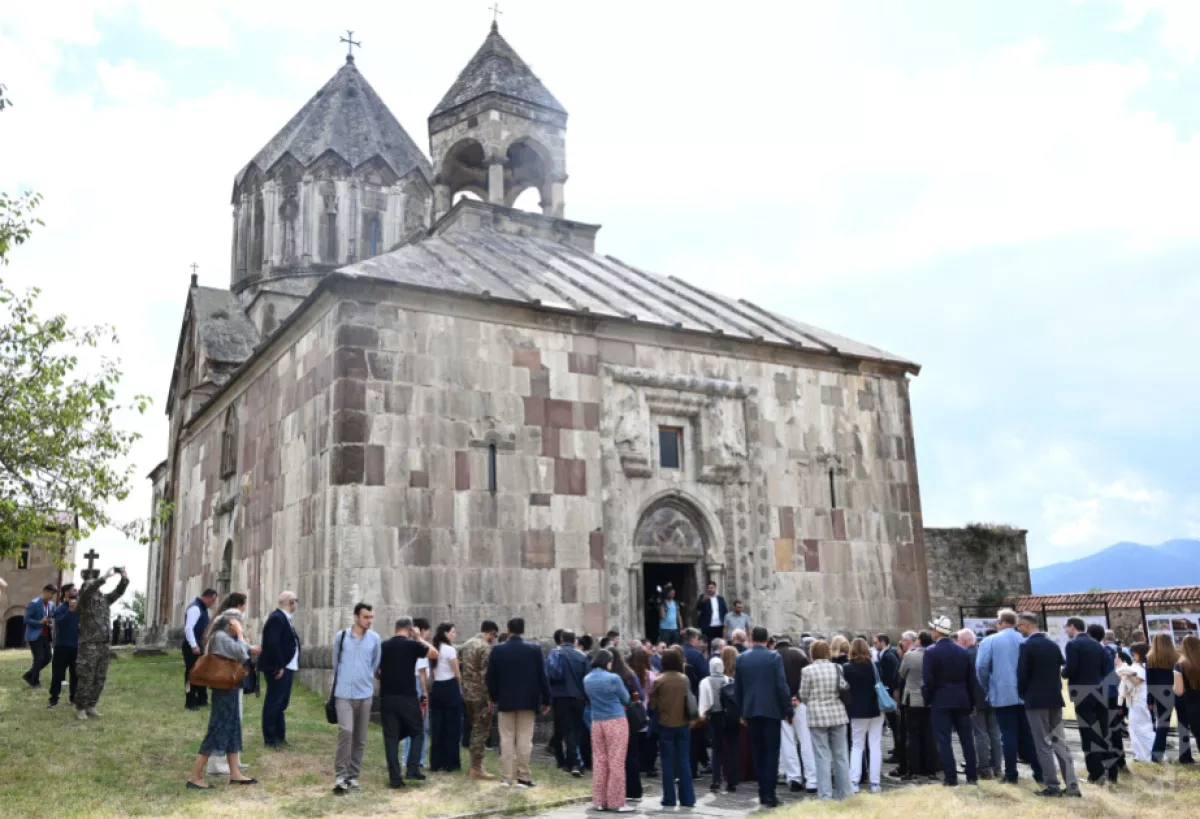
We cannot say that the Albanian khachkars in Syunik are “ours”, but neither can Armenians lay claim to Ganjasar, Amaras or Khudavang. The rulers and inhabitants of Caucasian Albania were the creators of these architectural monuments, and today they are located on territory under the jurisdiction of the Republic of Azerbaijan. Enough of this talk! Enough already! These monasteries are not Armenian. They are Albanian, if only because Artsakh-Khachen was a principality within Caucasian Albania, not Armenia. And this historical region is today located within the Republic of Azerbaijan.
For them to become “yours”, you would first have had to preserve the occupation, legitimise it, secure recognition from the international community — and above all from the UN — that Karabakh was an integral part of Armenia, and only then claim sovereign rights over these monasteries. For now, however, it is Hikmet Hajiyev, not Alen Simonyan, who accompanies diplomatic corps visits to these historical landmarks. Is that not the clearest and final point on the matter?
No matter how many times you repeat that the medieval monasteries of Karabakh are “Armenian”, they never were and never will be. They are part of the heritage of the vanished historical world of Caucasian Albania and of the modern Republic of Azerbaijan. Come to terms with the truth!