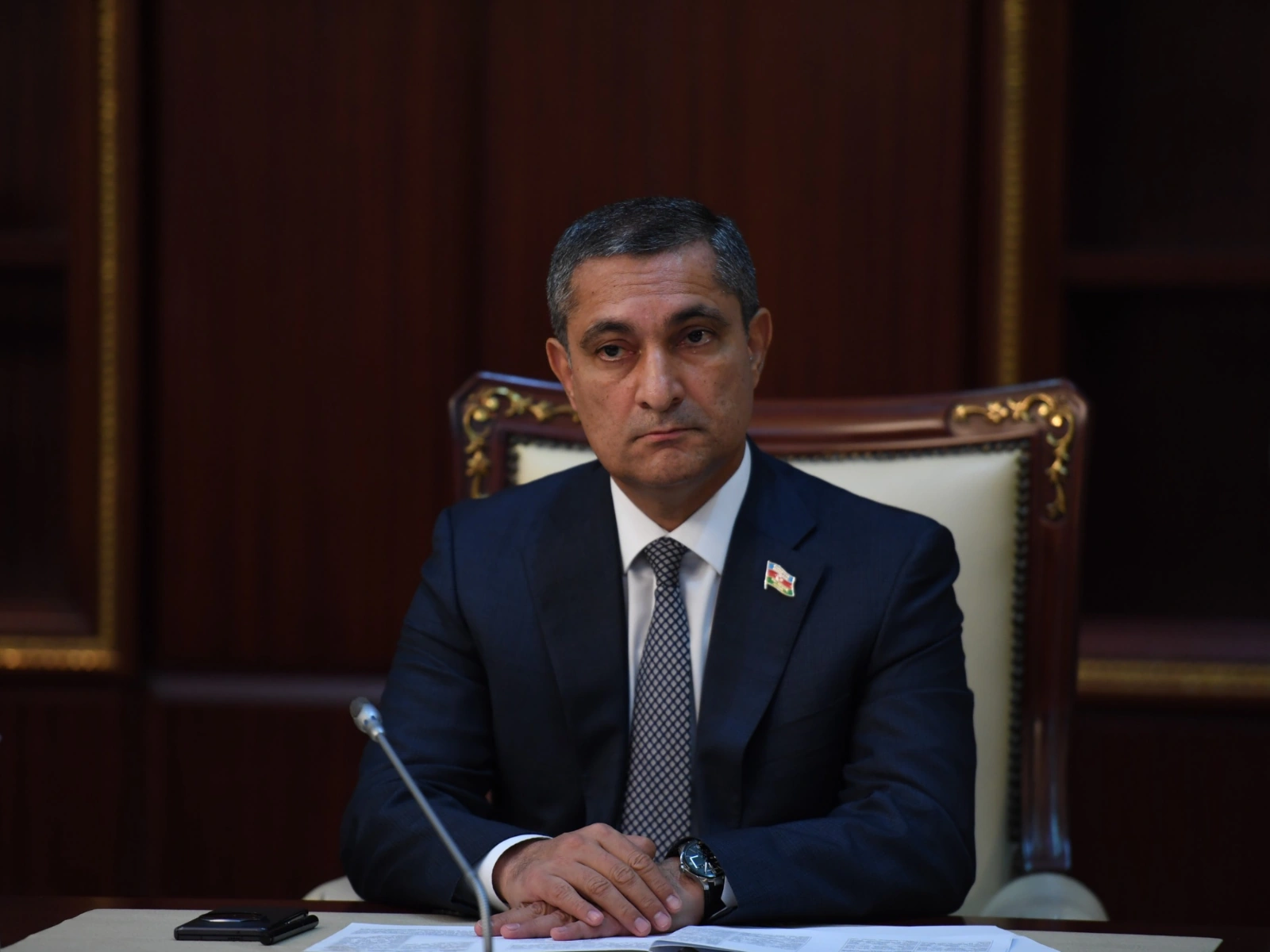
BAKU, Azerbaijan, September 19. The 7th Meeting
of the Council of Heads of Muslim Religious Administrations of the
Organization of Turkic States (OTS) held in Baku is of significant
importance in terms of protecting common values, promoting
Turkic-Islamic cultural heritage, as well as combating radicalism
and extremism, Azerbaijani MP Soltan Mammadov told Trend.
The “Baku Declaration” adopted during the meeting was also an
important step toward further expanding future cooperation with
both the Turkic world and Islamic countries.
The MP said that the international conference dedicated to
prominent figure and thinker Seyid Yahya Bakuvi is of particular
importance for further strengthening religious and cultural ties,
studying common heritage and passing it on to future
generations.
He noted that the 2017 Islamic Solidarity Games in Baku, the
organization of various events as part of cooperation with the
Organization of Islamic Cooperation and ICESCO, as well as plans to
host the OIC Summit in Baku next year demonstrate the continued
nature of Azerbaijan’s contribution to strengthening Islamic
solidarity.
The MP pointed out that Armenia’s 30-year occupation of
Azerbaijani territories was not limited to territorial occupation,
as serious damage was also inflicted during this period on the
country’s rich historical and cultural heritage, including mosques
and other religious monuments.
President Ilham Aliyev noted in his speech that 65 mosques were
completely destroyed by Armenians during the occupation,
emphasizing that this was an insult directed not only against the
Azerbaijani people but against the Islamic world as a whole.
Mammadov noted that large-scale reconstruction and restoration
work carried out in the liberated territories is bringing life back
to these lands. In line with the policy set by the head of state,
the liberated territories are rapidly being rebuilt, while their
historical appearance and former pace of life are being
restored.
“The fact that the Aghdam Juma Mosque was among the first
religious monuments to receive attention as part of the restoration
and reconstruction efforts is also of particular importance. The
restoration and reopening of 12 mosques destroyed as a result of
the occupation is an indication of the importance our state
attaches to preserving our religious heritage. These initiatives
are also important in terms of passing our historical and cultural
heritage on to future generations,” he said.