BAKU, Azerbaijan, September 16. President of
Tajikistan Emomali Rahmon presented the country’s investment
opportunities in the energy sector, including its significant
hydropower potential and the development of green energy.
According to the press service of the President of Tajikistan,
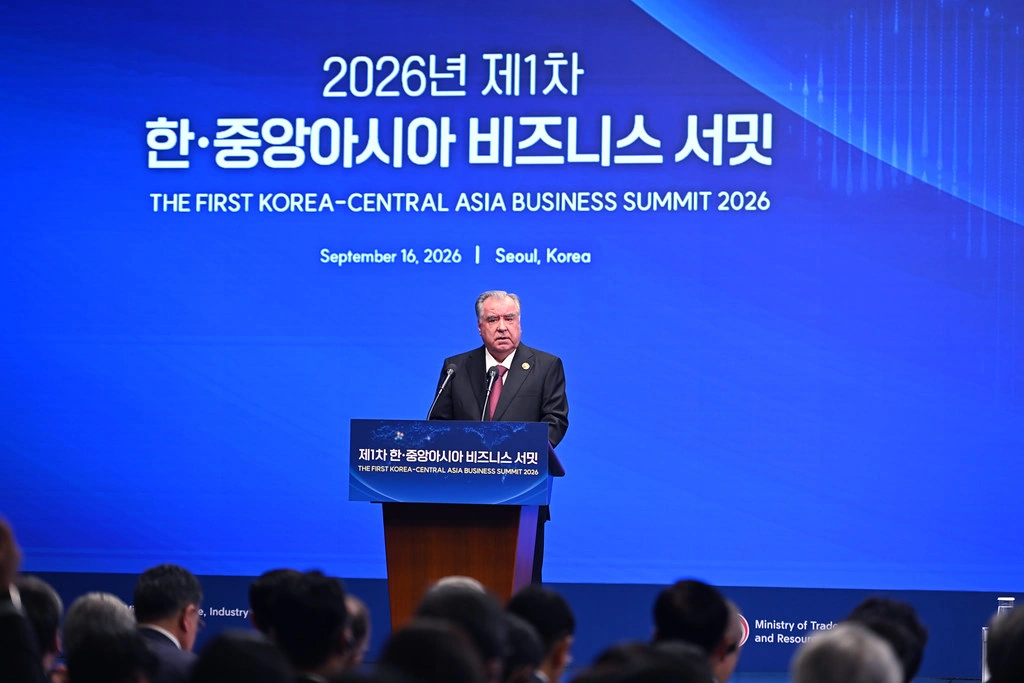
Emomali Rahmon presented these opportunities on September 16 at the
first Korea - Central Asia Business Summit in Seoul.
"During his address at the economic and trade forum, President
Emomali Rahmon presented investment opportunities, vast hydropower
potential and natural resources, including green energy, as well as
opportunities in industry, agriculture, textiles, transport,
tourism, banking and finance," the statement said.
Furthermore, the head of state noted that energy is one of the
strategic sectors for Tajikistan’s development.
During his address, Rahmon also presented the country’s natural
resources and opportunities for implementing green energy
projects.
The president expressed the view that the areas of cooperation
presented could attract the interest of business circles and
investors from the Republic of Korea.
Meanwhile, Tajik President Emomali Rahmon is participating in
the first Central Asia-Republic of Korea Summit in Seoul on
September 16-17. The summit brings together the leaders of South
Korea and the five Central Asian countries - Kazakhstan,
Kyrgyzstan, Tajikistan, Turkmenistan and Uzbekistan - marking the
first elevation of the Korea-Central Asia dialogue to the leaders’
level. The meeting is focused on expanding cooperation in areas
including trade and investment, industry, energy, transport,
digitalization, technology and human capital.
During his visit to South Korea, Emomali Rahmon is presenting
Tajikistan’s investment opportunities and highlighting areas with
potential for greater cooperation with Korean businesses, including
critical minerals, mineral processing, energy, infrastructure,
technology and agriculture.
The summit provides Tajikistan with a regional platform to
promote its investment potential and discuss opportunities for
attracting Korean capital, technologies, and expertise. It also
offers a framework for expanding practical cooperation between
South Korea and the Central Asian countries in strategic economic
sectors.