BAKU, Azerbaijan, September 16. The Global
Green Growth Institute, Alatau City Authority and Caspian Korea
have signed a tripartite Memorandum of Understanding (MoU)
establishing a three-year framework for low-carbon urban
development and green infrastructure projects in Kazakhstan's
Alatau City.
This was announced in a statement published by the Global Green
Growth Institute (GGGI).
According to the GGGI, the agreement covers low-carbon urban
planning, climate-resilient infrastructure, renewable energy and
hydrogen-enabled systems, including hydrogen co-firing for power
generation, GGGI said.
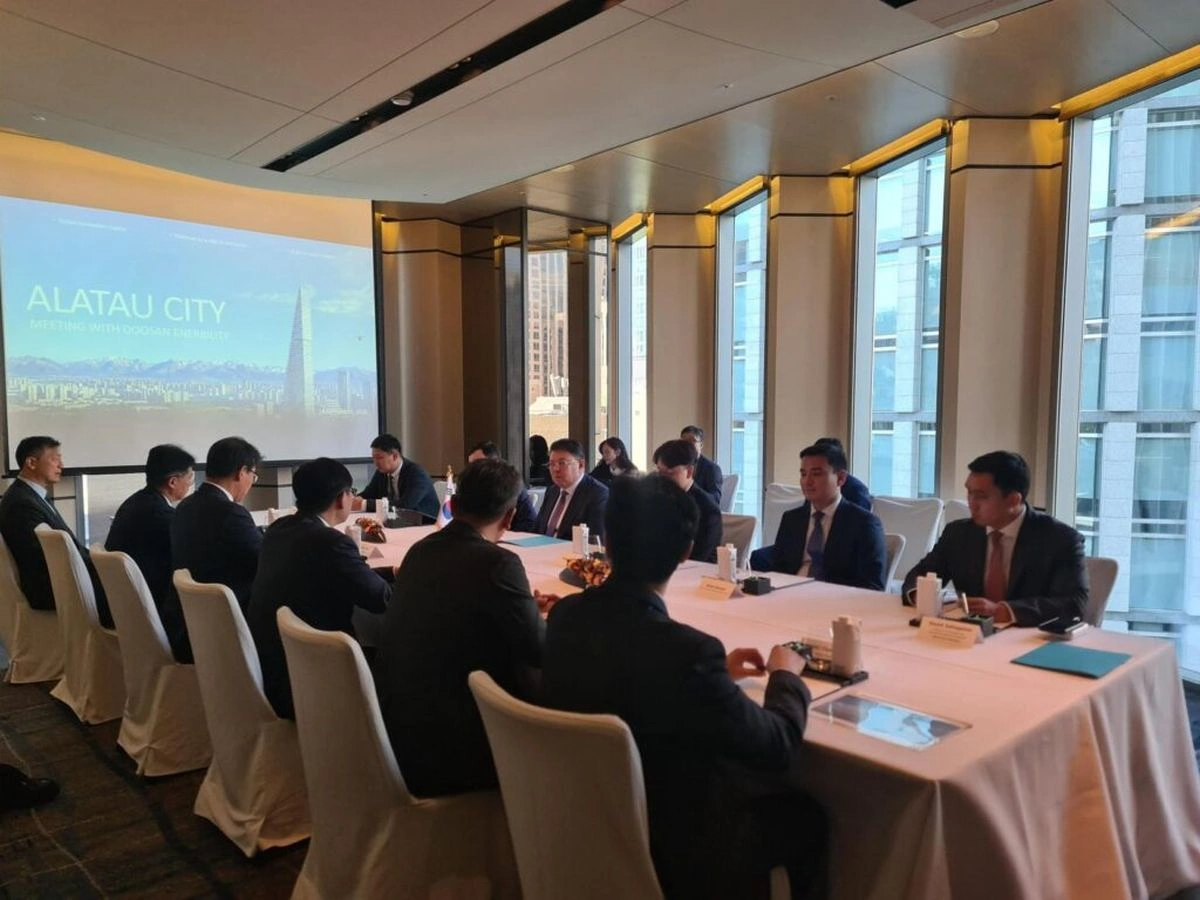
The agreement was signed following high-level discussions in
Seoul involving GGGI representatives and a Kazakhstan delegation
led by Deputy Prime Minister Kanat Bozumbayev and Alatau City
Authority CEO Alisher Abdykadyrov. Industry and advisory partners,
including Caspian Korea, Doosan Enerbility and KPMG, also
participated in the discussions.
"International cooperation is vital for accelerating
Kazakhstan’s green transition, and our partnership with global
institutions and technology leaders is paramount. We are ready to
attract investment and adopt proven global and Korean clean
technologies in power generation, renewable energy, and hydrogen.
By combining Kazakhstan’s energy resources with international
expertise, advanced technologies, and robust investment
capabilities, we can create scalable, mutually beneficial
opportunities for sustainable development," Bozumbayev said.
According to GGGI, the partnership will support the development
of concrete low-carbon projects in Alatau City under its Hydrogen
to Green Growth (H2G) Initiative.
"The H2G Initiative goes beyond standard hydrogen development by
actively utilizing clean hydrogen to decarbonize urban centers and
industries. By coupling the Korea Green New Deal Trust Fund
(KGNDTF) with end-to-end project preparation, covering technical,
commercial, and financial assessments, we can successfully guide
high-impact initiatives in Alatau City from blueprint to
implementation," Seung Tae Kim, Director of the Department of
Development Finance at GGGI, said.
GGGI said the initiative will seek to connect Kazakhstan's
development priorities with international expertise and financing
capabilities, with the aim of developing hydrogen projects to the
investment stage.
The Global Green Growth Institute (GGGI) was established in 2012
as a treaty-based international intergovernmental organization at
the United Nations Conference on Sustainable Development. GGGI
supports its Member States in transitioning their economies to a
green growth model that combines poverty reduction, social
inclusion, environmental sustainability, and economic growth.
With 55 Member States and 30 Partner countries and regional
integration organizations currently in the process of accession,
GGGI implements programs and projects in more than 57 countries.
Its work includes developing innovative green growth solutions,
providing technical assistance and capacity building, supporting
policy planning and implementation, and helping develop a pipeline
of bankable green investment projects, as well as facilitating
project financing, investment, and knowledge sharing.
Launched by GGGI in 2025, the Hydrogen to Green Growth (H2G)
Initiative supports GGGI Member States and developing countries in
using hydrogen to accelerate green growth and industrial
decarbonization.
The initiative focuses on hydrogen-enabled industries, including
green steel, green mobility, green energy, and green chemicals. To
date, H2G has developed a pipeline of projects and programs in more
than 15 countries and established partnerships with stakeholders
across more than 30 countries.
Korea Green New Deal Trust Fund (KGNDTF) was established at GGGI
in April 2022 with the support of the Ministry of Economy and
Finance (MOEF) of the Republic of Korea. It supports carbon
neutrality, green growth, and climate adaptation.