BAKU, Azerbaijan, September 15. Azerbaijan
recorded a current account surplus of $4.7 billion in its balance
of payments, and the country's external financial position
continued to strengthen in the first half of 2026. According to
external sector statistics released today by the Central Bank of
Azerbaijan (CBA), alongside the current account surplus, the
country's strategic foreign currency reserves rose to $85.8
billion, and Azerbaijan directed $5 billion in direct investments
abroad. These indicators demonstrate the expansion of the country's
external financial capabilities and the strengthening of its
international economic position.
According to the latest figures released by the regulatory body,
the current account surplus has more than doubled compared to the
$2.3 billion recorded in the first half of 2025, reaching 12.4 % of
GDP.
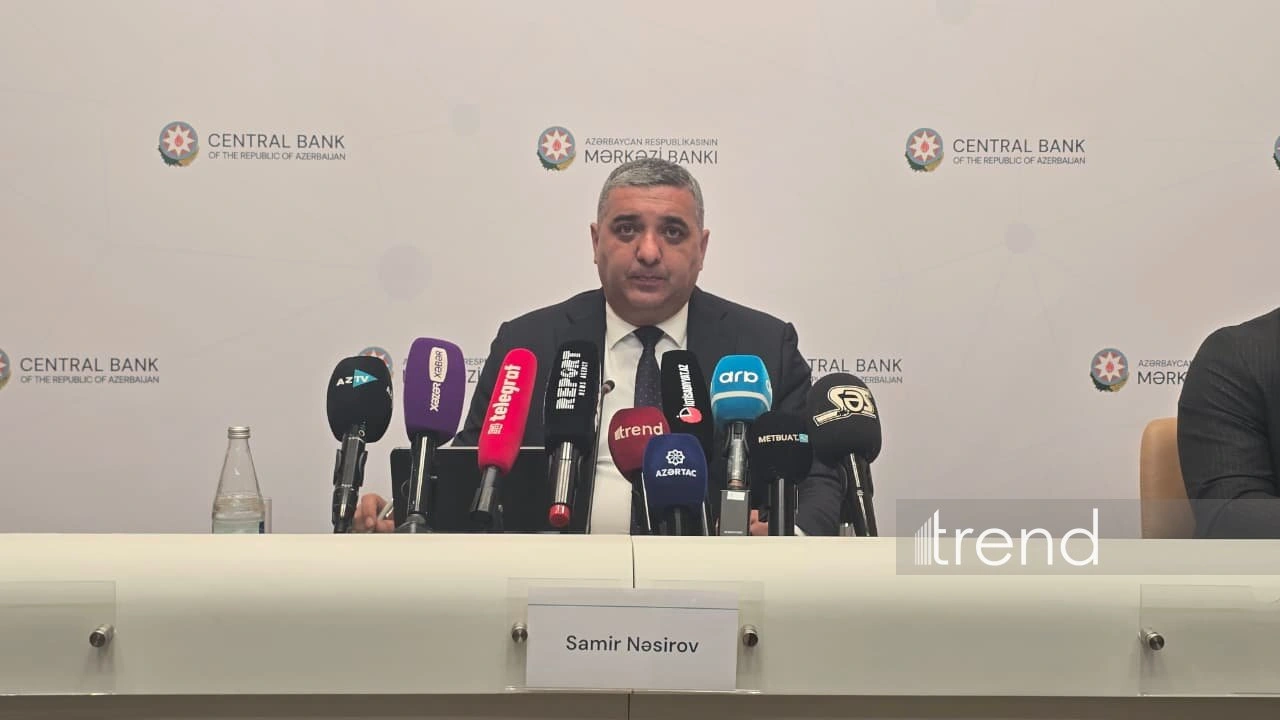
Director of the Statistics Department at the CBA, Samir Nasirov,
said during a press conference today that the current account
outcome is a key indicator of Azerbaijan's macroeconomic
stability.
"In the first half of this year, the current account surplus
stood at $4.7 billion. This figure represents 12.4 % of GDP and
marks an approximately twofold increase compared to the same period
last year," Nasirov said.
High revenues generated in the energy sector are a primary
driver of the surplus. The oil and gas current account surplus rose
by 23.6 % to reach $9 billion, while a deficit of $4.3 billion was
recorded in the non-oil and gas sector.
At the same time, positive trends in non-oil and gas exports,
transport services, foreign investments, and international
financial assets are also notable aspects of Azerbaijan's external
economic position. Increased activity in each of these areas
creates additional opportunities for expanding the country's
sources of foreign revenue and diversifying economic ties.
High oil prices strengthen external
position
In the first half of 2026, the average realized price of
Azerbaijani oil stood at $94.5 per barrel. This represents a 33 %
increase compared to the same period in 2025.
The rise in energy prices has directly translated into higher
export revenues. Total commodity exports grew by 16.9 %, reaching
$14.3 billion. Oil and gas exports amounted to $12.3 billion, while
non-oil and gas exports totaled $2 billion. With imports remaining
at $8.1 billion, a foreign trade surplus of $6.2 billion was
recorded.
The increase in the current account surplus driven by the oil
and gas sector is the result of additional foreign currency inflows
generated by high prices. At the same time, higher energy prices
also lead to increased profit repatriation by foreign investors
from projects in Azerbaijan. In the first half of the year, profit
repatriation by foreign investors amounted to approximately $2
billion, with oil and gas consortia accounting for $1.8 billion of
this total. Thus, the impact of high oil prices on the balance of
payments is not limited solely to the growth of export revenues.
The rise in energy revenues creates a reciprocal mechanism that
increases both the current account surplus and the volume of
earnings repatriated by foreign investors.
Azerbaijan expands its position as capital
exporter
In the first half of 2026, the total volume of direct
investments directed abroad from Azerbaijan amounted to $5 billion.
Of this, $4.2 billion originated from the oil and gas sector. The
net deficit in foreign direct investments stood at $4.3
billion.
"The oil and gas sector accounted for $4.2 billion of the direct
investments made abroad," Nasirov explained.
A major deal in the Italian energy market was the primary
component of capital outflow. In May, approximately 3 billion
euro—or $3.2–3.3 billion —was allocated for the acquisition of a
99.85% stake in Italiana Petroli.
"The acquisition of this stake was valued at approximately 3
billion euro, or $3.2–3.3 billion," the CBA official added.
This transaction is notable for the conversion of capital
generated within Azerbaijan's energy sector into foreign assets.
Furthermore, the fact that the investment was directed toward
Italy's energy and fuel distribution sector demonstrates that
Azerbaijan's foreign capital is concentrated on strategic energy
assets.
Another aspect of investment flows involves capital entering
Azerbaijan. In the first half of the year, $3.7 billion in foreign
direct investment was attracted to the country's economy. Of this
amount, $2.8 billion went to the oil and gas sector, while $877
million was allocated to non-oil and non-energy sectors.
Renewable energy projects are also included in non-oil and gas
investments. This indicates that the energy sector is not limited
to traditional hydrocarbons and that new energy assets have become
a significant destination for capital flows. Changes in the
structure of external debt obligations
A deficit of approximately $3 billion emerged in the capital and
financial account during the first half of 2026. The primary
components of this were a $3.3 billion increase in net external
financial assets and an increase of approximately $0.3 billion in
net external financial liabilities.
Of particular note is the approximately $2 billion decrease in
external financial liabilities related to portfolio investments. A
key driver of this trend was the repurchase of Eurobonds previously
issued within the framework of the Southern Gas Corridor.
"In the first quarter, the repurchase of Eurobonds previously
issued for the Southern Gas Corridor project was successfully
executed. This move served to reduce the country's external debt
and financial obligations," Nasirov noted.
The significance of this transaction extends beyond the mere
nominal reduction of debt; it is also important for improving the
structure of external obligations, optimizing the future
debt-servicing burden, and maintaining a more flexible position in
financial markets.
Meanwhile, external financial liabilities classified under
"other investments" rose by approximately $2.4 billion. This
increase was primarily driven by funds raised to finance investment
projects. Against the backdrop of rising loans, a decline was
recorded in deposits and foreign currency cash assets.
Transport emerges as second source of foreign currency
revenue, complementing energy earnings
Azerbaijan’s services balance traditionally runs a deficit. In
the first half of the year, the overall deficit in services stood
at approximately $1 billion. The bulk of this was attributable to
construction and other business services procured from abroad for
the oil and gas sector.
However, significant surpluses exist in specific service
categories. Notably, the surplus in transport services grew by
9.9%, reaching $941 million.
"The surplus in transport services remains a key highlight.
During the reporting period, this figure rose by approximately 10%
to reach $941 million," Nasirov said.
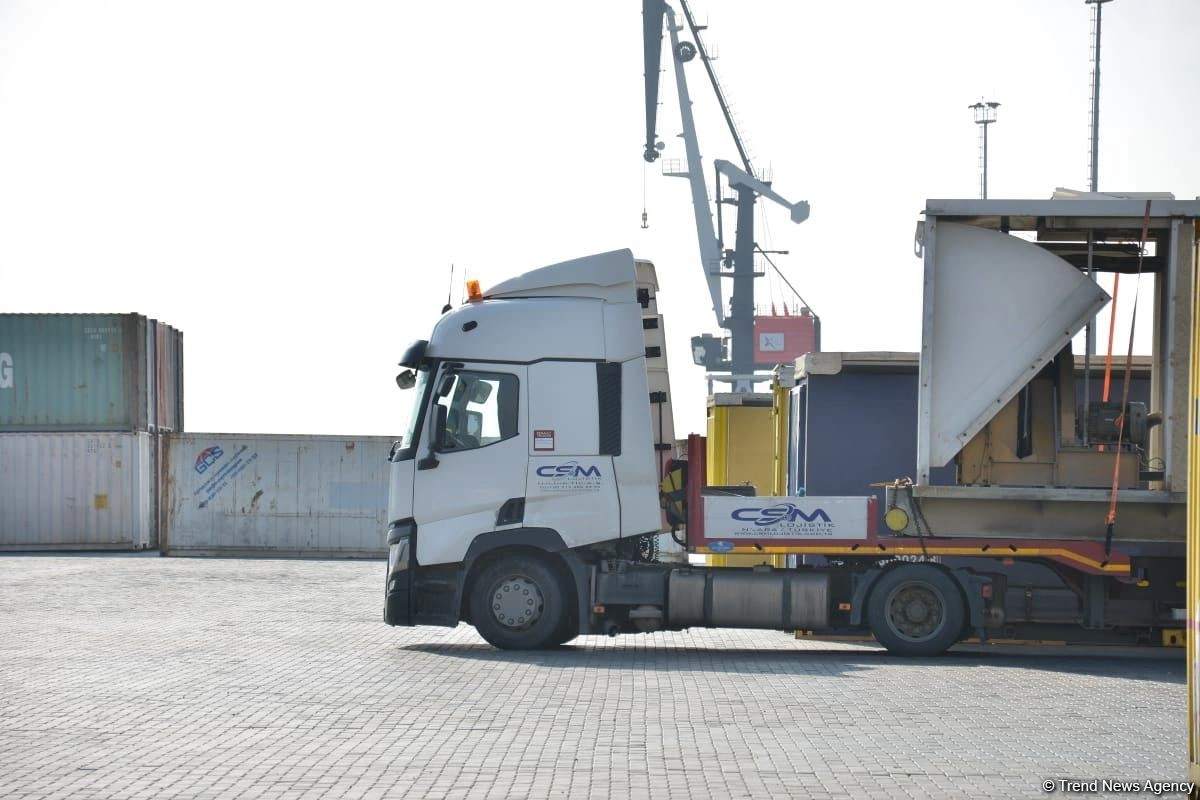
An important point to note here is that transport revenues
aren't linked solely to the Middle Corridor.
"Freight transport and transit services provided to
non-residents—including tariff revenues—within the framework of the
Southern Gas Corridor and Baku-Tbilisi-Ceyhan projects play a
primary role in this growth. High oil and gas prices also
facilitate the increase of these revenues," the CBA official
added.
This structure demonstrates that Azerbaijan's geographical
location offers opportunities for monetization beyond the energy
sector. Beyond export earnings, the transport of energy resources,
transit, and logistics infrastructure generate service revenues for
the country. Furthermore, the development of the Middle Corridor
creates additional opportunities to expand this potential into a
broader economic base.
A surplus was also maintained in tourism services, amounting to
$47 million at the end of the first six months.
"Although a slight decline in the number of incoming tourists
was observed, the surplus in the tourism balance was preserved. By
the end of the six-month period, the surplus in tourism services
stood at $47 million," Nasirov noted.
Remittances also support external accounts
Secondary income represents another positive component of the
current account. In the first half of the year, personal
remittances sent to Azerbaijan from abroad rose by 40.2 %, reaching
approximately $748 million. Meanwhile, foreign remittances from the
country fell by 12.7 % to $208 million.
As a result, net inflows from remittances amounted to
approximately $540 million. The primary sources of these inflows
were Russia, Türkiye, the U.S., Ireland, and Georgia.
This trend also creates a positive backdrop regarding the
components of the current account excluding energy exports. In the
first half of the year, the overall surplus regarding secondary
revenues reached $525.7 million, an increase of 86.3%
year-on-year.
Reserves remain a key buffer against external
shocks
The substantial current account surplus and financial inflows
are also reflected in the growth of strategic foreign currency
reserves. By the end of the first six months, strategic foreign
currency reserves stood at $85.8 billion. By September 1, this
figure has risen to $90.77 billion.
In August alone, reserves increased by $3.96 billion, or 4.55%.
Year-on-year, strategic foreign currency reserves are up by
15.7%.
CBA Chairman Taleh Kazimov said at a recent press conference
that the current level of reserves provides a significant safety
margin regarding the country's import capacity.
"Based on balance of payments statistics, strategic foreign
currency reserves are sufficient to cover 40 months of imports of
goods and services," Kazimov said.
The fact that reserves exceed the broad money supply by 3.4
times is also a crucial indicator of the financial system's
resilience against external shocks.
High energy prices key advantage for 2026
The situation in the global energy market provides additional
support for Azerbaijan's external position. Rising tensions in the
Middle East, persistent risks surrounding the Strait of Hormuz, and
concerns regarding global oil supplies have kept prices at high
levels.
ING estimates that Azerbaijan's current account surplus could
reach 9–10% of GDP by 2026. According to the bank's assessment,
higher energy prices are a key factor strengthening the external
financial buffers of exporting nations like Azerbaijan and
Kazakhstan.
"Under the new oil price scenario, Azerbaijan's current account
surplus could amount to 9–10% of GDP this year, while the
consolidated budget surplus could reach 4% of GDP," ING experts
noted.
This estimate exceeds the Central Bank of Azerbaijan's (CBA)
forecast of $6.1 billion. In its updated forecast, the
International Monetary Fund (IMF) also projects that Azerbaijan
will record a current account surplus of $7.57 billion in 2026.
Despite the varying figures, there is a common thread in the
assessments of international institutions: favorable energy prices
are creating a more positive outlook for Azerbaijan's external
accounts in 2026 than previously anticipated. These conditions
offer a significant advantage for the country in terms of
increasing strategic foreign currency reserves, expanding
opportunities for investment in international assets, strengthening
the management of foreign obligations, and channeling additional
financial resources into other sectors of the economy.
At the same time, indicators from the first half of 2026 reveal
trends demonstrating that Azerbaijan's external economic
capabilities aren't limited solely to energy revenues. Key elements
of this picture include a 18% growth in non-oil and gas exports to
$2 billion, a rise in the transport services surplus to $941
million, foreign direct investments totaling $5 billion, and
strategic foreign currency reserves reaching $85.8 billion.
Azerbaijan's external financial position is currently being
strengthened by the combined impact of a substantial current
account surplus, extensive strategic foreign currency reserves,
growing foreign investment opportunities, and transport-logistics
potential. Meanwhile, the additional opportunities created by
favorable prices in the global energy market provide a conducive
environment for leveraging this financial base toward broader
investments and regional economic initiatives.
Ultimately, the indicators for the first half of 2026 reveal
that Azerbaijan’s external economic position is underpinned by both
the strong financial foundation generated by energy revenues and
opportunities emerging in other sectors. Key factors completing
this picture include the volume of foreign direct investments, the
growth of non-oil and gas exports, the widening surplus in
transport services, and the high level of strategic foreign
currency reserves. At this stage, Azerbaijan’s primary advantage
lies in its ability to forge a stronger and more resilient external
economic position by leveraging favorable energy revenues to expand
opportunities in investment, transport, exports, and finance.