BAKU, Azerbaijan, September 8. Uzbekistan and
Serbia have adopted a joint Action Plan for Industrial Partnership
for 2026–2028, setting out a framework for new projects in
transportation and logistics, agriculture, manufacturing,
pharmaceuticals and the digital economy, as the two countries seek
to deepen economic ties.
This was reflected in the statement by the press service of the
Uzbek president.
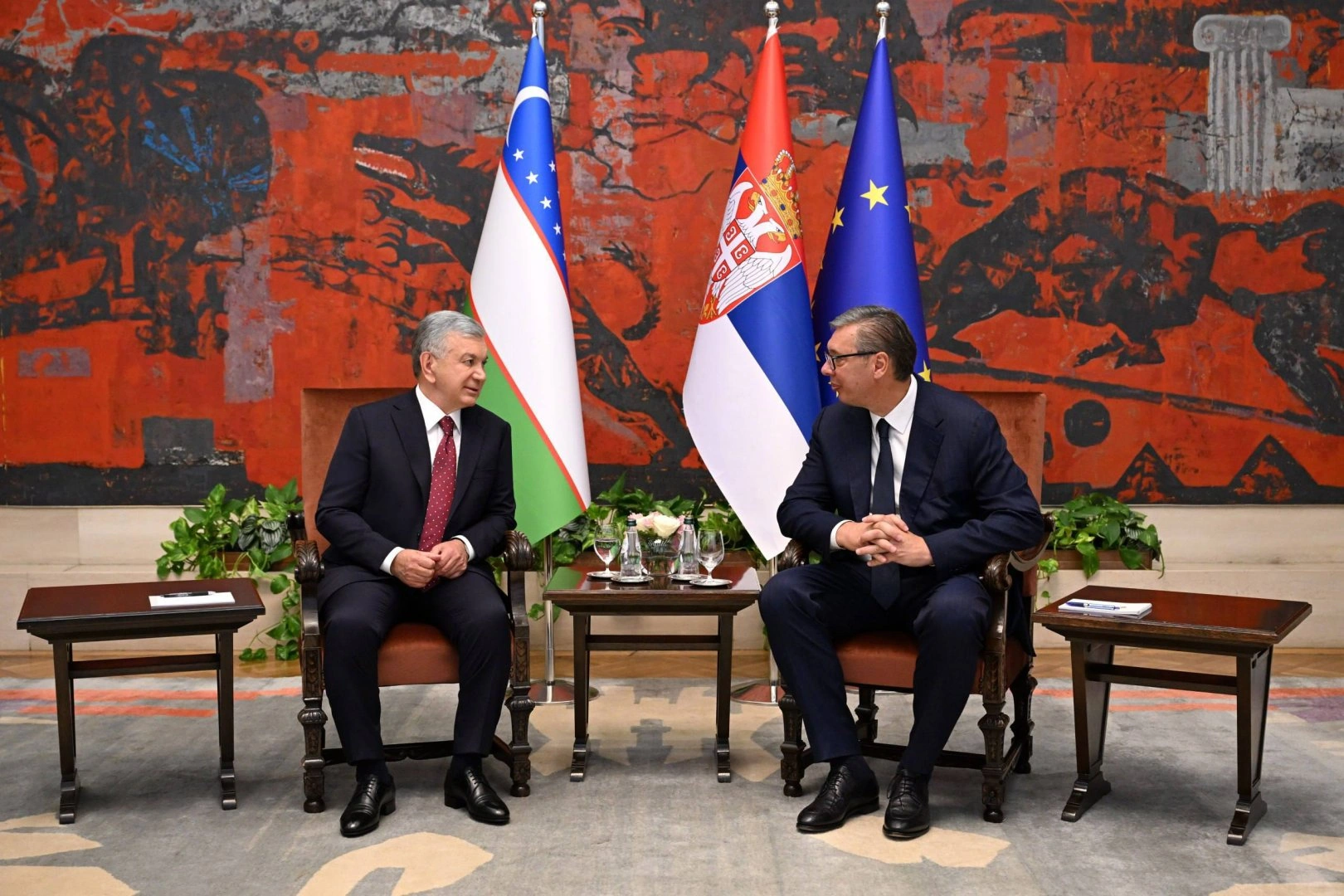
The action plan was adopted during Uzbek President Shavkat
Mirziyoyev’s talks with Serbian President Aleksandar Vučić at the
Palace of Serbia in Belgrade, where the two leaders reviewed the
current state of bilateral relations and outlined priorities for
expanding trade, investment and industrial cooperation.
New joint projects are planned in transportation and logistics,
light and food industries, agriculture, pharmaceuticals, medicine
and the digital economy. The countries identified additional
potential for industrial cooperation in auto components, equipment,
electrical engineering and electronics.
The two leaders held both one-on-one talks and expanded
negotiations with official delegations, reviewing the current state
and prospects of bilateral relations.
“The comprehensive roadmap will serve as a practical mechanism
for ensuring the timely and high-quality implementation of the
agreements, decisions and agreements reached between the two
countries,” the Uzbek presidential administration said.
The sides highlighted the growing momentum in political
dialogue, parliamentary ties, trade and economic cooperation, as
well as business and humanitarian exchanges. They said the opening
of diplomatic missions and establishment of an interparliamentary
forum would further strengthen bilateral relations.
Economic and investment cooperation emerged as a key area of the
talks. The sides discussed increasing mutual trade by expanding
supplies of in-demand goods and emphasized the importance of
developing a free trade agreement, strengthening cooperation in
standardization and organizing reciprocal trade exhibitions.
The leaders also welcomed the establishment of direct ties
between Uzbekistan’s Samarkand region and Serbia’s Vojvodina
province, as well as between the cities of Samarkand and Novi
Sad.
Cooperation in education, culture, sports and tourism will also
be expanded through cultural days, joint film, theater and music
festivals and direct contacts between sports federations.
The sides paid particular attention to organized labor migration
and welcomed the signing of an agreement on mobility and labor
migration during the visit.
Uzbekistan is also set to participate with a national pavilion
in EXPO 2027 in Belgrade, providing another platform for
strengthening economic and people-to-people ties.
The presidents also exchanged views on regional and
international issues and reaffirmed their mutual support at
multilateral platforms.