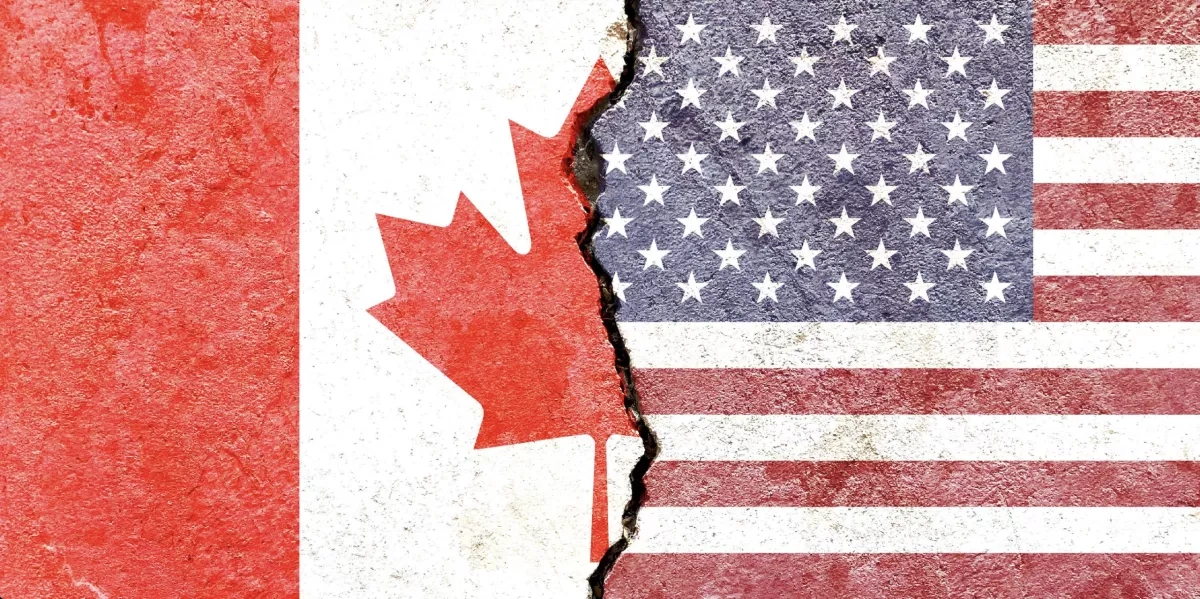
The North American neighbouring duo is experiencing one of the lowest points in its bilateral history, caused by a range of disagreements between US and Canadian governments, ranging from tariffs, climate policies, drug trafficking-related issues and even the matter of Ottawa's sovereignty. This bickering has now resulted in yet another measurable consequence, with new data showing Canadians have sharply reduced their travel to the United States amid worsening bilateral relations, resulting in billion-dollar damages to industries.
New government data show billions of dollars in tourism spending have shifted away from the US toward other international destinations. According to research published this week by Statistics Canada, Canadians spent $3.3 billion less on travel to the United States in 2025 than they did the previous year, opting instead to spend more on holidays elsewhere, as US media notes.
The agency said the shift coincided with changes in US policy following the start of the new administration in early 2025, including the introduction of new tariffs and repeated remarks by US President Donald Trump about annexing Canada.
“Following the change in the US administration in early 2025 and the implementation of America First policies, Canadian travel sentiment shifted abruptly,” the report's authors wrote.
While spending on US travel declined, Canadians increased their expenditures on travel to other international destinations. Spending on overseas travel excluding the United States rose by $3.6 billion in 2025, reaching a total of $22.8 billion.
Travel to Europe increased by nearly 14% compared with 2024, while visits to Asia rose by almost 17%, reflecting a broader diversification of Canadians' travel preferences.
Overall, return trips from the United States to Canada by both road and air declined by roughly 25% during 2025 compared with the previous year. The sharpest decrease occurred in July, when border crossings fell by approximately one-third year-on-year.
Statistics Canada described the sustained decline in cross-border travel as “the deepest and most sustained on record.”
The agency noted that, since digital records began in 1972, declines exceeding 30% had previously occurred only in September 2001 following the terrorist attacks on the World Trade Centre in the United States.
Preliminary data for 2026 suggests the trend has continued.
According to Statistics Canada, return trips from the United States have remained at levels similar to those recorded at the end of 2025, when cross-border travel between October and December was down 27% compared with the previous year.
The agency said the figures indicate “a persistent shift away from the United States by Canadian residents in their travel preferences”.
The data also illustrates how deteriorating political relations have affected public sentiment. Since returning to office, President Trump has repeatedly suggested that Canada should become the 51st US state, while his administration has imposed new tariffs on Canadian goods, prompting strong criticism from Canadian officials.
The latest tensions have been compounded by Washington's announcement of another round of tariffs affecting more than 50 countries, including Canada. Canadian officials have also expressed concern over what they see as the US administration's limited interest in renewing key North American trade arrangements, including the United States-Mexico-Canada Agreement (USMCA).
By Nazrin Sadigova