Record low water levels in the Danube River have forced nuclear power plants in Hungary and Romania to reduce electricity output, with officials warning that reactors could be shut down entirely in the coming days if conditions do not improve.
The disruption comes as prolonged heat and drought continue to affect Europe, Caliber.Az reports, citing Reuters.
In France, where nuclear energy generates about two-thirds of the country's electricity, power output has also been reduced because rivers can no longer provide sufficient cooling water. Researchers say such disruptions are becoming a recurring seasonal risk as climate change increases the frequency of extreme heat and drought.
Hungarian Prime Minister Peter Magyar said the Paks nuclear power plant could be shut down as early as Thursday or Friday.
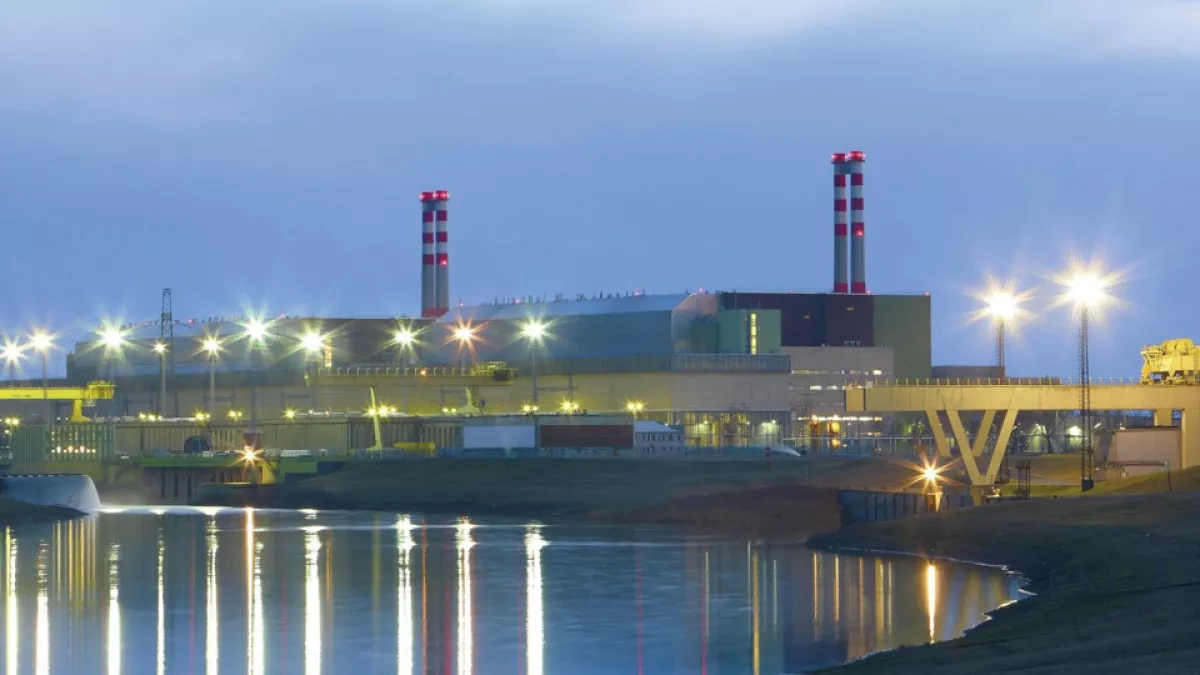
The facility, which operates four Russian-built reactors with a combined capacity of 2 gigawatts and supplies nearly half of Hungary's electricity, began reducing output on Monday and is currently operating at less than 50% of capacity.
Magyar warned that a shutdown of the plant, combined with an expected 20% surge in evening electricity demand during the heatwave, could create a critical situation by Monday.
He also noted that Hungary had lost another 400 megawatts of generating capacity due to a malfunction at the country's largest gas-fired power plant in Százhalombatta.
The outages are increasing Hungary's reliance on imported electricity at a time when the grid is already under pressure from rising demand for air conditioning and constrained supplies.
According to Magyar, Hungary has electricity import capacity of between 3,600 and 3,800 megawatts, which would be sufficient to meet demand if the Paks plant is shut down.
The prime minister made it clear that the national grid operator would ask major electricity consumers, including battery and automobile manufacturers, to voluntarily reduce consumption between 5 p.m. and 10 p.m. local time. The government also urged residents to avoid charging electric vehicles and using air conditioners during those hours.
"It is in our common interest to avoid unplanned shutdowns and a system collapse," Magyar added.
He added that the government has prepared a contingency plan that includes a list of major industrial consumers whose electricity and water use could be temporarily restricted in an emergency.
Hungary's average peak temperature on Thursday was forecast at 35 degrees Celsius, 8.8 degrees above the normal high for July 30–31.
In neighbouring Romania, state-owned nuclear power producer Nuclearelectrica said on Thursday that its second reactor remained connected to the grid because river conditions still allowed it to operate.
A day earlier, the company had announced plans to shut down the reactor from Thursday after the first unit was disconnected earlier this week.
Nuclearelectrica operates two 706-megawatt reactors at the Cernavodă nuclear power plant on the Danube, which together account for about one-fifth of Romania's electricity generation.
Romanian Prime Minister Ilie Bolojan remarked that the reactor shutdowns could last for one to two weeks and called on the public to voluntarily reduce electricity consumption during evening peak hours.
By Bakhtiyar Abbasov