BAKU, Azerbaijan, July 30. Iran’s Islamic
Revolutionary Guard Corps (IRGC) has said the Strait of Hormuz will
remain closed unless the United States ends its threats and
intervention.
The statement was issued by the Islamic Revolutionary Guard
Corps.
The IRGC said that continued US threats and interference are
further complicating the situation.
“The Strait of Hormuz is our territory. The IRGC Navy maintains
firm control over the strait. Those who have come from thousands of
kilometers away will not be allowed to interfere,” the statement
said.
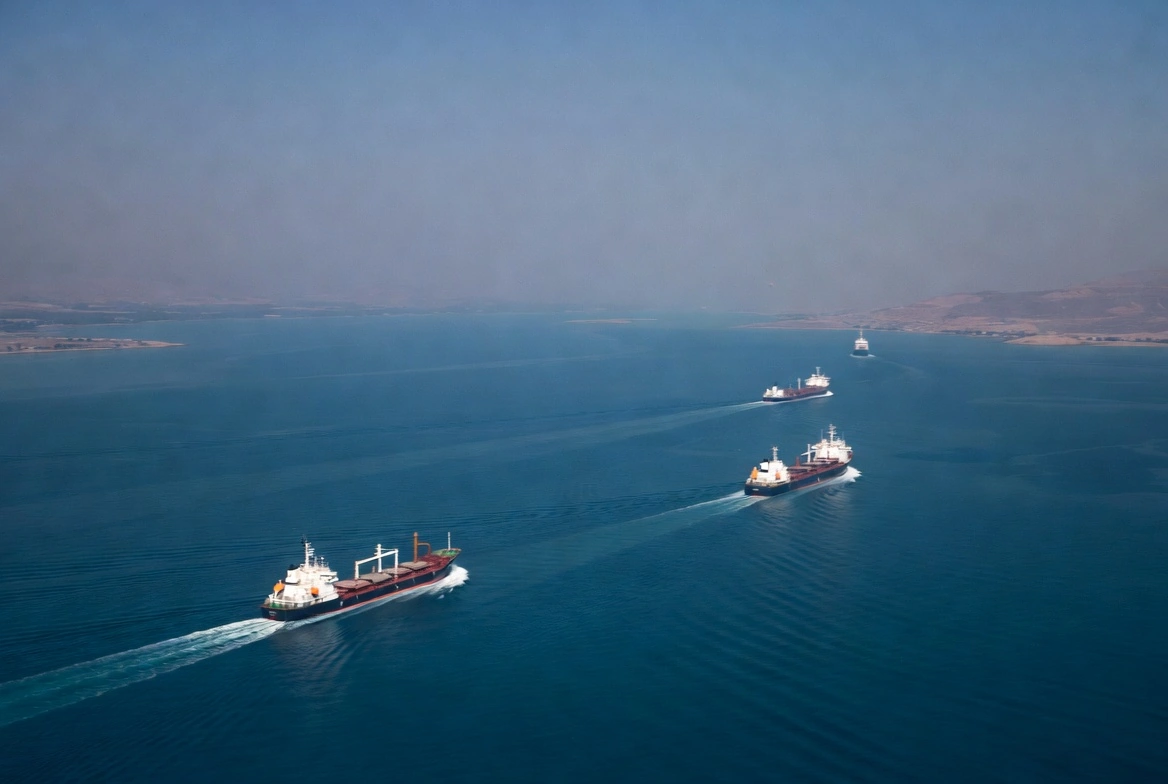
The IRGC also claimed that two oil tankers attempted to pass
through an unsafe area of the Strait of Hormuz last night with US
support. It said both vessels immediately withdrew after a major
fire broke out on one of the tankers.
Earlier, the U.S. Central Command (CENTCOM) said that strikes
had been carried out against dozens of targets in Iran, including
military command centers, missile and unmanned aerial vehicle
facilities, coastal surveillance and defense sites, as well as
naval capabilities.
Meanwhile, as no tangible progress was made in the nuclear
negotiations between the U.S. and Iran, the situation escalated on
February 28, when the United States and Israel launched military
airstrikes against Iran. In retaliation, Iran initiated missile and
drone strikes targeting Israeli and U.S. installations in the
region. Following these developments, a two-week ceasefire
agreement was brokered on April 7 through Pakistan's mediation.
A peace memorandum was signed between Iran and the U.S. on June
18. The memorandum was signed by Iranian President Masoud
Pezeshkian and U.S. President Donald Trump. The memorandum came
into effect on June 19.
Meanwhile, the latest escalation in U.S.-Iranian relations began
on July 8. On that day, for the first time since the signing of the
memorandum between Washington and Tehran, the U.S. military carried
out several waves of strikes on Iranian territory, claiming that
this was in response to an attack on a merchant ship in the Strait
of Hormuz. On the same day, U.S. President Donald Trump announced
the end of the ceasefire with Iran. In response, Tehran began
attacking U.S. facilities in Bahrain, Jordan, Qatar, Kuwait, the
UAE, and Oman.