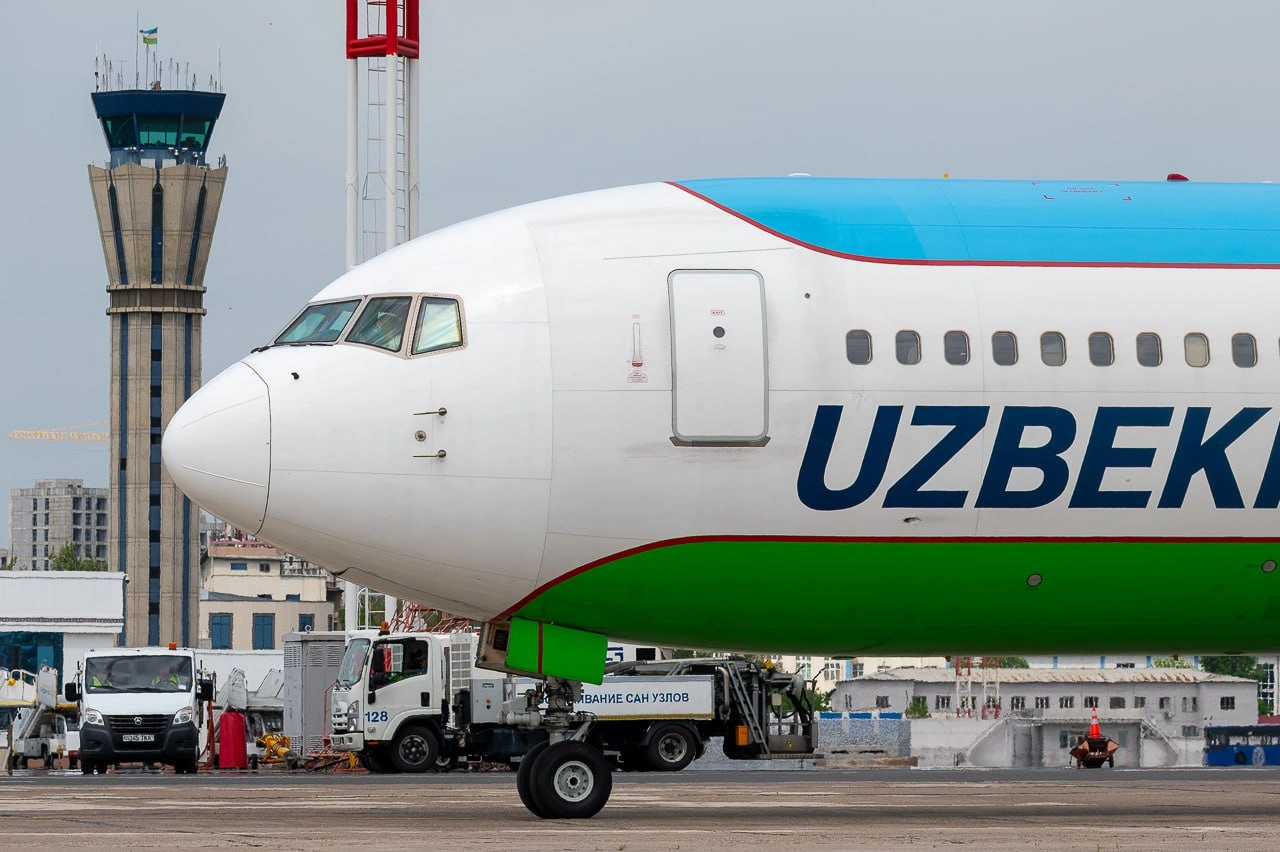
BAKU, Azerbaijan, July 28. Uzbekistan's
airports handled 8.15 million passengers in the first half of 2026,
up 16% from a year earlier, driven by expanding international
connectivity and the reopening of regional airports.
This was reflected in the statement by the Uzbekistan
Airports.
The country's airports handled 64,831 flights during the
January-June period, an 8% year-on-year increase. International
flights accounted for 47,371 movements, while domestic services
totaled 17,460.
International routes carried 6.7 million passengers, while
domestic flights served 1.46 million travelers. Cargo and mail
volumes rose 33% year-on-year to 51,546 metric tons, according to
the company.
Tashkent International Airport remained the country's busiest
hub, handling 40,283 flights and 5.36 million passengers, up 7% and
17%, respectively. Cargo and mail volumes at the airport increased
33% to 48,170 metric tons.
Uzbekistan Airports attributed the growth to the expansion of
international air services, including the launch of new routes to
Shanghai by China Eastern Airlines, Seoul by Asiana Airlines and
Yerevan by Shirak Avia. Uzbek carriers also added new international
destinations and increased frequencies on existing routes.
Among regional airports, Andijan International Airport posted
the strongest passenger growth, with traffic surging 2,249% after
reopening in March 2025 following a major reconstruction. Passenger
traffic also increased 52% at Termez, 24% at Urgench, and 23% at
Nukus, supported by new international routes and stronger domestic
demand during the tourism season.
Passenger traffic declined at Fergana, Namangan, Karshi and
Navoi airports, reflecting changes in airline route networks,
shifting demand and flight schedule adjustments linked to the
geopolitical situation. Despite these factors, Uzbekistan's airport
network continued to post overall growth in passenger traffic and
cargo volumes.
"At the same time, Fergana, Namangan, Karshi, and Navoi airports
experienced declines in certain performance indicators. This was
primarily due to changes in route network structures, shifts in
demand on specific routes, and the impact of the current
geopolitical situation, which prompted airlines to revise their
flight schedules. Despite these external challenges, Uzbekistan's
airport network maintained positive overall growth and continued to
demonstrate steady increases in passenger traffic," the statement
said.