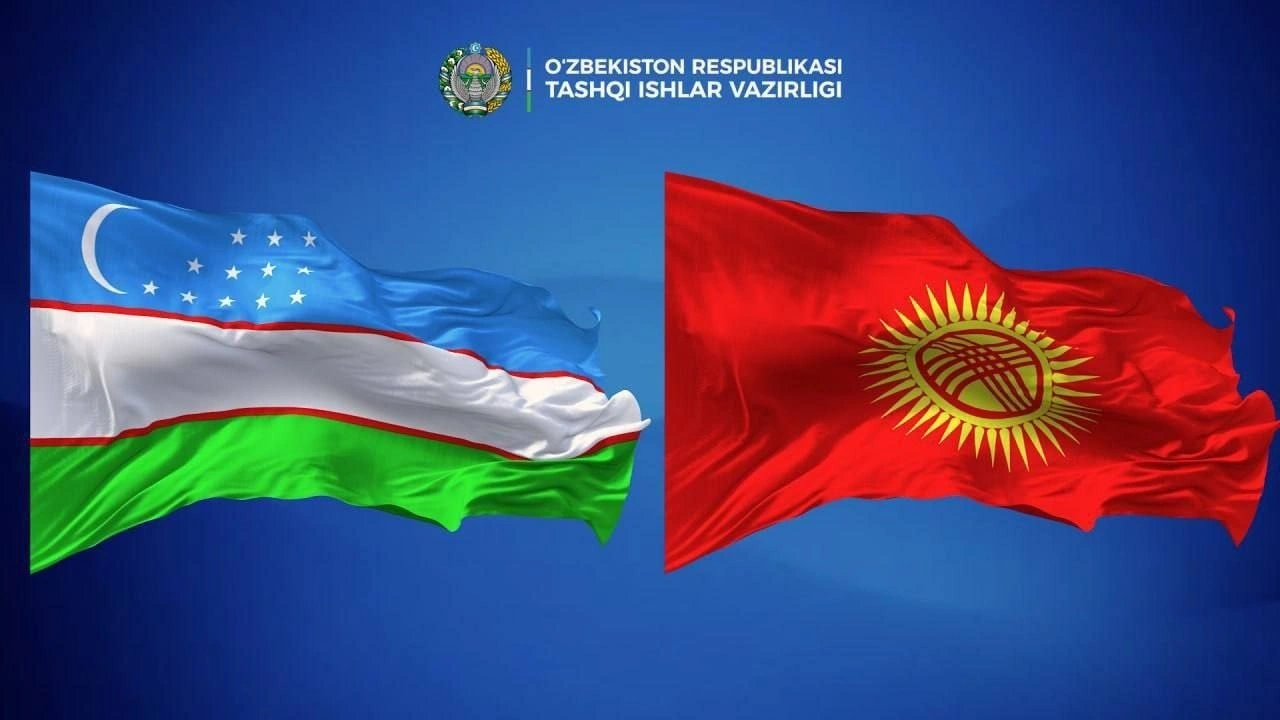
BAKU, Azerbaijan, July 28. The Kyrgyz-Uzbek
Business Forum, scheduled for July 28 in Bishkek, represents more
than another networking event for regional companies. Coming after
a week of intensive government consultations, business meetings and
high-level political contacts, the forum illustrates how Kyrgyzstan
and Uzbekistan are steadily transforming improved political
relations into a broader framework for industrial cooperation,
investment and regional economic integration.
While business forums have become increasingly common across
Central Asia, the sequence of events leading up to the Bishkek
gathering suggests a more coordinated strategy. Rather than
focusing solely on expanding bilateral trade, both governments are
placing greater emphasis on creating joint production facilities,
attracting investment and integrating their economies through
long-term industrial partnerships.
One of the clearest indications of this shift came on July 20,
when an Uzbek delegation led by Deputy Minister of Investments,
Industry and Trade Khurram Teshabayev visited Bishkek for talks
with Kyrgyz officials and business representatives. The discussions
went beyond trade promotion, centering on expanding the portfolio
of the Uzbek-Kyrgyz Development Fund, accelerating financing for
new manufacturing projects and advancing plans for a textile and
garment cluster and an industrial-logistics centre in Kyrgyzstan's
Osh region. The visit also laid the groundwork for a large-scale
business forum bringing together hundreds of entrepreneurs from
both countries.
The focus on the Development Fund is particularly significant.
Initially established to support bilateral investment, the fund is
increasingly emerging as one of the principal instruments for
financing industrial cooperation. By directing capital toward
manufacturing projects rather than short-term commercial
transactions, both governments appear to be encouraging the
creation of shared production capacity capable of generating higher
value-added exports.
The partnership also reflects the complementary nature of the
two economies. Uzbekistan remains the region's larger economic
engine, with nominal GDP projected at $139.2 billion in 2026,
compared with $22.2 billion for Kyrgyzstan. Uzbekistan also
generates substantially greater agricultural output, with
agriculture expected to contribute $23.2 billion in value added
this year, versus $1.65 billion in Kyrgyzstan. At the same time,
Kyrgyzstan has demonstrated strong industrial momentum, recording
9.4% industrial production growth in 2025, compared with 7.2%in
Uzbekistan, suggesting opportunities for expanding cross-border
manufacturing and supply-chain integration.
Macroeconomic fundamentals also support deeper cooperation.
Uzbekistan's relatively low public debt, estimated at 10.5% of GDP
in 2025, provides greater fiscal space for infrastructure and
industrial investment, while both countries post comparable Human
Capital Index scores, 0.62 for Uzbekistan and 0.61 for Kyrgyzstan,
highlighting a broadly similar level of workforce development that
could facilitate technology transfer and joint production
projects.
Business engagement has also become increasingly central to
bilateral cooperation. This trend was evident during the
Uzbekistan-Kyrgyzstan business forum held in Bishkek, which brought
together more than 200 entrepreneurs, government officials and
business associations from both countries. The forum featured
business-to-business (B2B) negotiations covering construction
materials, agriculture, food processing, textiles, pharmaceuticals,
chemicals, electrical equipment, furniture manufacturing,
logistics, tourism and other industries. According to Uzbekistan's
Chamber of Commerce and Industry, participants discussed expanding
exports, establishing joint manufacturing ventures and implementing
new investment projects, with several agreements reached on
developing new commercial partnerships and production initiatives.
Although the financial value of the agreements was not disclosed,
the event demonstrated the growing role of direct business
engagement in translating political commitments into practical
economic cooperation.
The range of sectors represented at the forum is equally
noteworthy. Manufacturing, textiles, agriculture, logistics,
pharmaceuticals, construction materials and information technology
consistently appear among the priorities of bilateral discussions,
suggesting that both governments have identified industries with
the greatest potential for developing regional value chains. Rather
than focusing solely on increasing trade in finished goods,
Kyrgyzstan and Uzbekistan increasingly appear to be pursuing a
model centred on joint production, industrial localisation and
cross-border supply chains capable of supporting long-term economic
integration.
High-level political engagement continues to underpin this
economic agenda. On July 23, the foreign ministers of both
countries reviewed preparations for Uzbek President Shavkat
Mirziyoyev's upcoming state visit to Kyrgyzstan, with discussions
focusing on trade, transport connectivity and the implementation of
previously agreed bilateral initiatives. The following day,
Mirziyoyev and Kyrgyz President Sadyr Japarov reaffirmed their
commitment to expanding trade, supporting industrial cooperation
through the Joint Fund and advancing major regional infrastructure
projects during a telephone conversation.
Taken together, these developments suggest that economic
cooperation between the two neighbours is becoming increasingly
institutionalised. Ministerial meetings are identifying priority
projects, development finance is being directed toward
manufacturing, business forums are connecting companies, while
high-level diplomacy provides the political framework necessary to
sustain long-term cooperation.
This evolution reflects a broader trend across Central Asia,
where governments are increasingly viewing regional integration not
only through the lens of trade liberalisation but also through
industrial collaboration and investment. Faced with growing
competition for foreign capital and the need to diversify their
economies, countries across the region are seeking to strengthen
intra-regional supply chains, improve transport connectivity and
encourage joint ventures capable of serving larger export
markets.
Taken together, these developments suggest that Kyrgyzstan and
Uzbekistan are entering a more mature phase of economic
cooperation, in which trade expansion is increasingly supported by
investment, industrial policy and coordinated government action.
Rather than relying solely on growing commercial exchange, both
countries appear to be laying the institutional foundations for
long-term integration through joint financing mechanisms,
cross-border manufacturing projects and closer business engagement.
The upcoming business forum is therefore likely to serve not only
as a venue for signing commercial agreements but also as a
barometer of how effectively political commitments are being
translated into tangible economic outcomes. Its success will
ultimately be measured less by the number of participating
companies than by the implementation of the projects and
partnerships it helps generate.