BAKU, Azerbaijan, July 24. Kazakhstan and
Uzbekistan have developed a joint action plan to increase the
capacity of railway corridors between the two countries from 35
million tonnes to 60 million tonnes, according to the press service
of the Kazakh government.
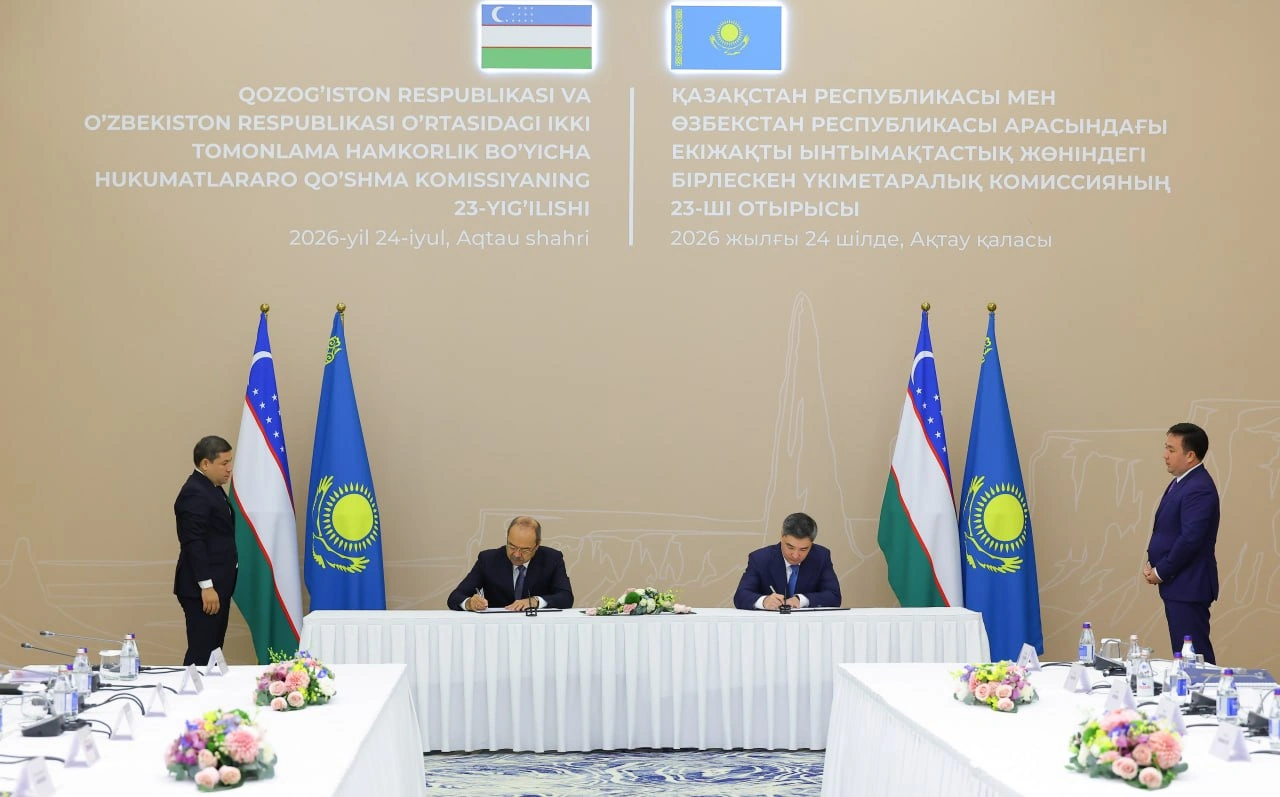
The issue was discussed during the 23rd meeting of the Joint
Intergovernmental Commission on Bilateral Cooperation, chaired by
Prime Minister of Kazakhstan Olzhas Bektenov and Prime Minister of
Uzbekistan Abdulla Aripov in Aktau.
According to the government, railway freight traffic between
Kazakhstan and Uzbekistan increased by 16% in 2025, reaching 32.3
million tonnes. Bektenov emphasized the importance of further
developing railway infrastructure to expand transport connectivity
with Central Asian countries. In this regard, he proposed
considering the modernization of adjacent railway sections and the
opening of additional border crossing points.
Positive dynamics are also observed in the use of Kazakhstan’s
maritime infrastructure. The two countries continue to develop
cooperation in road transportation. The transition to electronic
exchange of foreign permit forms through the E-Permit system has
increased their number more than tenfold over four years and
reduced border crossing times from nine hours to 30 minutes.
"This year, within the framework of meetings between our
respected presidents in Bukhara, Astana and Turkistan, specific
tasks were set for the governments of the two countries to expand
cooperation. I express my readiness to take all necessary measures
to fulfill these instructions. I am confident that our current
negotiations will contribute to the further development of trade,
investment, industrial, transport, interregional and
cultural-humanitarian cooperation," Aripov said.
Following the discussions, the parties agreed to intensify
cooperation in industry, the transport and transit sector, and
other areas of the economy. At the conclusion of the meeting, the
heads of government signed the protocol of the 23rd meeting of the
Joint Intergovernmental Commission on Bilateral Cooperation.