BAKU, Azerbaijan, July 22. The new $2.2 billion
Tashkent-Samarkand highway is expected to spur economic growth
across central Uzbekistan.
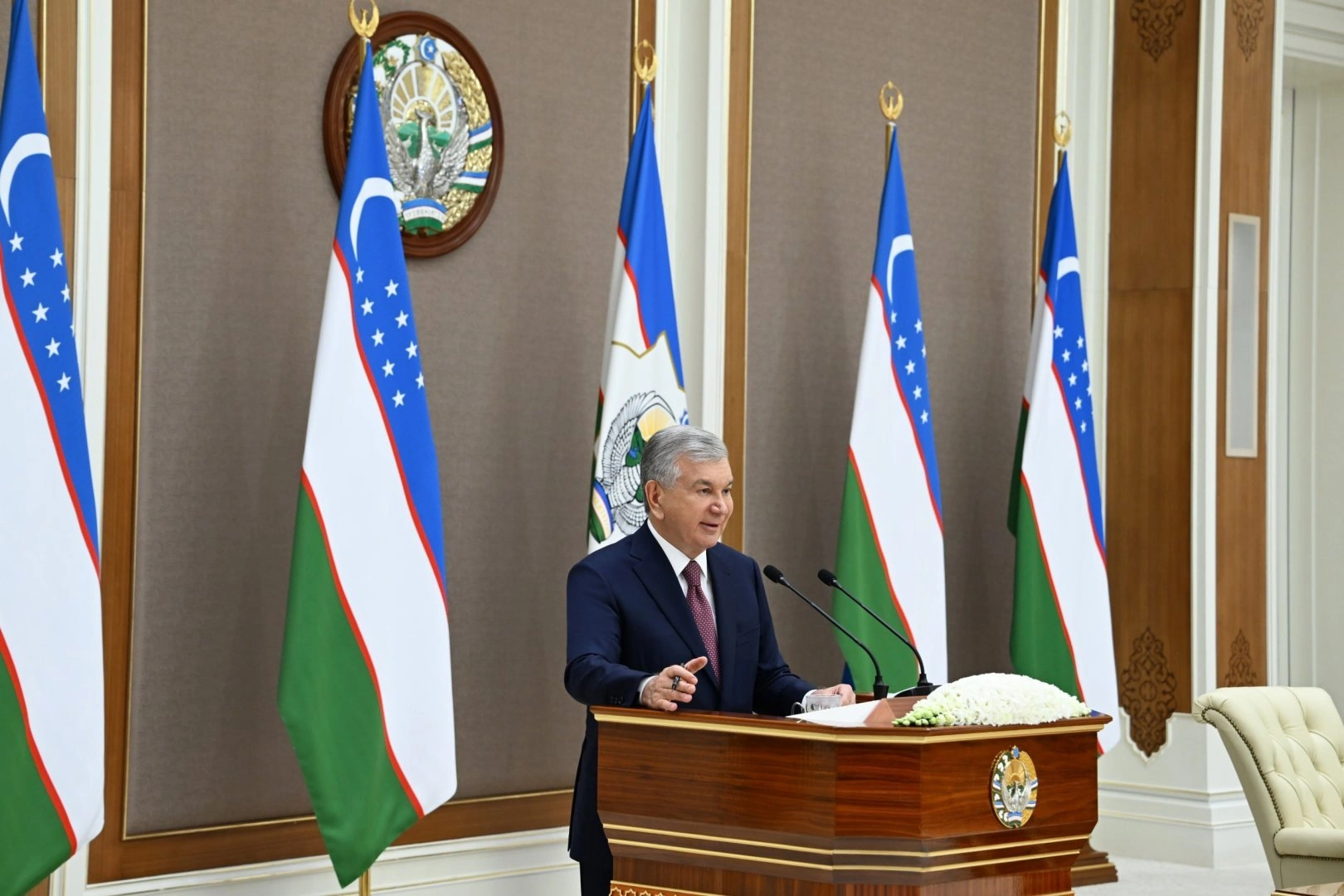
This was announced by the press service of the Uzbek President,
citing Mirziyoyev's remarks at the launch ceremony for the
Tashkent-Samarkand highway.
''An analysis by the World Bank shows that every dollar invested
in major transportation infrastructure projects in Uzbekistan can
yield up to five dollars in economic benefits,'' the press service
says, citing Mirziyoyev's speech.
According to Mirziyoyev, the new Tashkent-Samarkand highway will
raise economic activity in the regions to a new level.
The president stressed that the highway is expected to increase
the combined gross regional product of Tashkent city and the
Syrdarya, Jizzakh and Samarkand regions by about 3%, while creating
new opportunities for business and investment.
The project is also expected to generate thousands of jobs and
new sources of income for 13 districts with a combined population
of more than 2 million people.
In the course of the meeting, it was announced that logistics
centers, warehouses, industrial and agro-industrial enterprises,
commercial and service facilities, hotels, and tourism
infrastructure are expected to emerge along the route, helping
transform the corridor into a major economic zone.
The government also expects the project to stimulate domestic
industries by creating significant demand for locally produced
construction materials and engineering services, providing new
business opportunities for Uzbek companies during the construction
phase.
Mirziyoyev said the government is simultaneously advancing
several other strategic transport projects, including the recently
launched Khiva-Urgench highway, the Tashkent-Andijan highway, for
which an international tender is nearing completion, and a new road
linking Tashkent with Bostanliq District, whose design work is
close to being finalized.
''Today, on the eve of the 35th anniversary of our country's
independence, we are laying another solid foundation for
Uzbekistan's future, its economic stability and the prosperity of
our people,'' Mirziyoyev said before placing a ceremonial capsule
to mark the start of construction.
Speaking at the groundbreaking ceremony, Mirziyoyev said the
six-lane expressway marks the beginning of ''a new era'' for
Uzbekistan's road infrastructure as the government accelerates
investment in transport networks to support economic growth and
regional connectivity. ''The construction of the new
Tashkent-Samarkand highway is another major historic step in the
development of our country's transport infrastructure,'' he
said.
According to the president, Uzbekistan has carried out
construction and rehabilitation work on 128,000 kilometers of roads
over the past decade, investing 78 trillion soums (around $6.4
billion) in the sector. The new highway will stretch 282 kilometers
and include 92 bridges, 28 overpasses and 60 tunnel-type
crossings.
The statement said that the expressway will feature a monolithic
concrete pavement designed to withstand heavy traffic and
high-speed vehicles, allowing speeds of up to 150 kilometers per
hour on flat sections while incorporating modern safety systems and
digital traffic management technologies to reduce road accidents.
Once completed, the highway is expected to cut travel time between
Tashkent and Samarkand from five hours to about two and a half
hours, accommodate 60,000 to 80,000 vehicles per day, and lower
freight transportation costs by 20% to 24%, according to official
estimates.
The project is one of Uzbekistan's largest transport
infrastructure investments and forms part of the government's
broader strategy to modernize road networks, improve domestic
connectivity and strengthen the country's position as a regional
transit hub by enhancing trade efficiency, supporting tourism and
improving links between the country's largest economic centers.
The Tashkent-Samarkand expressway forms part of Uzbekistan's
broader effort to modernize its transport network and strengthen
regional connectivity. Beyond reducing travel times, the government
expects the project to stimulate industrial development, attract
private investment, and reinforce the country's position as a key
logistics hub connecting Central Asia with international trade
corridors.