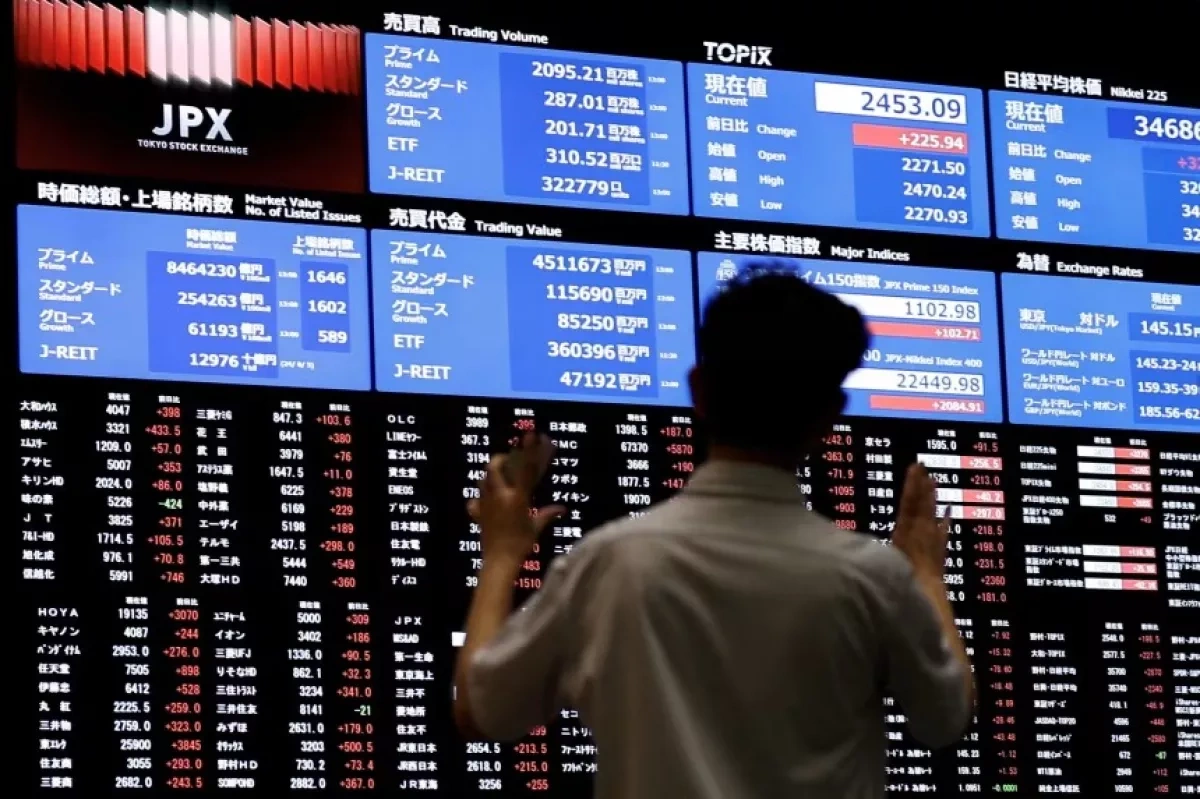
Asian stocks tumbled on Friday (June 26), led by a sharp sell-off in technology shares, as investors questioned lofty valuations and growing spending on artificial intelligence infrastructure, British media reports.
South Korea's benchmark Kospi index briefly halted trading after plunging 8%, triggering a circuit breaker designed to curb panic selling. The index later recovered some losses but still ended the session down 5.8%.
The decline followed a sharp drop in U.S. technology stocks overnight. Apple shares fell 6% on Thursday, their biggest one-day decline in more than a year, after the company announced price increases for iPads and MacBooks amid rising chip costs.
Investors are also scrutinising the massive sums being invested by major technology firms in AI-related projects, raising concerns about whether future returns will justify current spending levels.
Traders are reassessing the valuations of tech stocks, while some are taking profits after a rally in recent months, said senior partner David Makaryan from the Alpha Pacific Group, an investment firm.
"The long term investment case for AI remains compelling, but investors are becoming far more selective about which companies can justify the valuations the market has assigned to them," Makaryan said.
Japan's Nikkei 225 fell more than 4%, while shares of technology investor SoftBank dropped 12.5%. Major stock indexes in Taiwan and mainland China also posted steep losses.
South Korea's stock market has experienced heightened volatility in recent months. Friday's 20-minute trading suspension marked the third activation of the circuit breaker this week and the fifth occurrence this year.
Beyond Apple, Microsoft shares also declined after the company announced higher prices for its Xbox gaming consoles, citing increased component costs.
The latest moves have fuelled concerns that rising production costs could weaken demand for consumer electronics, potentially reducing demand for semiconductors and other technology components.
The high cost of commercialising AI tools is gradually being passed on to consumers, said analyst Raymond Woo from Kyoto University Innovation Capital.
That "naturally raises questions" about how quickly demand for such tools will match the investment into AI, and whether the valuations of tech stocks today are realistic, Woo said.
The sell-off underscores growing investor caution toward the technology sector after months of strong gains, with markets increasingly focused on whether AI-driven growth expectations can be sustained.
By Aghakazim Guliyev