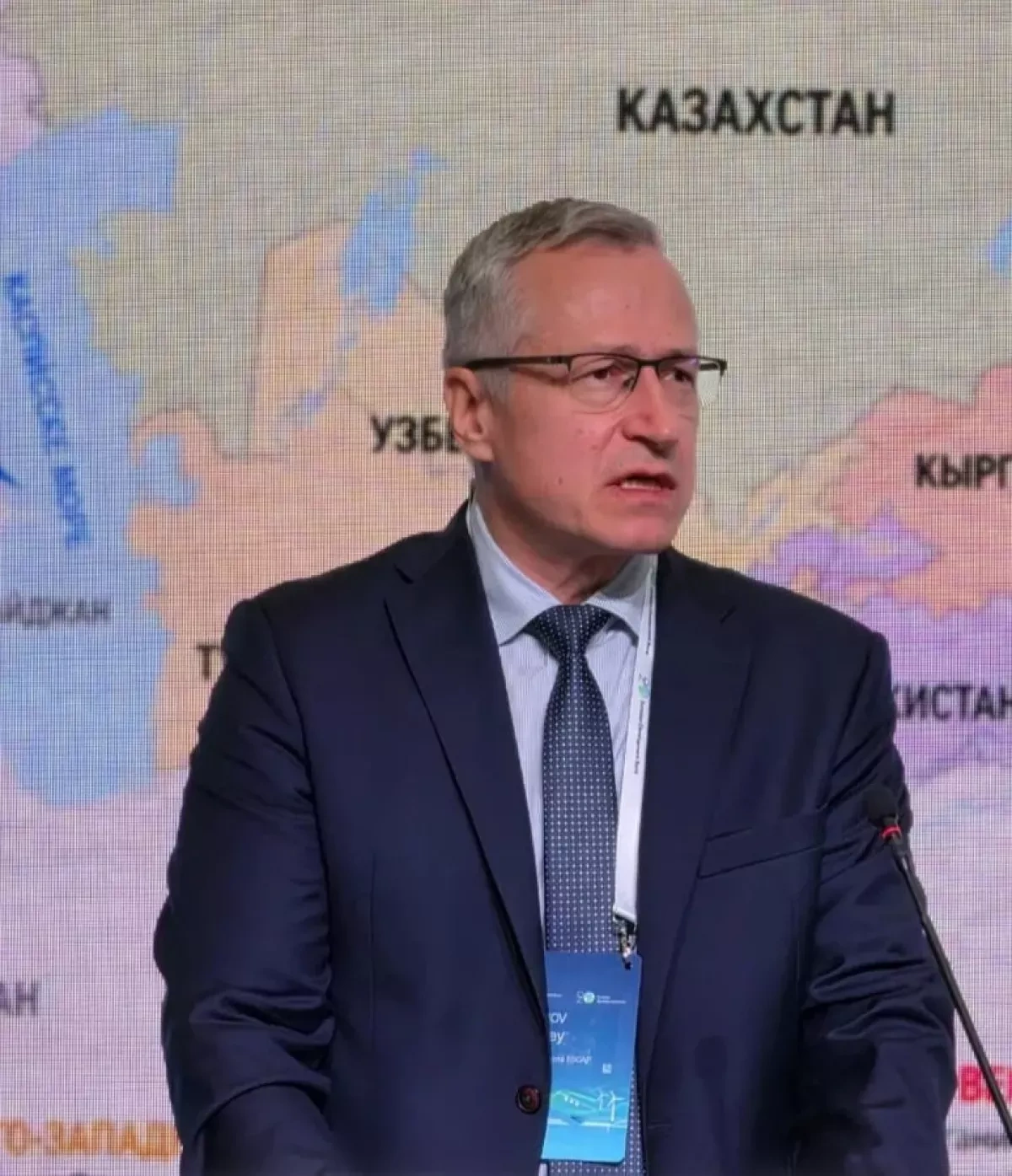
The Trans-Caspian Green Corridor, a major energy initiative linking Central Asia with Azerbaijan, has the potential to become a long-term strategic route for exporting surplus electricity generated from renewable energy sources, said a senior official from the United Nations Economic and Social Commission for Asia and the Pacific (ESCAP).
Sergey Tulinov, Project Manager at the ESCAP Secretariat, made the remarks during the Annual Meeting and Business Forum of the Eurasian Development Bank (EDB), Caliber.Az reports via local media.
Tulinov emphasized that the development of renewable energy in Central Asia should follow a phased approach, enabling the gradual expansion of regional cooperation and the creation of a mutually beneficial electricity market.
"The first stage is improving existing mechanisms of cooperation. The second is the launch of a pilot day-ahead market, which is actively developing in Europe. The third stage envisages the creation of a real-time electricity market and the development of ancillary services. The fourth involves establishing a common capacity market based on regional assessments of resource adequacy, recognition of the contribution of different resources to power system reliability, and mechanisms for remunerating available and delivered capacity," he said.
According to Tulinov, such a step-by-step strategy would help reduce the risks of premature decisions while laying a sustainable foundation for the integration of regional power systems.
"Central Asia can become an energy hub connecting several regional electricity systems, while the Trans-Caspian Green Corridor can serve as a long-term strategic option for exporting surplus renewable electricity," the ESCAP representative stated.
A feasibility study for the project is currently being prepared by Italian consulting company CESI. The cost of the study is estimated at approximately €1 million and is being financed through grants provided by international financial institutions.
To support implementation of the initiative, the system operators of Kazakhstan, Azerbaijan, and Uzbekistan established the joint venture Green Corridor Alliance on July 1, 2025. The company is tasked with coordinating project implementation and facilitating regular working meetings among experts from the participating countries.
Each of the three countries holds an equal 33.3% stake in the joint venture.
By Vafa Guliyeva