BAKU, Azerbaijan, June 24. Azerbaijan strongly
condemns responses published by France's Ministry for Europe and
Foreign Affairs on the website of the French National Assembly,
calling them "unfounded" and reflective of Paris's persistent bias
against Baku.
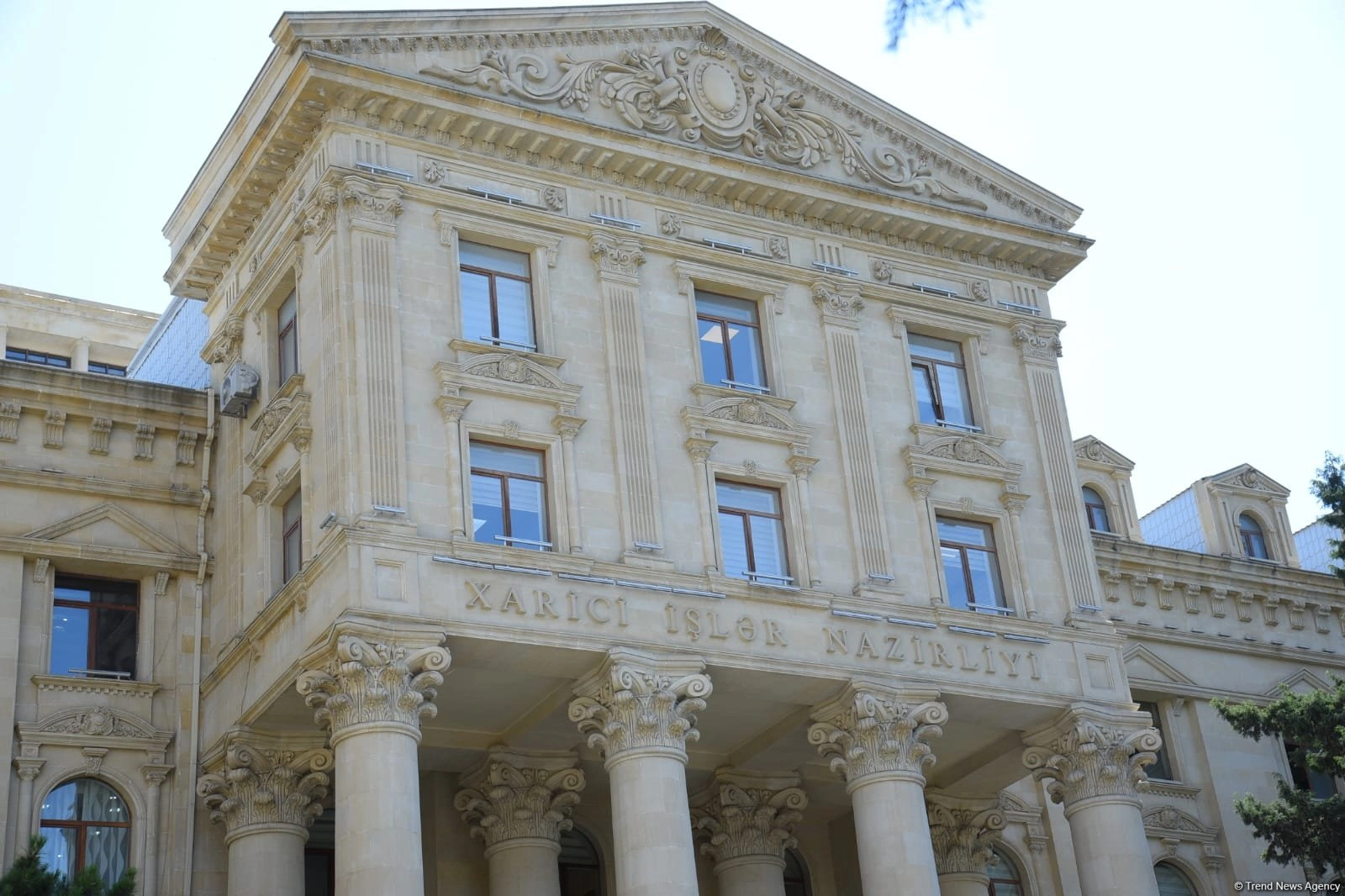
This was stated by Aykhan Hajizadeh, the press secretary of the
Ministry of Foreign Affairs, in his comment on the issue.
The responses, published on June 23, addressed questions raised
by members of the French National Assembly on a range of issues,
including support for Armenians "displaced from Nagorno-Karabakh,"
the "fate and release of Armenian prisoners," "Armenian religious
and cultural heritage," "human rights in the Azerbaijan-Armenia
peace process," and "human rights in Azerbaijan."
"We strongly condemn and reject these unfounded responses," said
Aykhan Hajizada, Spokesperson for Azerbaijan's Ministry of Foreign
Affairs. "They represent yet another example of France's
long-standing biased approach toward the Azerbaijan-Armenia
normalization process."
Hajizada pointed to what he described as a glaring imbalance in
the French document. While extensive attention was devoted to
Armenia's security and the situation of Armenian detainees in
Azerbaijan, the responses made no mention of Armenia's nearly
30-year occupation of Azerbaijani territories, the destruction
wrought during that period, the forced displacement of more than
one million Azerbaijanis, the fate of missing persons, or the
ongoing mine threat posed by Armenia.
The spokesperson also challenged France's credentials as a
neutral party in the South Caucasus. Despite presenting itself as a
supporter of the peace process, Paris has simultaneously deepened
defense cooperation with Yerevan and actively promoted the
activities of the EU Mission in Armenia (EUMA).
"France's expanding military cooperation with Armenia, its
provision of arms, and its overtly one-sided political stance do
not contribute to peace," Hajizada said. "On the contrary, such
actions encourage revanchist tendencies and undermine the
normalization process."
On the issue of Armenian detainees, Hajizada was unequivocal,
describing French allegations as "entirely detached from reality"
and dismissing attempts to question Azerbaijani court rulings as
"unacceptable."
"The Armenian-origin individuals currently detained in
Azerbaijan have been held accountable in accordance with national
legislation and international law for specific criminal offenses,"
he said. "The separatist leaders and other Armenian-origin
individuals whom Armenia, along with France, supported and
patronized for nearly three decades have been convicted and are
serving sentences for war crimes, ethnic cleansing, military
aggression, torture, and other grave offenses."
Hajizada also took aim at France's commentary on Armenian
cultural and religious heritage, calling it "particularly ironic"
given Paris's silence on the destruction of Azerbaijani mosques and
cultural monuments in Armenia and the formerly occupied
territories.
The spokesperson further questioned France's standing to raise
human rights concerns, citing what he described as Paris's own
troubled record — including corruption scandals involving
politicians, police brutality, violent crackdowns on protesters,
pressure on journalists, violations of migrants' rights, religious
discrimination, and violence in overseas territories, notably New
Caledonia.
"It is surprising that France attempts to lecture Azerbaijan on
human rights," Hajizada said.
Baku concluded with a broader rebuke of French policy in the
region, warning that Paris's approach was eroding its own influence
and credibility.
"Official Paris continues to struggle to accept the realities of
the region and, instead of contributing to lasting peace and
stability in the South Caucasus, persists in pursuing outdated and
one-sided political approaches," Hajizada said. "Such a policy
causes serious damage to France's credibility and standing both in
the region and as a reliable international partner."