BAKU, Azerbaijan, June 24. Multi-pillar pension
systems are generally more effective in achieving diverse pension
policy objectives and in distributing risks, according to
PensionsEurope, Trend's correspondent reports from the event.
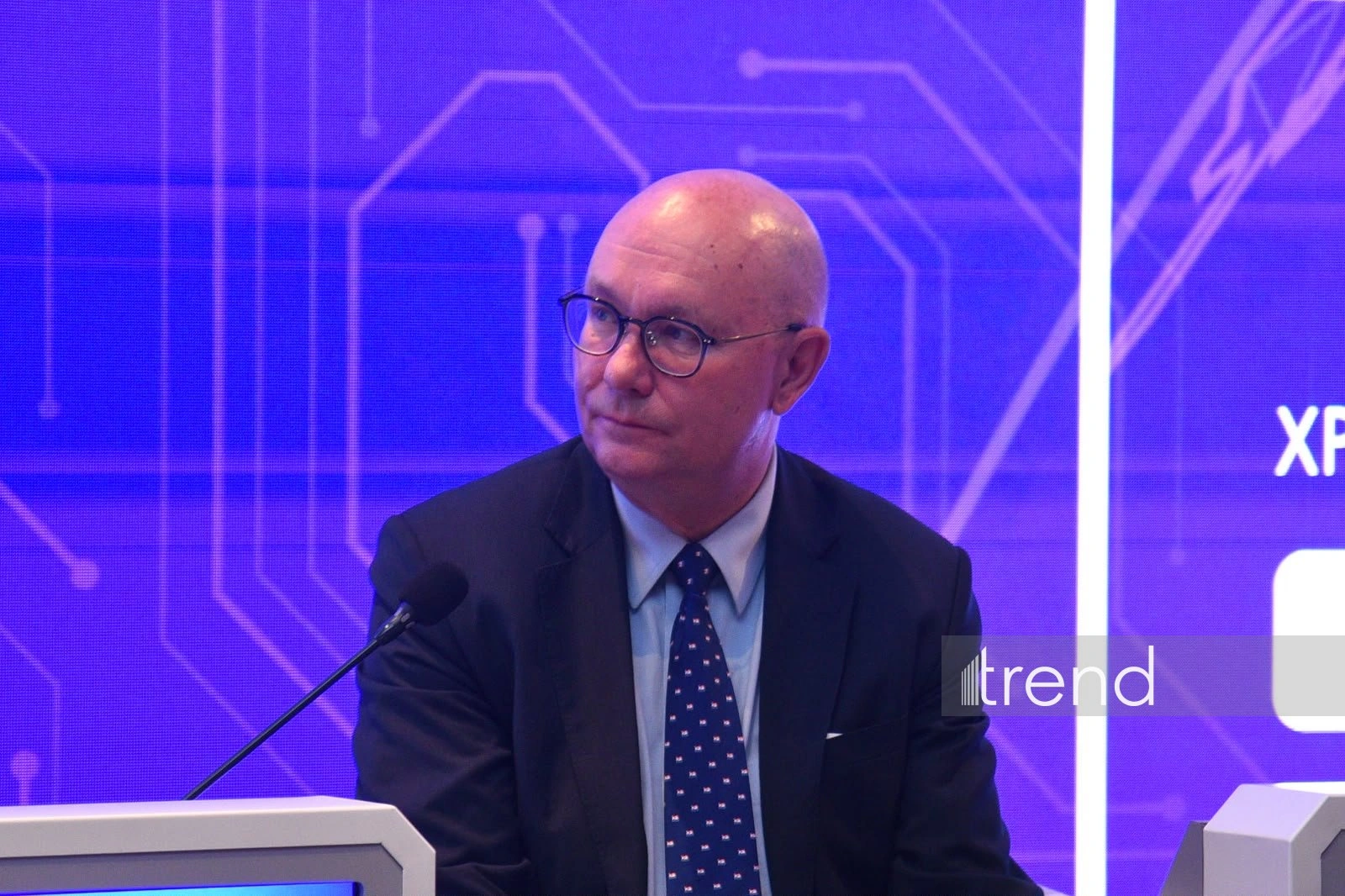
Speaking at the 11th Azerbaijan International Insurance Forum in
Baku, Matti Leppäla, Secretary General and CEO of PensionsEurope,
said that no single pension pillar can simultaneously meet all
policy goals, making the combination of different mechanisms
essential.
“State pensions primarily serve to prevent poverty and ensure
social solidarity. These elements are also clearly visible in the
Azerbaijani pension system. However, state pensions alone cannot
cover all socio-economic objectives. The OECD also emphasizes that
separate tools and mechanisms are required for each policy goal,”
he said.
Leppäla noted that occupational pensions linked to employment,
but outside the social security system, play a key role in income
replacement and long-term financing.
He added that individual pension schemes provide more flexible
saving opportunities, particularly as many workers in Europe remain
outside occupational pension coverage.
“The strongest pension systems diversify risks in the same way
investors diversify portfolios,” he said.
Leppäla highlighted that most advanced pension systems in Europe
are built on a three-pillar structure combining public pensions,
occupational schemes, and voluntary private savings.
He cited Switzerland and the Netherlands as leading examples.
Switzerland has a strong and stable occupational pension system,
while the Netherlands has the most developed second-pillar system
in Europe, covering more than 90% of the workforce and managing
over €1.5 trillion in pension assets, making it the largest funded
pension market in Europe.
He noted that while Switzerland’s system is mandatory, the Dutch
model is based on collective agreements between employers and
employees. However, he cautioned that such models cannot be
directly replicated elsewhere due to differences in labor markets,
institutional structures, and the role of social partners.
Leppäla also said that Sweden’s pension system is based on a
Notional Defined Contribution (NDC) model, which shares
similarities in some respects with Azerbaijan’s system. He added
that Sweden also has a strong occupational pension pillar built
through collective agreements over more than a century, alongside
widespread voluntary savings.
Finland’s system, he said, differs in structure as it combines
pay-as-you-go and partially funded elements within its
earnings-related pension system. Around 25–30% of pension
liabilities are funded, with assets managed by private pension
insurance companies.
Leppäla noted that Finland’s accumulated pension assets are
roughly equivalent to the country’s GDP. He also said the system is
fully universal, with no restrictions on pension coverage or
pensionable income, which reduces the need for a large second
pillar.
“Everyone is fully covered under the same system, which is why
the second pillar is less developed in Finland,” he added.