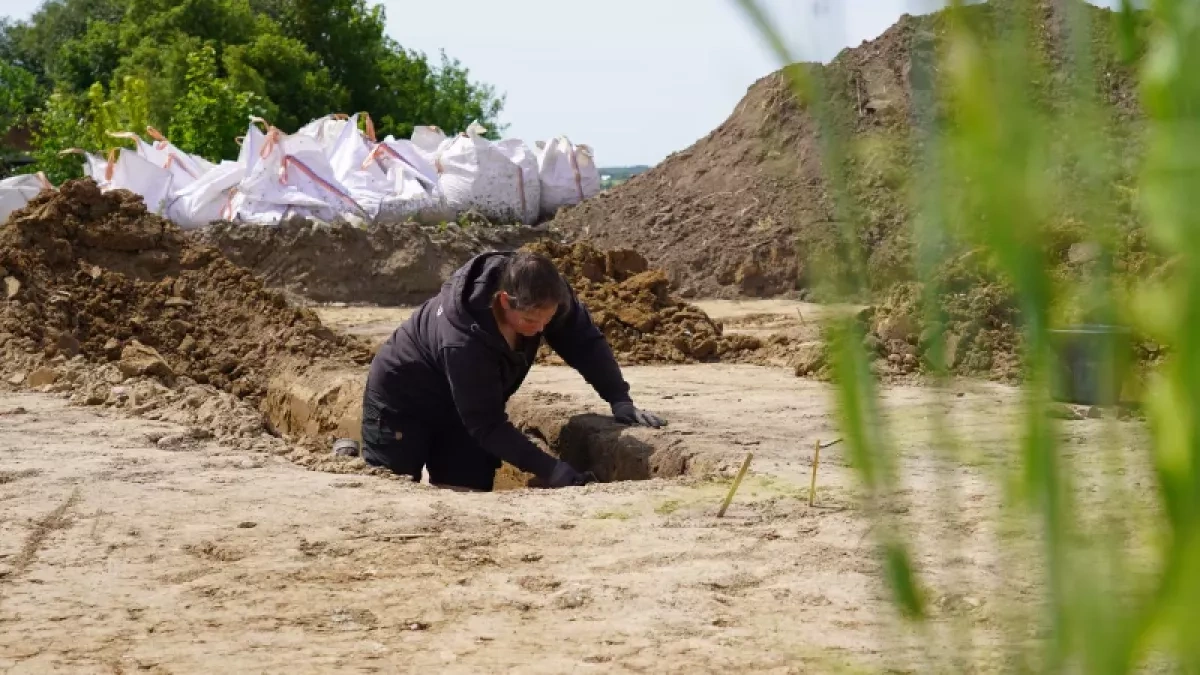
Archaeologists in Denmark have uncovered what appears to be one of the largest known Viking-era textile production sites, offering new evidence of the economic organisation and industrial capabilities of Scandinavian societies more than a millennium ago.
According to an NPR article, the site is located in Søften, approximately 10 kilometres north of Aarhus on Denmark’s Jutland peninsula. Covering around 100,000 square meters, the settlement dates from the late Iron Age to the early Viking Age, roughly between A.D. 600 and 950. Archaeologists identified an extensive production area for flax processing alongside more than 80 pit houses, semi-subterranean structures commonly used as workshops and dwellings during the period.
The analysis highlights the site’s unusually strong association with textile manufacturing. Archaeologist Liv Stidsing Reher-Langberg, who led the excavation, said that "we have a clear focus on textile production, which makes this settlement different from other kinds of settlements of this period."
Evidence recovered from the site includes spindle whorls, loom weights, silver coins, glass beads and pottery. Reher-Langberg explained that "we have spindle whorls, we have weight looms; that tells us about what has been going on in the pit houses." These findings suggest that textile production was a central activity within the settlement rather than a supplementary domestic craft.
Researchers also identified separate zones dedicated to production and craftsmanship, along with what appears to have been a single residential building. The arrangement suggests a degree of centralised oversight, potentially by an individual or group exercising control over resources and manufacturing activities. Such an organisation points to a more structured economic system than is often associated with early medieval societies.
The excavation followed decades of smaller discoveries in the area. Reher-Langberg noted that metal-detector enthusiasts had recovered several silver coins from the vicinity over the past 30 years. A preliminary excavation conducted before the construction of a new road and industrial zone revealed the scale of the site and prompted a larger investigation. According to Reher-Langberg, "we could see in the trenches that it just keeps on going, with these houses and pit houses and textile production features."
The piece argues that the significance of Søften extends beyond textile production itself. Moesgaard Museum historian Kasper Andersen described the discovery as "another piece in the puzzle" for understanding the economic, cultural and political structures that shaped the region during the Viking Age.
The settlement’s proximity to Aarhus, known in the Viking period as Aros, is particularly notable. The city functioned as a centre of royal authority and international trade, while another nearby Viking site discovered in Lisbjerg is believed to have housed members of the nobility. Andersen suggested that resources and goods likely moved from rural production centres such as Søften into wider commercial networks.
"When you have a production site of this scale, it cannot be only because of the local area. It needs to be understood as part of a greater network, a much bigger international perspective," Andersen said.
Future carbon dating and pollen analysis may provide further insight into the specific nature of textile production at the site. For now, the discovery reinforces the view that Viking societies relied on sophisticated systems of production, distribution and trade. Andersen argued that the findings demonstrate Vikings were "not just simple, uncivilised, barbaric hordes, rambling about Europe." Instead, the evidence points to a society capable of sustaining organised production chains and participating in markets that extended well beyond local communities.
By Jeyhun Aghazada