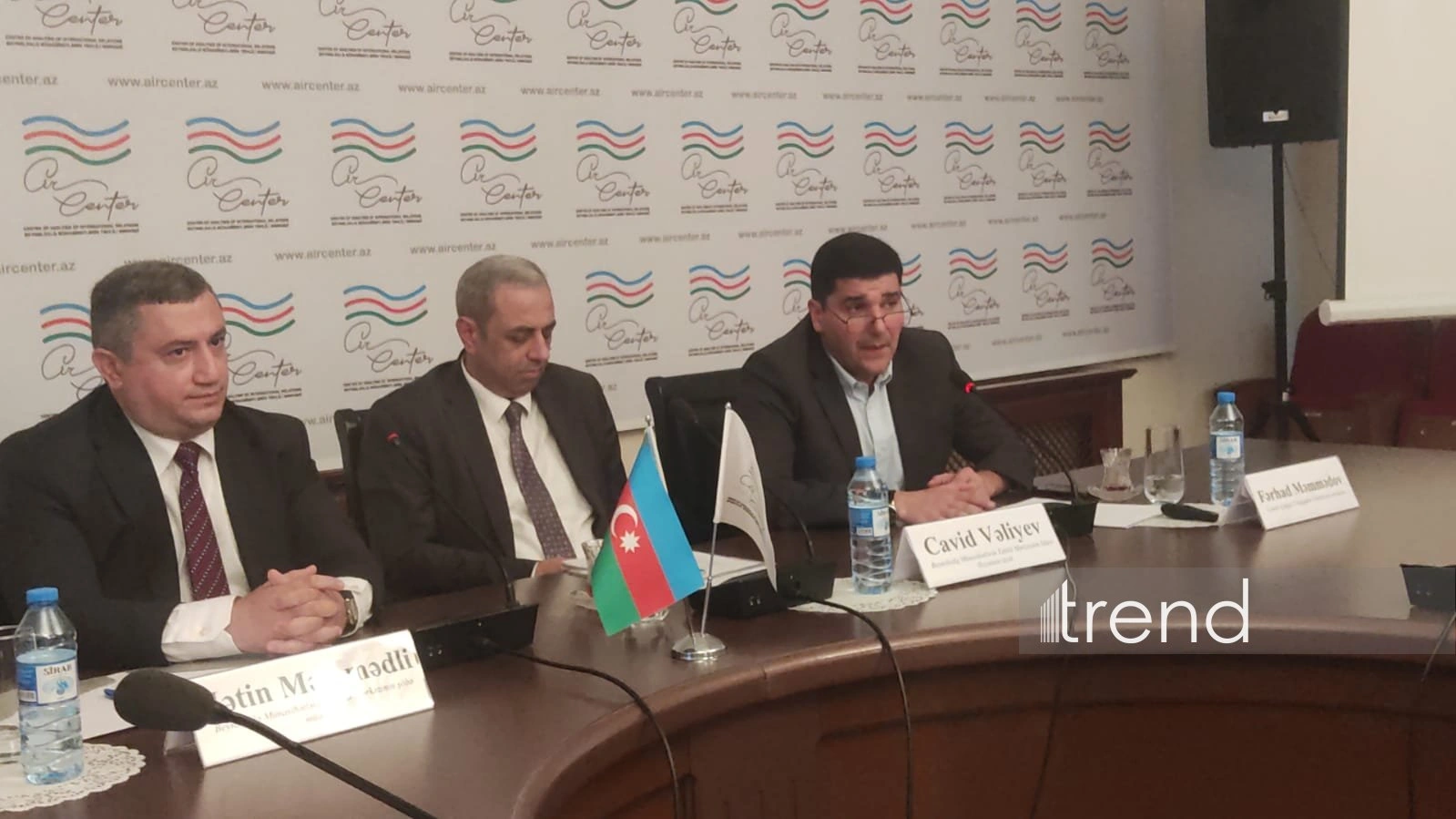
BAKU, Azerbaijan, June 24. Azerbaijan is a
leading state in the South Caucasus, and together with Georgia it
helps shape the region’s geopolitical and geoeconomic landscape
through jointly implemented projects, according to Farhad Mammadov,
Director of the South Caucasus Research Center, Trend's correspondent
reports from the event.
Speaking at a conference titled “Azerbaijan as a Middle Power:
Foreign Policy, Regional Influence and Global Participation,”
Mammadov said Azerbaijan holds a strong regional position from a
geopolitical perspective.
He noted that geopolitical identity allows countries to connect
with different regions despite their geographic location, adding
that even states with significant military or economic power cannot
always achieve all their objectives in international affairs.
“Some large and wealthy countries in Europe remain relatively
weak in terms of defense capabilities,” he said, emphasizing that
the criteria for defining a middle power are fluid and depend on
historical and geopolitical context.
Mammadov said that in today’s context, countries in Central
Asia, the South Caucasus, and the Balkans can include emerging
middle powers such as Azerbaijan and Kazakhstan.
He argued that both countries actively promote global
initiatives, act as mediators, resolve many issues independently,
and maintain balanced relations with major geopolitical
centers.
According to him, rather than applying a fixed theoretical
model, the concept of a middle power should be derived from the
practical behavior and foreign policy actions of states.
He added that one of the key characteristics of a middle power
is independent decision-making, including the ability to say “no”
to major powers when their policies conflict with national
interests.
“It is easy to say ‘yes’ to great powers, but the real test is
the ability to say ‘no’ when necessary and maintain that position,”
he said.
Mammadov also noted that Azerbaijan has opportunities to
cooperate with the United States, the European Union, China, and
other partners simultaneously, particularly in economic and
technological areas.
He said this balanced approach helps prevent dependence on any
single center of power and supports national development.
“Economic and technological progress is a vital factor for the
security of every state and the well-being of its citizens,” he
added.