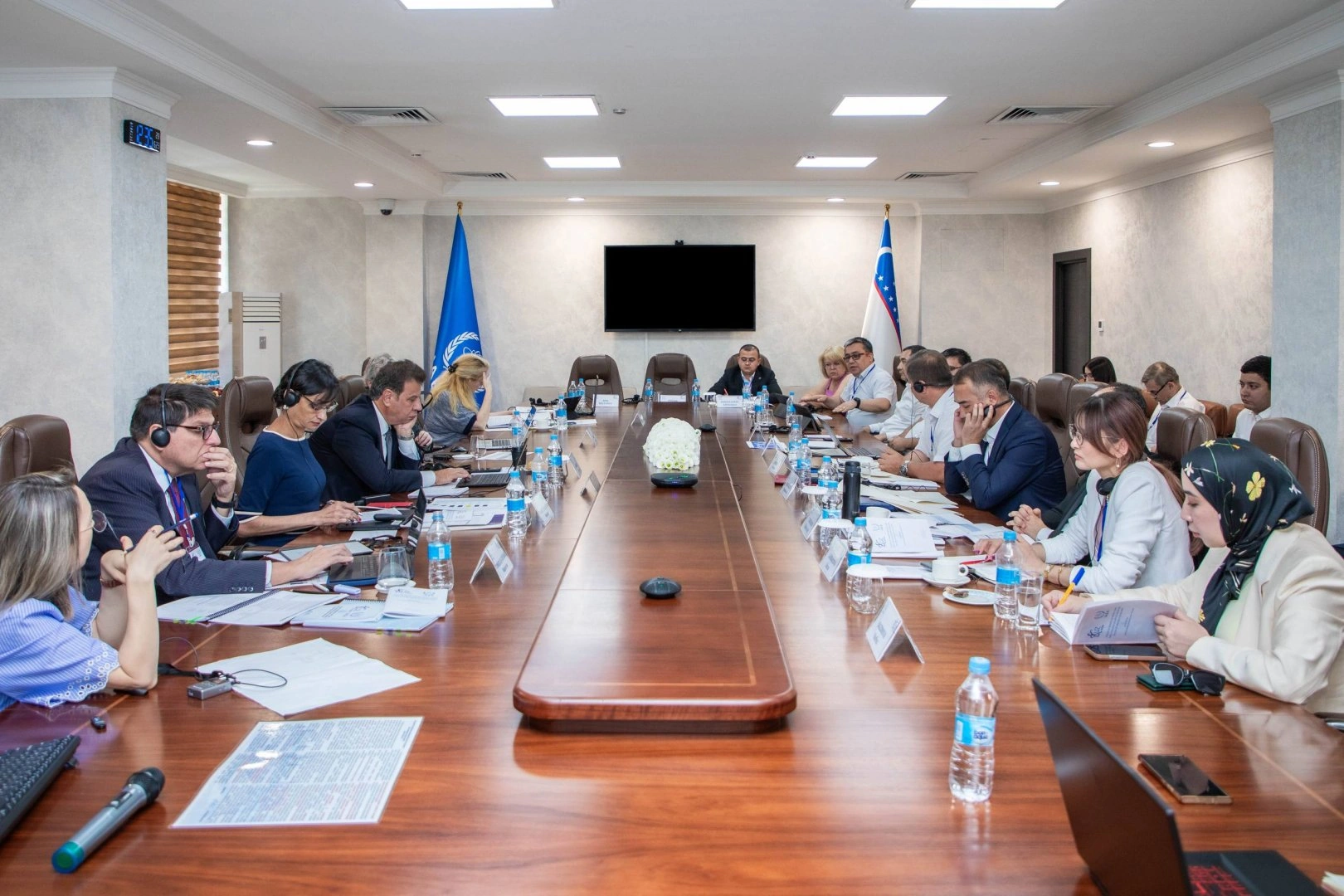
BAKU, Azerbaijan, June 24. The International
Atomic Energy Agency (IAEA) continued its INIR Follow-up Phase 2
mission in Uzbekistan, conducting a comprehensive review of the
country’s nuclear infrastructure as preparations advance for the
development of an integrated nuclear power plant project.
This was reflected in the statement by the Uzatom, following the
second day of the mission, IAEA experts and representatives of
Uzbek ministries and government agencies reviewed progress made
since the initial INIR assessment and discussed information
submitted by the Uzbek side.
The morning session focused on the areas of financing and
procurement as well as the legal framework supporting the nuclear
energy program. Participants held detailed discussions on the
development and completion of economic assessment documents related
to investments in Uzbekistan’s planned integrated nuclear power
plant. The review included analysis of international experience
from nuclear projects such as the Dukovany Nuclear Power Plant in
the Czech Republic, Rooppur Nuclear Power Plant in Bangladesh, Paks
II in Hungary, El Dabaa Nuclear Power Plant in Egypt, and Russia’s
Kursk and Leningrad II nuclear facilities.
The parties also examined efforts to establish a comprehensive
regulatory and legal framework not only for the nuclear sector
itself but also for related industries involved in project
implementation.
"The IAEA commended the Republic of Uzbekistan for acceding to
key international conventions, such as the Vienna Convention on
Civil Liability for Nuclear Damage, the Convention on Nuclear
Safety, the Convention on Early Notification of a Nuclear Accident,
and the Convention on Assistance in the Event of a Nuclear or
Radiological Emergency." the Uzatom said.
In the afternoon, discussions shifted to nuclear safeguards and
the broader regulatory framework. Particular attention was given to
Uzbekistan’s cooperation with countries possessing extensive
nuclear expertise, including China, Hungary, Belarus, and Italy.
Participants reviewed ongoing work on licensing procedures,
regulatory oversight, and the adoption of legislation necessary for
the safe development of nuclear energy.
The IAEA also commended Uzbekistan’s efforts to incorporate
international best practices into its regulatory framework through
technical cooperation programs. Experts highlighted the
establishment of the Scientific and Technical Center for Radiation
and Nuclear Safety, which serves as a technical support
organization for the national regulator.
According to Uzbek officials, IAEA specialists received
comprehensive responses to their inquiries and have begun preparing
an updated national report on Uzbekistan’s nuclear
infrastructure.
The mission follows discussions held on June 22 covering
national policy, nuclear safety, and management systems. The IAEA
delegation is led by John Haddad, head of the mission, and includes
mission coordinator Fanny Tonos Paniagua, technical cooperation
representative Anna Melkumyan, and international experts Marcelo
Gomes da Silva of Brazil and Anil Bölme of Turkey.
"The mission is scheduled to continue through June 26." the
Uzatom noted.
The INIR review is considered an important milestone in
Uzbekistan’s efforts to develop a civilian nuclear energy sector in
line with international safety, security, and non-proliferation
standards. The assessment provides independent expert guidance on
the readiness of national institutions, legislation, financing
mechanisms, and regulatory systems required for the successful
implementation of a nuclear power program. As electricity demand
continues to grow, Uzbek authorities view nuclear energy as a key
component of the country’s long-term strategy to diversify energy
sources and strengthen energy security while reducing carbon
emissions.