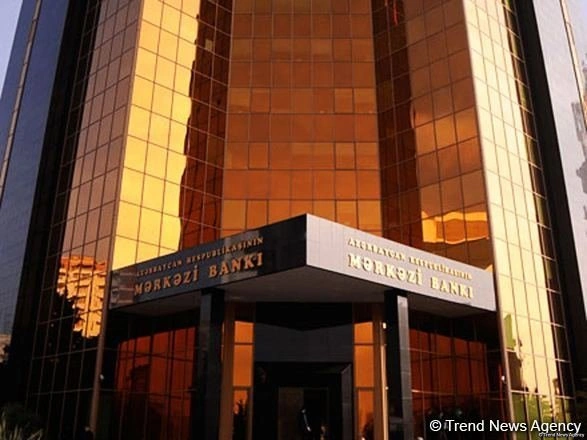
BAKU, Azerbaijan, June 24. The Central Bank of
the Republic of Azerbaijan has kept all parameters of its interest
rate corridor unchanged, leaving the discount rate at 6.5%,
according to a decision by the bank’s Board.
The lower bound of the corridor remains at 5.5%, while the upper
bound is unchanged at 7.5%.
The Central Bank said the decision took into account the
stabilization of actual and forecast inflation within the target
range, the geopolitical environment, global financial market
trends, and domestic macroeconomic conditions.
Annual inflation remains within the target range and is broadly
tracking the forecast trajectory under the baseline scenario. In
May 2026, 12-month inflation stood at 5.6%. Price growth was
recorded at 6.6% for food products, alcoholic beverages and
tobacco, 5.7% for paid services, and 3.9% for non-food goods.
Annual core inflation was also 5.6%.
In the first five months of 2026, supply exceeded demand in the
foreign exchange market across both cash and non-cash segments.
Exchange offices recorded net cash foreign currency purchases of
$311 million. The dollarization ratio of resident individuals’
deposits fell by 2.8 percentage points over the past 12 months to
27% in May 2026.
Money transfers into the country increased by 28.8% year on year
in January–May, reaching $560.1 million.
Amid reduced bank demand at currency auctions, the Central Bank
conducted purchase-oriented interventions. Foreign exchange
reserves increased by $1.2 billion, or 10.4%, in the first five
months of the year, reaching $12.7 billion.
External sector indicators remain positive. Customs data show a
foreign trade surplus of $7.2 billion in January–May 2026. The
Central Bank expects the current account surplus to improve further
by the end of the year, supported by higher global energy prices
and continued growth in non-oil exports.
Monetary policy tools are being applied in line with liquidity
conditions in the banking system and developments in financial
markets. Short-term money market rates continue to hover within the
interest rate corridor, close to the policy rate. The average daily
AZIR rate has remained in the 6.43–6.44% range since the end of
March 2026.
With excess liquidity in the system, the Central Bank has mainly
relied on 7-day deposit operations to keep the AZIR close to the
policy rate. As of end-May, these operations accounted for 88.7% of
the sterilization portfolio. Regular auctions of Central Bank notes
have also been conducted, with yields trending downward in May and
June. Excess liquidity is expected to increase further over the
remainder of the year.
The Central Bank maintained its forecast that inflation will
stay within the target range this year and next, though it noted a
rise in externally driven cost pressures.
It warned that recent shifts in the global economic environment
increase external inflation risks, including rising food and
fertilizer prices, higher transport and logistics costs, imported
inflation from trading partners, and a slower pace of nominal
effective exchange rate appreciation. The bank said it is
conducting further analysis on the persistence of these
factors.
Domestically, the likelihood of excessive aggregate demand
expansion remains low given current fiscal and monetary
conditions.
Future decisions on the interest rate corridor will depend on
inflation forecasts and macroeconomic trends under different
scenarios, as well as liquidity dynamics in the banking sector.
The Central Bank also announced a change in its 2026
communication schedule. The next decision on the interest rate
corridor and accompanying press conference will now be published on
July 31, 2026, instead of August 5. A meeting with experts is also
planned for the same day.