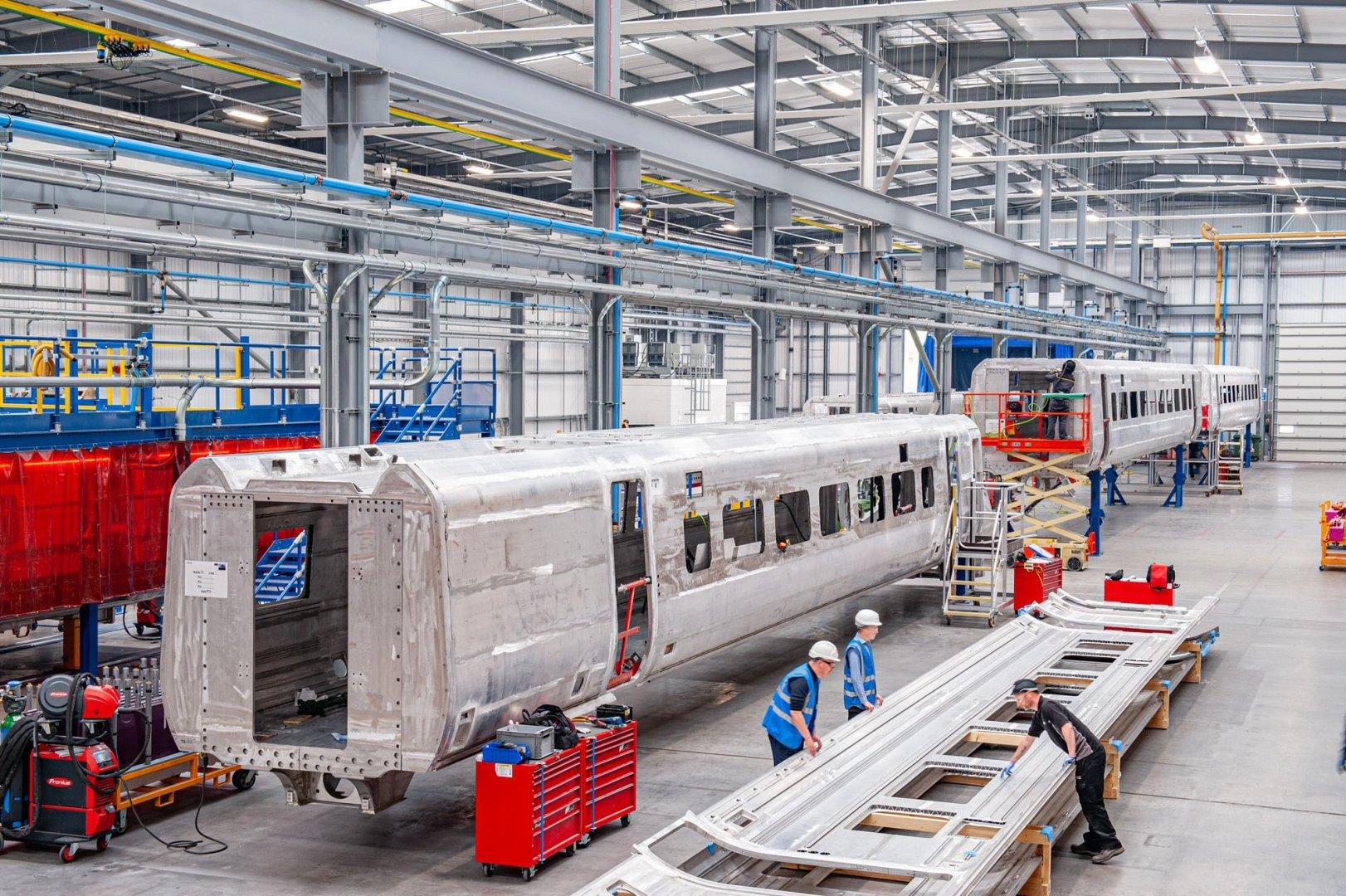
BAKU, Azerbaijan, June 16. Kazakhstan’s railway
engineering sector grew by 22.5% in production volume, according to
the country's Ministry of Industry and Construction.
This was published by the press service of the Kazakh government
in a press release following a cabinet meeting on June 16.
"Railway engineering has become one of the key sectors of
domestic industry in line with the instructions of the Head of
State to develop transport potential and strengthen the country's
industrial base," said Industry and Construction Minister Yersaiyn
Nagaspayev.
According to him, the sector accounts for 13% of Kazakhstan’s
total mechanical engineering output and currently includes 60
enterprises employing more than 8,000 people.
The minister noted that production reached 734 billion tenge
last year, reflecting a 22.5% increase compared to the previous
period.
The government said the sector’s growth is closely linked to
state programs aimed at renewing the national railway fleet and
expanding industrial capacity.
For reference, Kazakhstan’s railway engineering sector is
structured around several major industrial hubs developed in
partnership with leading global manufacturers. The key enterprises
include the Lokomotiv Kurastyru Zauyty (LKZ) locomotive plant in
Astana, operating in cooperation with U.S.-based Wabtec, which
focuses on the assembly and servicing of mainline freight
locomotives adapted for regional railway conditions.
Another major facility is the Alstom Kazakhstan Engineering
plant, which produces and maintains electric locomotives under
cooperation with France’s Alstom, supporting both freight and
passenger rail operations. In addition, the Stadler Kazakhstan
plant in Astana manufactures passenger railcars and commuter
trainsets in partnership with Switzerland’s Stadler Rail,
contributing to the modernization of the country’s passenger
rolling stock.
Overall, the sector is developing in tandem with the
implementation of large-scale rolling stock modernization programs
carried out by the national operator, Kazakhstan Temir Zholy, which
continue to stimulate demand and contribute to greater localization
in manufacturing and maintenance.