BAKU, Azerbaijan, June 19. Uzbekistan’s
Parliamentary Commission overseeing the implementation of the
country’s Sustainable Development Goals (SDGs) reviewed progress in
sustainable urbanization and identified key priorities for future
development.
This was reflected in the statement by the Senate of Oliy
Majlis, following the meeting held on June 18.
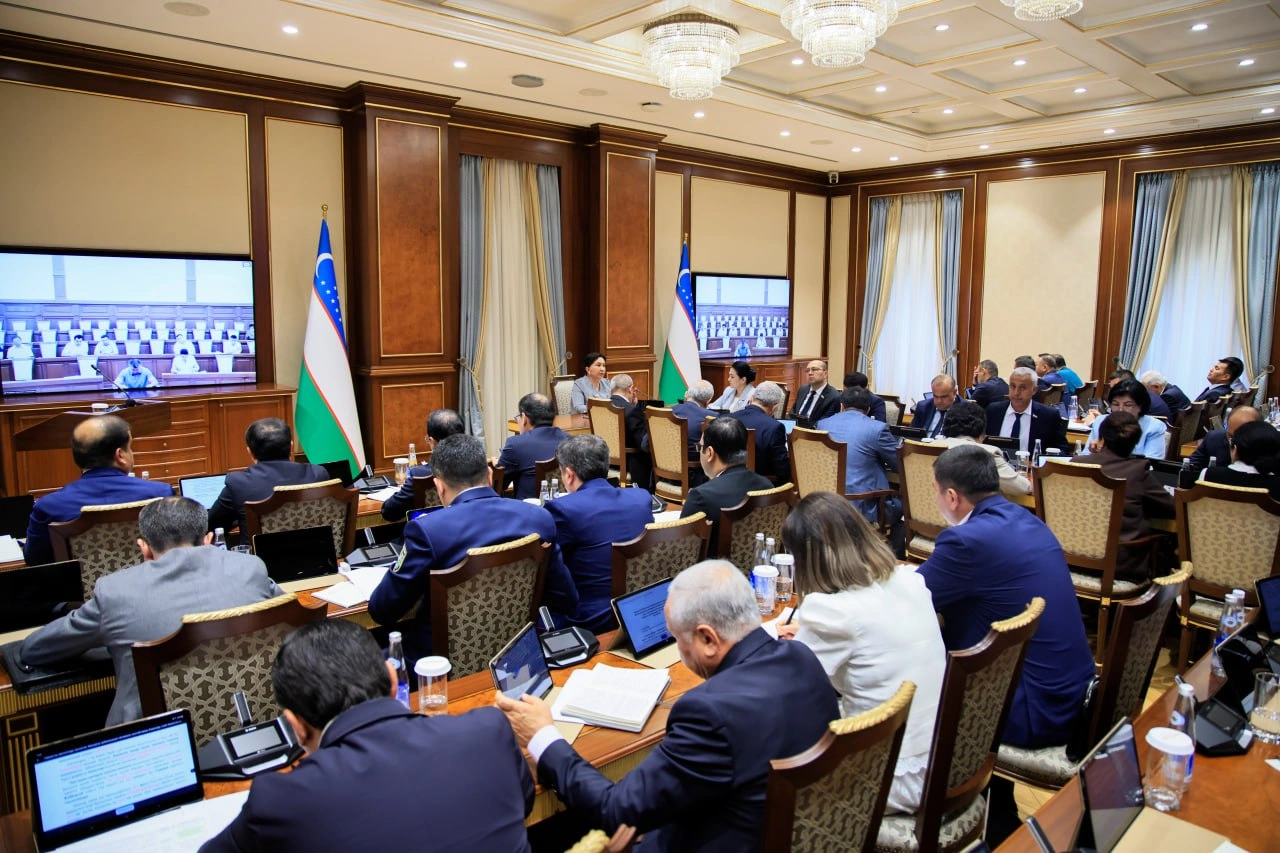
The session was chaired by Tanzila Narbaeva, Chairperson of the
Senate and Co-Chair of the Parliamentary Commission, and focused on
efforts to advance environmentally sustainable urban development
under the country’s national SDG framework through 2030.
During the meeting major reforms were highlighted, aimed at
improving living standards, expanding housing availability, and
strengthening urban planning. As part of these efforts, procedures
for obtaining construction permits have been significantly
streamlined, with the number of approval stages reduced threefold
and processing times cut by a factor of four.
The government has also revised 420 urban planning standards and
regulations, leading to the adoption of 140 new regulatory
documents designed to modernize the sector.
According to data presented at the meeting, favorable conditions
for private developers have contributed to the establishment of
nearly 10,000 new construction companies over the past nine years.
Annual housing construction has increased tenfold, reaching 238,000
apartments in 2025, while 61 residential complexes have been built
nationwide under the “New Uzbekistan” program.
It was noted that approximately 6,500 hectares of land and
600,000 square meters of buildings and facilities are offered
annually for business development. In addition, around 140 trillion
soms (about $12 billion) in financial resources are allocated to
support small and medium-sized enterprises, helping generate
employment for approximately 3.5 million people in construction,
building materials manufacturing, and related industries.
"Thanks to the reforms, the country's urbanization rate has
reached 51%." the senate said.
The commission also reviewed findings from studies conducted in
the Fergana, Andijan, and Namangan regions, where population growth
and urban development have accelerated in recent years.
Over the past five years, permanent population growth reached
11.4% in Namangan, 10.5% in Andijan, and 8.4% in Fergana.
Housing construction in the three regions has nearly tripled
over the past four years, while 26,000 citizens received mortgage
loans totaling 4.21 trillion soms (approximately $364 million)
through state-supported programs.
Under regional investment programs, authorities reported the
implementation of 9,160 industrial projects worth 123.9 trillion
soms (about $9.7 million), creating approximately 237,600 new
jobs.
The meeting also highlighted progress in renewable energy
development. Solar power facilities with a combined capacity of 144
megawatts have been installed in Andijan, 133.6 MW in Namangan, and
27.4 MW in Fergana.
As part of environmental initiatives, dozens of new green public
spaces were established through the “My Garden” program during
2024–2025, including 36 green parks and gardens in Fergana, 24 in
Namangan, and 23 in Andijan.
Urbanization rates in the three regions have reached 64.9% in
Namangan, 56.7% in Fergana, and 52.2% in Andijan, officials
said.
Despite the progress, commission members identified several
ongoing challenges, including the need for more comprehensive urban
planning documentation, safer and more inclusive public spaces,
expanded pedestrian and cycling infrastructure, modern traffic
management systems, and a better balance between industrial
development and environmental sustainability.
At the conclusion of the meeting, the commission approved a
resolution and a roadmap outlining further actions to support
sustainable urban development. Relevant ministries and government
agencies were tasked with implementing the agreed measures as
Uzbekistan continues work toward its 2030 development goals.