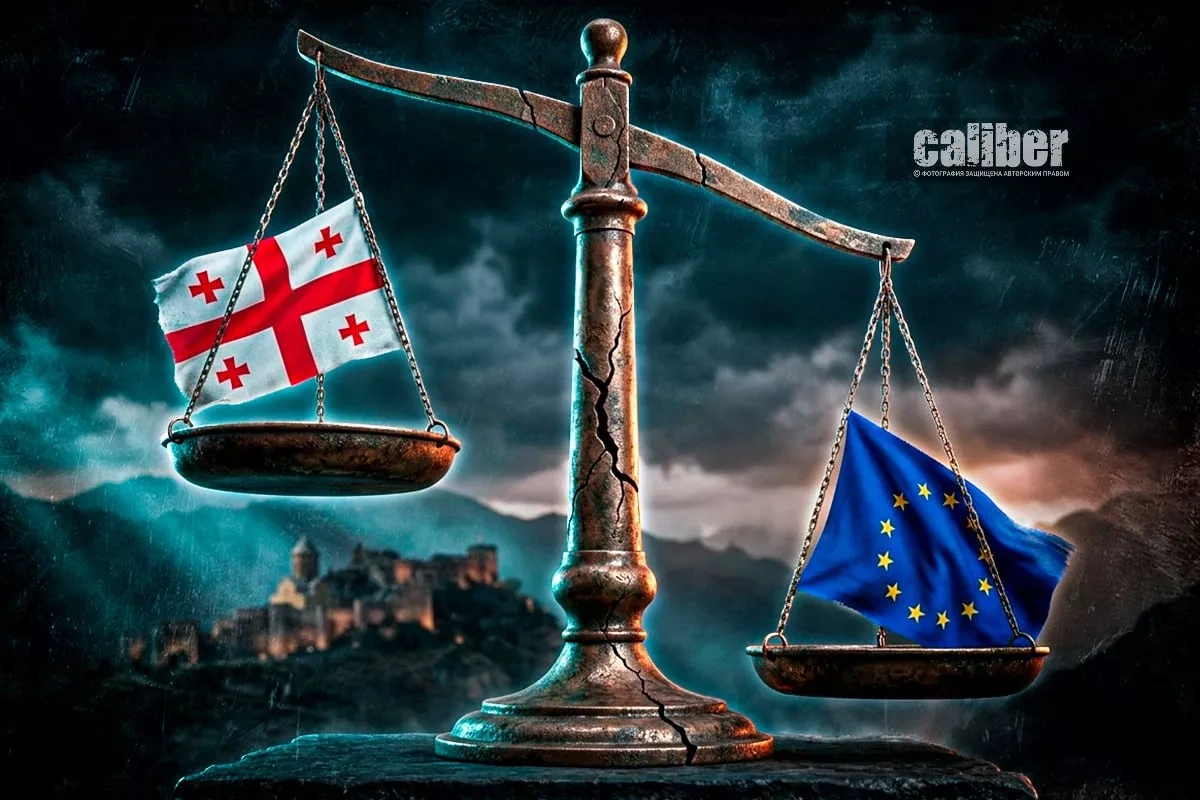
Brussels is considering the possibility of admitting countries to the European Union that would be required to comply with all of the bloc’s rules but would not be able to fully influence its decision-making process. This idea has already provoked a sharp reaction in Georgia.
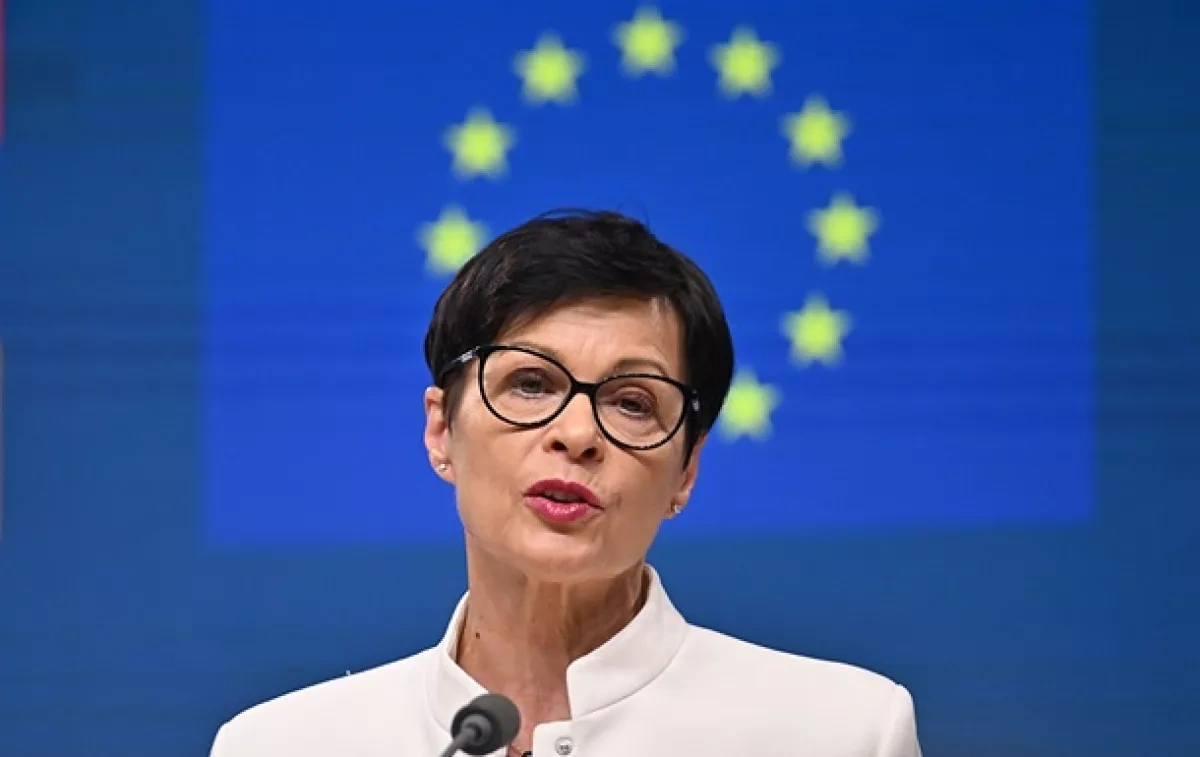
EU Commissioner for Enlargement Marta Kos, speaking in Luxembourg ahead of a meeting of EU foreign ministers, confirmed that veto rights for new members of the European Union would be limited. In addition, according to Kos, special response mechanisms would be applied to such countries in the event of reform backsliding or non-compliance with EU rules.
“If the new member state will follow the rules, nothing will happen. If they will not follow the rules, the safeguards will bite hard and this is the system we are building,” Marta Kos emphasised.
In Georgia, the prospect of becoming “second-class Europeans” has drawn reactions from representatives of both the government and the opposition. Within the Georgian political community, the question is being raised increasingly often: “Do we really need such a Europe, where Georgia would have obligations but not full rights?”
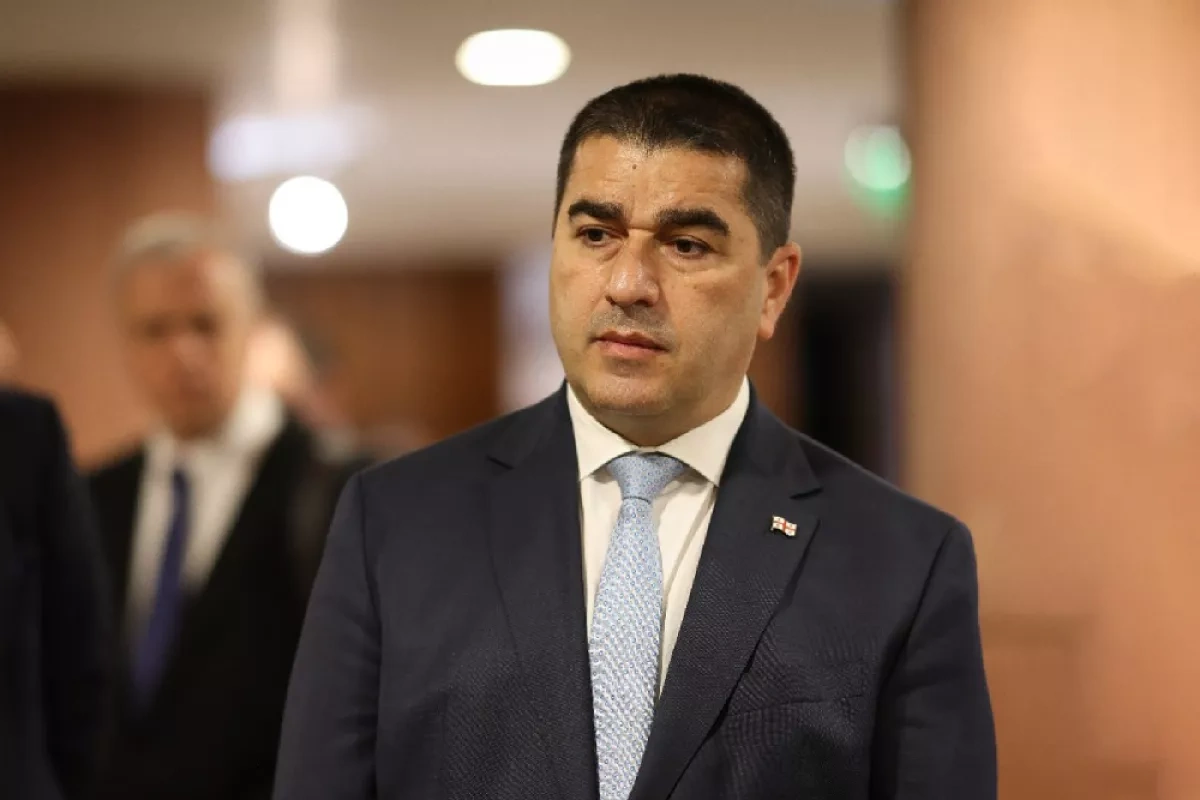
The Speaker of the Georgian Parliament, Shalva Papuashvili, openly stated that such “second-class” EU membership could pose a threat to Georgia’s national interests.
“Yesterday, the European Commissioner for Enlargement, Marta Kos, noted that the European Union is considering an idea under which future EU member states would not have the same voting rights as current members.
This would also mean that Georgia, like other new member states, when they move to the membership stage, would have obligations similar to those of other EU members, but would not be equal to them in terms of rights. In practice, this means that the EU would be able to make decisions on matters of existential importance to Georgia’s national interests without Georgia’s actual participation,” Shalva Papuashvili wrote on social media.
Formally, Brussels explains the idea of limiting the rights of new EU members as an effort to prevent a repeat of situations in which Hungary blocked EU decisions on sanctions against Russia and support for Ukraine. Brussels is also seeking to accelerate the accession of war-weakened Ukraine to the European Union, which is likewise cited as a reason for introducing the principle of unequal rights for new members. Critics argue that this appears particularly contradictory given that the same Brussels had previously insisted that Ukraine’s interests be taken into account.
“Many will probably recall the phrase often repeated by Brussels: ‘Nothing about Ukraine, without Ukraine.’ The idea being discussed in the EU is precisely the abandonment of this approach, not only toward Ukraine, but toward all candidate countries. Ukrainians have also recognized this clearly and have stated that they would not agree to second-class membership,” Shalva Papuashvili noted.
Papuashvili also emphasised that the European Union was originally conceived as a project based on rules that presupposed the equality of all members before those rules.
“Such trends show that the EU’s slogan, ‘United in Diversity,’ is increasingly being replaced in practice by the motto, ‘Do not deviate from the general line,’ meaning that you will only be admitted to the club if your voice serves a merely decorative function. […] The EU has always been a rules-based project, which implies that all members are equal before those rules. Brussels’ idea of introducing a legal segregation of countries radically changes this founding principle of the EU and transforms it from a union of equal nations into a union of ‘first-class’ and ‘second-class’ nations,” Shalva Papuashvili noted.
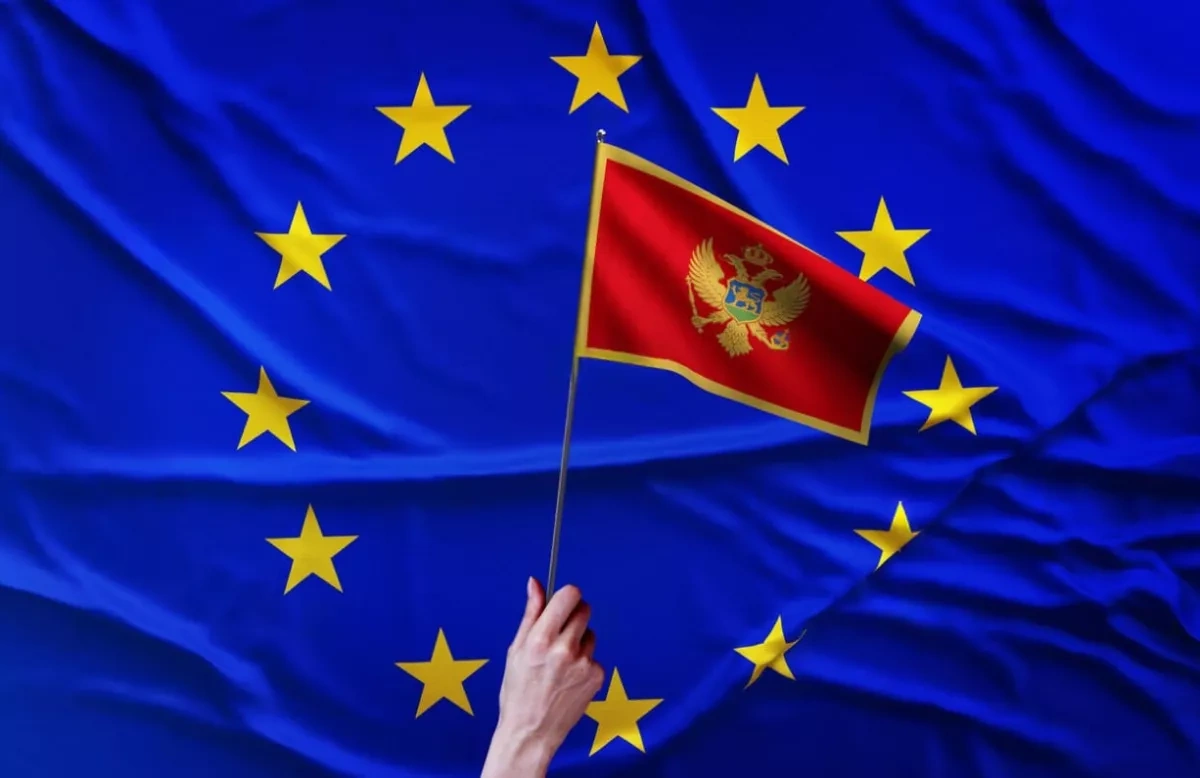
The proposal to limit the rights of new EU members emerged at a time when the question of admitting not only Ukraine, but also Montenegro—whose accession to the EU is being projected for 2028—as well as Moldova, has come to the forefront.
As for Moldova, President Maia Sandu recently voiced the idea of relinquishing statehood and joining Romania in order to accelerate the country’s
Montenegro was not only the smallest of the six republics of Yugoslavia; it was also the last to leave the Yugoslav state during its dissolution. From 2003 to 2006, Montenegro was part of the State Union of Serbia and Montenegro, a confederative arrangement that formally granted equal status to both constituent entities. In practice, however, political decision-making within the union was largely dominated by the Serbian leadership.
As a result, the experience of participating in a political union with limited influence over decision-making is not new for Montenegro. It is therefore no coincidence that Brussels has chosen to introduce a similar principle for new members in connection with Montenegro’s accession to the European Union. Marta Kos herself has indicated that Montenegro’s future accession treaty will serve as a model for subsequent candidate countries.
“What will be new this time, and this will be for the first time with the Montenegro accession treaty … will be how to safeguard that once a country is becoming a member of the EU, the rules will be obeyed after five, ten, fifteen years,” the European Commissioner stated.
As a result, for another 15 years—or possibly even longer—after accession, Montenegro would not enjoy full membership rights, while continuing to bear enhanced obligations and remain under special oversight from Brussels. Georgia, however, has no intention of relinquishing its statehood and sovereignty, as some politicians in Moldova have proposed, nor does it wish to become a “second-class” country within a united Europe, as critics argue is being contemplated for Montenegro. This point was also emphasised by Shalva Papuashvili.
“[…] if this idea is implemented, it will no longer be the union that Georgia applied to join four years ago. Nor will it be the union that is envisioned in Article 78 of Georgia’s Constitution.
Georgia has already had 70 years of experience with nominal and unequal membership in a union, and we do not intend to repeat that experience. If the post-Soviet countries that are already EU members allow such a change to happen, it will appear that their problem was not with the Soviet Union itself, but rather with who dominates such a union,” Papuashvili wrote.
It is no coincidence that Papuashvili recalled that Georgia had already experienced a 70-year period without full rights as part of another union—the USSR—and does not wish to repeat such an experience under “European conditions.” Given the European Union’s current militarisation, membership in the EU without full rights could have serious consequences for Georgia and the Georgian people.
Moreover, critics of the European Union’s current course argue that the Brussels bureaucracy is increasingly promoting a socio-political agenda that is rejected by parts of European societies and is becoming an additional source of division and disagreement.
At the same time, representatives of Georgia’s pro-Western opposition are concerned not so much about the prospect of limiting the country’s sovereign rights within the framework of the European Union, but rather about the possibility that the Georgian authorities, aware of such a prospect, may abandon the very idea of European integration.
For example, Salome Samadashvili, one of the leaders of the “Lelo — Strong Georgia” party, suggested in a social media post that Georgia’s formal application for EU membership should be withdrawn in the near future. She views this as the authorities carrying out “Russia’s task.”
“Preparations are beginning for canceling the application for membership in the EU.
The EU is currently discussing various models for Ukraine's membership. The goal is to quickly join. Nothing has been agreed yet, but a new strategy for ‘associate membership’ is also being discussed at the initial stage.
The Georgian Dream has decided to use this discussion for its own propaganda.
It is obvious that if in 2024 they deceived the Georgian people with the slogan ‘Towards a Europe with dignity’, Russia expects that now they will remain in power with the slogan ‘Far from a Europe without dignity’.
Georgia’s formal application for EU membership should be canceled in the near future - this is the Russians’ next task. ‘Step by step, the 'Kotsuri' propaganda is moving towards this goal’,” Salome Samadashvili wrote.
It is not surprising that representatives of the opposition view as a tragedy not the prospect of limiting their country’s sovereignty, but rather the possibility of abandoning the
Since 2024, their rallies have effectively been held under the slogans of a full and unconditional transfer of a significant part of powers to Brussels, with demands for the unquestioning implementation of all conditions put forward by the EU leadership. In essence, the issue of Georgia’s European integration under the terms being proposed today is increasingly turning into a question of preserving the country’s state sovereignty or giving up part of that sovereignty.
By Vladimir Tskhvediani, Georgia, exclusively for Caliber.Az