BAKU, Azerbaijan, June 18. Uzbekistan's
Transport Ministry and the Japan International Cooperation Agency
(JICA) met to discuss accelerating joint infrastructure projects
and expanding cooperation in road and tunnel construction.
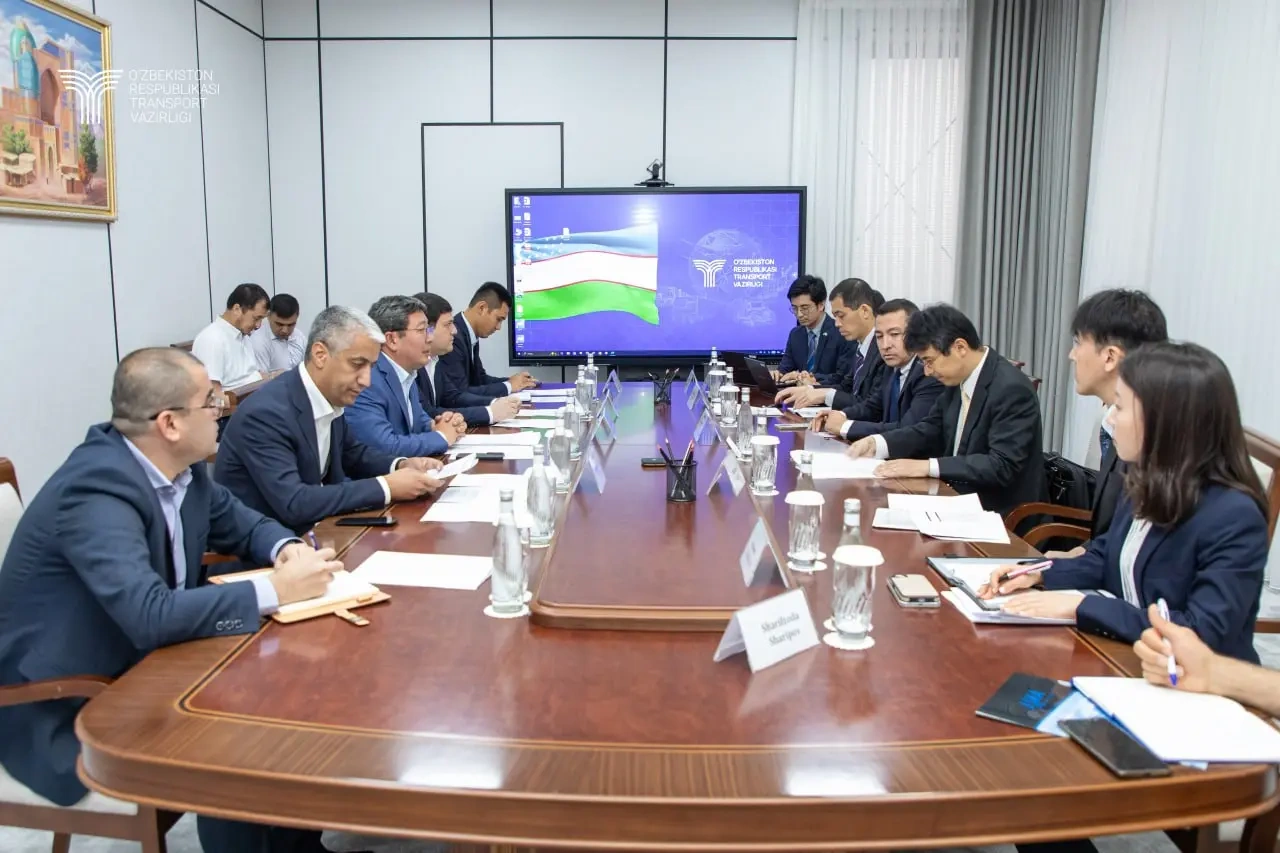
This was reflected in a statement by the Ministry of Transport
of Uzbekistan, following a meeting between the officials from
Uzbekistan's Transport Ministry and the Japan International
Cooperation Agency (JICA), which was held on the sidelines of the
fifth Tashkent International Investment Forum.
The talks brought together JICA Vice President Yoshikawa
Yoshifumi, Deputy Transport Minister Ilkhomjon Abdugafarov, and
Road Committee Chairman Jamshid Tursunov.
The sides reviewed the progress of ongoing projects financed
with JICA support.
"Specifically, these include projects to build a tunnel
connecting the Samarkand and Kashkadarya regions, to reconstruct 37
km of roads and 4 bridges in the Samarkand region, and to
reconstruct 45 km of roads in the Andijan region." the ministry
said.
Participants stressed the importance of implementing the
projects using optimal engineering solutions while ensuring
compliance with environmental and sustainability standards.
The officials also agreed on the need to accelerate practical
work on the projects and outlined next steps to advance their
implementation.
In addition, the parties discussed expanding professional
exchanges and developing proposals for grant-funded training
programs that would allow Uzbek road sector specialists to study
Japan's experience in the design, construction, and operation of
tunnels and highways. The initiative includes plans for joint
capacity-building courses aimed at strengthening technical and
scientific expertise in the sector.
The Japan International Cooperation Agency (JICA) was
established in 1974 and reorganized in 2008 into one of the world's
largest bilateral development agencies. Headquartered in Tokyo,
JICA provides official development assistance through loans,
grants, and technical cooperation programs, supporting
infrastructure, economic growth, environmental sustainability, and
human resource development in more than 150 countries and
regions.