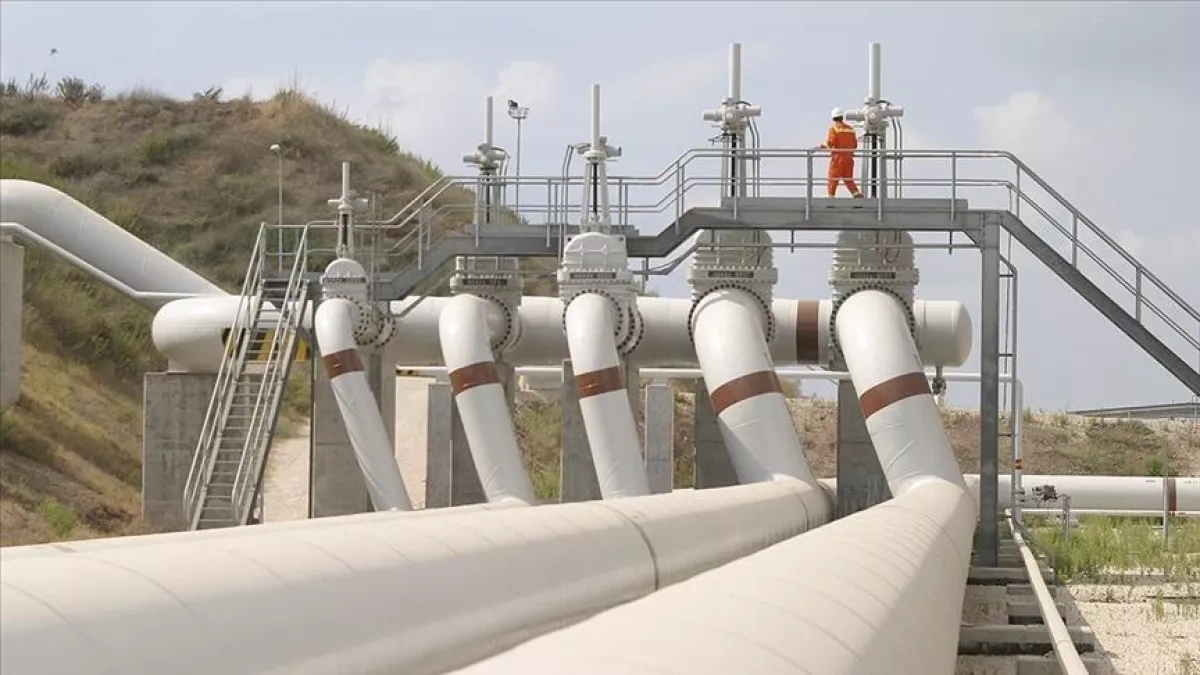
Oil shipments through the Baku–Tbilisi–Ceyhan (BTC) pipeline fell in the first five months of 2026, although Azerbaijani crude continued to account for more than four-fifths of total throughput, underscoring the country's dominant role in the region's main export corridor.
A total of 10.56 million tonnes of crude oil were transported via the BTC pipeline between January and May, down 9.4% from the same period a year earlier, according to local media, citing data released by Azerbaijan's State Statistics Committee.
The BTC pipeline accounted for 76.8% of all oil transported during the reporting period, maintaining its position as Azerbaijan's principal export route to global markets.
Crude produced in Azerbaijan represented 82.4% of total BTC shipments, equivalent to 8.7 million tonnes, while the remaining 1.86 million tonnes, or 17.6%, originated from Turkmenistan and Kazakhstan.
The volume of Azerbaijani oil shipped through the pipeline declined by 10.4% year-on-year, outpacing the overall drop in throughput. Shipments of crude from Turkmenistan and Kazakhstan also decreased, falling 4.05% compared with the same period of 2025.
The BTC pipeline, which transports crude from the Caspian region to Türkiye's Mediterranean coast, remains a critical artery for regional energy exports and a key source of transit revenues for participating countries.
By Aghakazim Guliyev