BAKU, Azerbaijan, June 18. TheInternational
Islamic Trade Finance Corporation (ITFC) will prioritize a private
sector-led growth in Azerbaijan in the next phase of engagement,
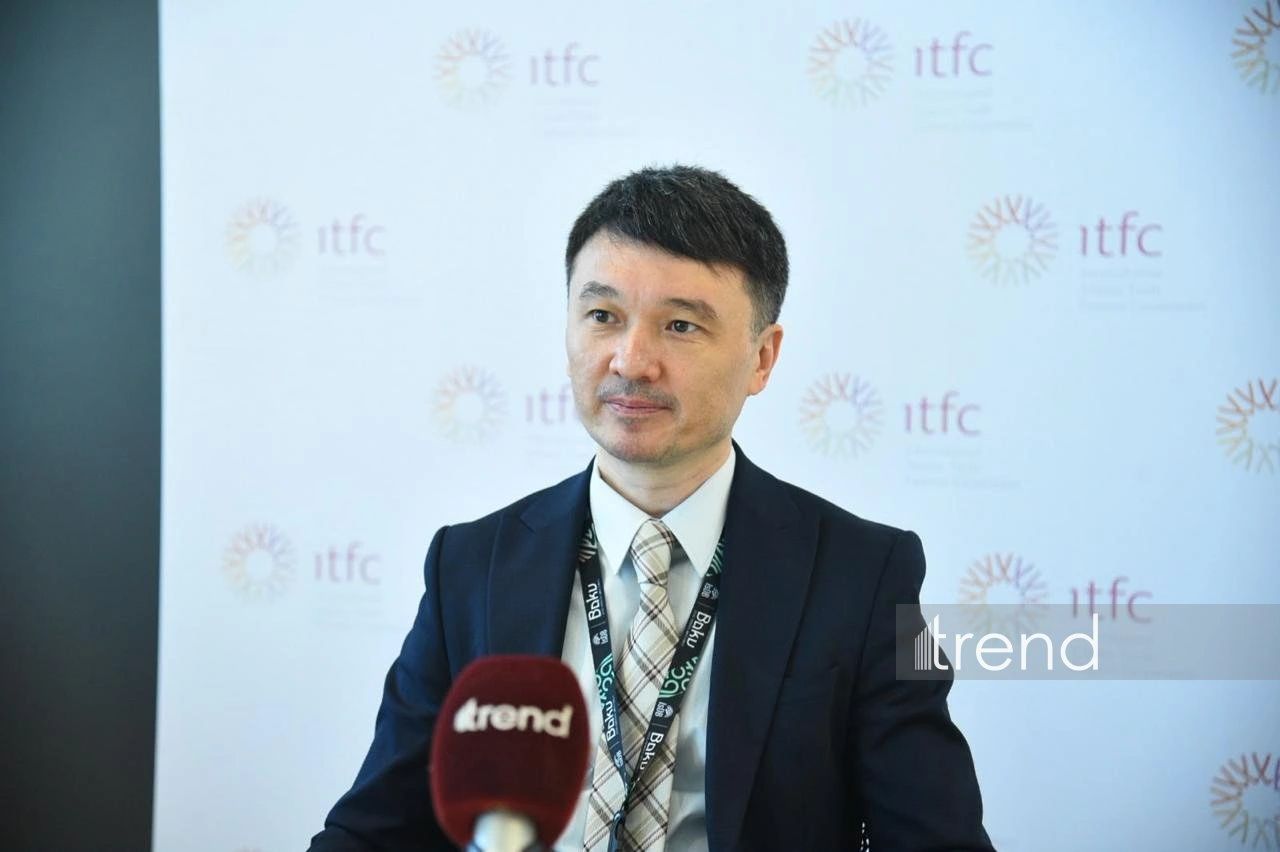
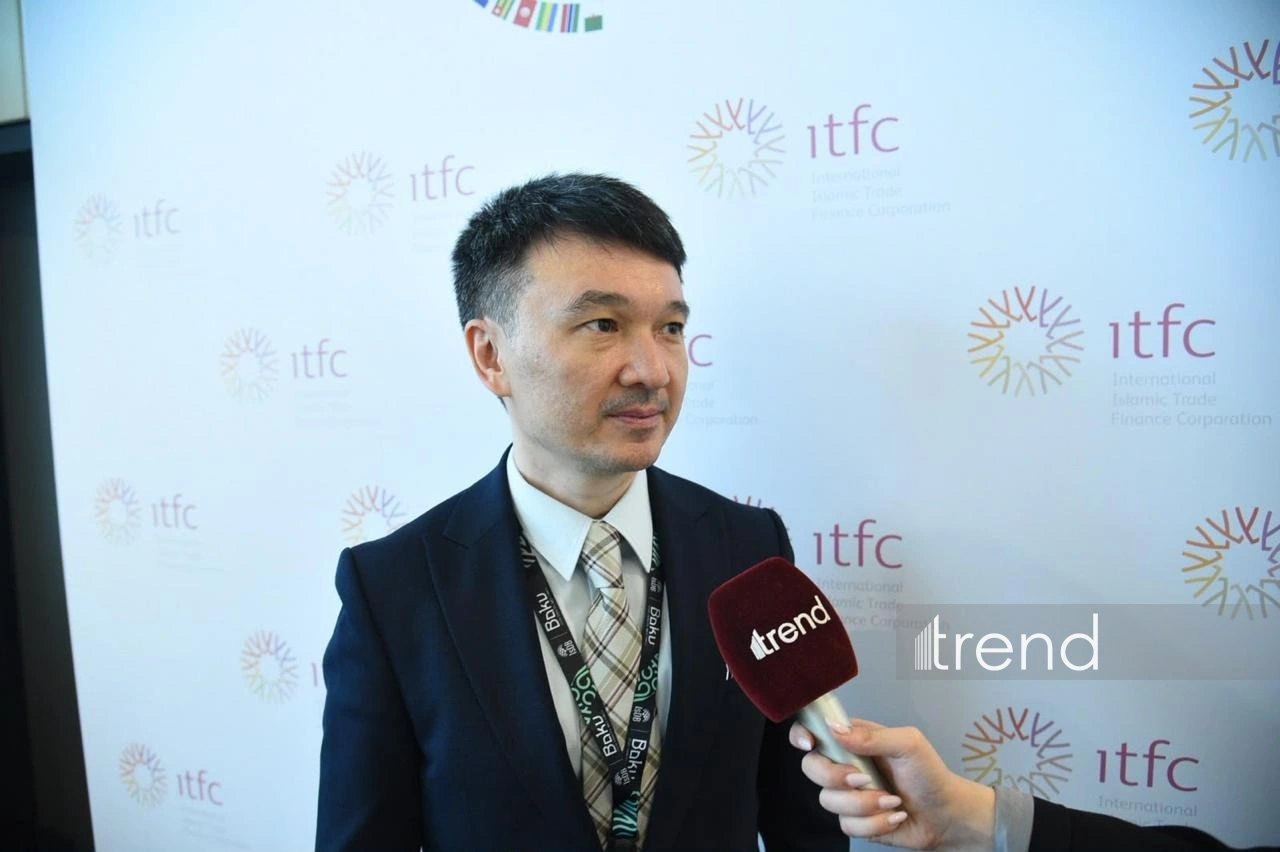
Anvar Nigmatov, Senior Manager, Trade Finance for Türkiye and CIS,
ITFC, said in an exclusive interview with Trend on the sidelines
of the Islamic Development Bank Group Annual Meetings 2026 in
Baku.
Priority sectors in the next phase of
engagement
Nigmatov noted that ITFC’s cooperation with Azerbaijan is
constructive and in a growing stage.
"Total financing for Azerbaijan stands at USD 103 mln, and
expected to grow over the coming years. Our engagement in
Azerbaijan to date has focused on private sector trade finance
support and capacity building, particularly in Islamic finance. The
next phase will prioritize private sector-led growth through
partnership with local banks, leveraging lines of finance and
syndications, as well as engagement with government and government
owned institutions," he said.
He pointed out that key sectors expected for expansion include
food security, energy, manufacturing and SMEs, reflecting both
national priorities and ITFC’s global portfolio.
"Instruments such as Murabaha-based trade finance, Letter of
Credit (documentary credit) and Letter of Credit confirmation, and
structured solutions will gain traction, especially considering the
latest initiatives of Azerbaijan towards development of Islamic
Finance. We also see increasing importance of trade facilitation.
Overall, our direction is toward integrated trade solutions
combining financing with development impact," Nigmatov added.
Medium-term trade finance needs of CIS
economies
ITFC's senior manager noted that CIS economies face growing
trade finance needs driven by supply chain reconfiguration and
shifting trade routes.
"Access to finance remains a critical constraint, particularly
for SMEs and cross-border transactions. Global estimates suggest a
significant trade finance gap, affecting developing markets
disproportionately. In CIS region, key gaps are expected in working
capital finance, risk mitigation, and export finance. There is also
a shortage of long-term funding for trade-enabling infrastructure
and logistics. SMEs remain underserved, with high rejection rates
and limited access to international banking networks. ITFC sees the
opportunity in bridging these gaps through partnerships with
governments, corporates and local banks," he explained.
ITFC's role in strengthening the Middle
Corridor
Nigmatov noted that ITFC can play a catalytic role in connecting
infrastructure with actual trade flows along the Middle
Corridor.
"While infrastructure investments are essential, trade finance
is critical to enable businesses to use these routes. ITFC
contributes through trade finance lines, syndications, and working
capital solutions for corridor users. The impact of these
instruments is maximized when they are coupled with a soft
component such as the trade related technical assistance and trade
development programs, extended by ITFC to partners and countries.
In terms of innovation, ITFC increasingly leverages resource
mobilization, and co-financing models and blend finance in some
instances. ITFC can contribute to enhancing the commercial
viability of the corridor and making it inclusive, especially for
SMEs," he added.
Enhancing trade connectivity between Türkiye and CIS
countries
ITFC's senior manager pointed out that Türkiye plays a central
role as a regional trade hub linking CIS markets to global supply
chains.
"ITFC has already provided significant financing in Türkiye to
support export-oriented SMEs. Going forward, we aim to strengthen
cross-border trade flows between Türkiye and CIS countries through
banking partnerships. This includes trade finance lines,
syndications, and LC confirmation services. At a regional level,
initiatives such as Trade Connect Central Asia+ (TCCA+) provide a
platform for cooperation between Turkiye and the region. Although
main target of the TCCA+ is Central Asia and Azerbaijan, ITFC will
engage Türkiye in the execution of the activities within the
initiative directly linked to trade," he said.
Nigmatov noted that these programs aim to improve trade
cooperation, reduce trade costs, and enhance connectivity.
"We also see potential for greater collaboration with
international partners to scale these efforts," he added.
New trade finance programs for CIS region and
Azerbaijan
Nigmatov pointed out that looking ahead, ITFC is focusing on
integrated trade solutions to support resilience and growth.
"This includes expanding SME-focused financing through partner
banks, combined with capacity-building programs. We are also
advancing initiatives in paperless systems, and supply chain
efficiency. Strengthening food and energy supply chains remains a
core priority. In addition, ITFC is working on enhancing
risk-sharing and mobilization mechanisms to crowd in private
capital. Regional programs like TCCA+ will continue to support
cross-border trade and value chain development. Overall, our
strategy is to combine financing, partnerships, and trade
development to enable sustainable trade growth," said ITFC's senior
manager.
He recalled that since 2024 ITFC re-activated its line of
financing business in Azerbaijan, where partnerships with two local
banks have been established to support the trade financing needs of
private sector, especially SMEs.
"ITFC has extended USD 10 million to Rabitabank and USD 10
million to Turanbank aimed at enabling the SMEs to access trade
finance solutions. We plan to strengthen our cooperation with other
banks, which is expected to further facilitate trade flows,"
Nigmatov concluded.