BAKU, Azerbaijan, June 17. Azerbaijan has
supported 51 out of 57 Organization of Islamic Cooperation (OIC)
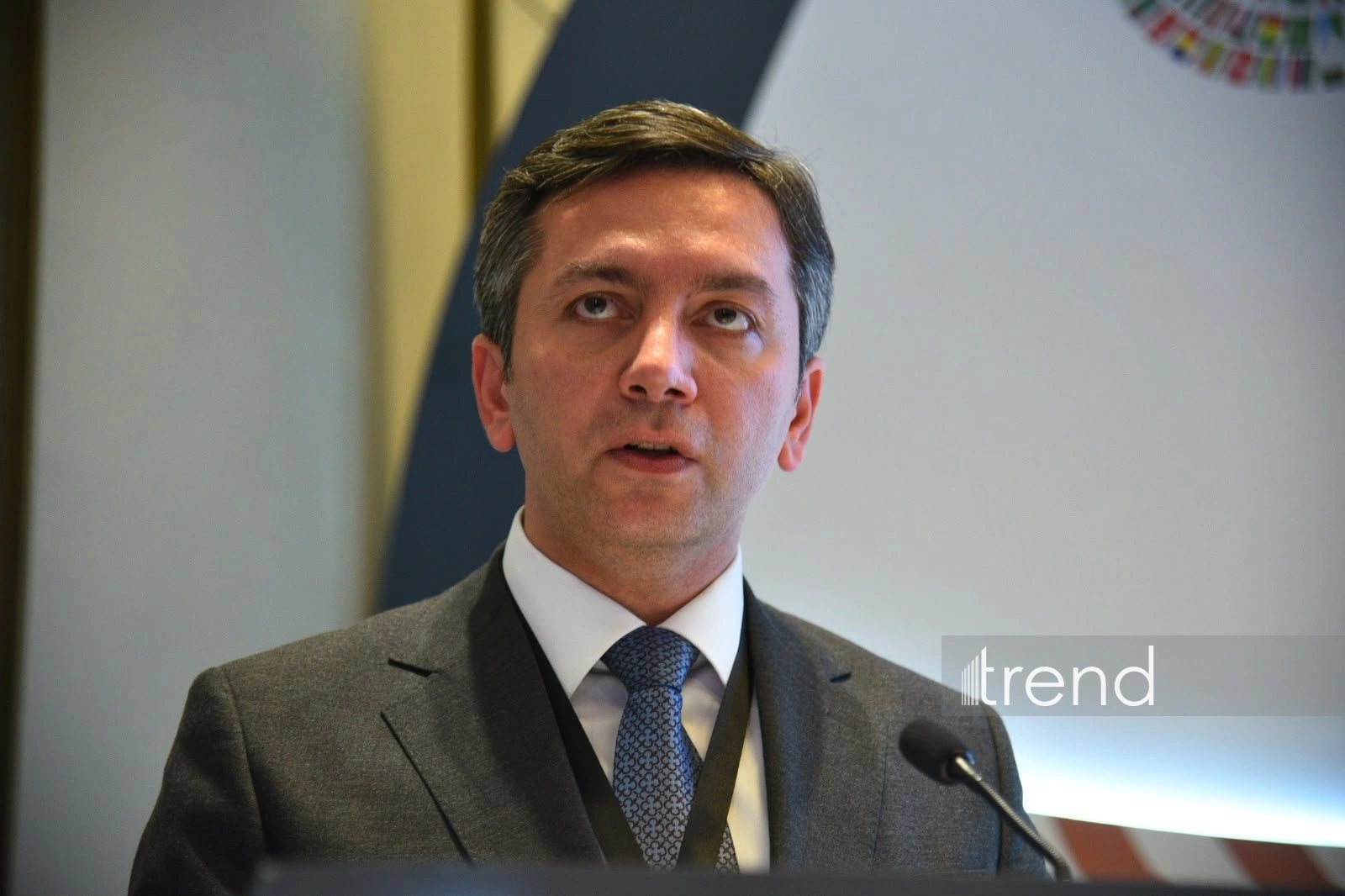
countries, Deputy Foreign Minister of Azerbaijan Yalchin Rafiyev
said, Trend's
correspondent reports from the event.
He made the remark at the event High-Level Dialogue "Capacity
Development over Aid" - AIDA-IsDB Partnership on International
Technical Assistance for Resilience and Sustainable Development,
organized within the framework of the 51st Annual Meeting of the
Islamic Development Bank Group in Baku.
"Azerbaijan considers capacity building, knowledge and
experience exchange, as well as supporting projects based on
countries' own development priorities as the main approach to
ensuring sustainability and sustainable development," the diplomat
explained.
According to him, within the framework of international donor
activities, Azerbaijan has provided financial, technical, and
capacity-building support to 43 of the world's 44 least developed
countries, 53 of the 54 countries of the African continent, as well
as 51 of the 57 member states of the OIC.
"This broad geography of activities reflects our belief that
sustainable development can be achieved through strengthening local
potential, exchanging knowledge and experience, as well as
supporting projects based on countries' own development
priorities," said Rafiyev.
The deputy minister emphasized the expansion of cooperation
between the Azerbaijan International Development Assistance Agency
(AIDA) and the IsDB.
"Our joint activities are being developed in four main areas:
digital innovations and information and communication technologies,
health and vocational education, climate resilience, and
humanitarian assistance. This cooperation is particularly focused
on African countries, as well as Syria, Afghanistan, and other
vulnerable states. We hope that today's discussions will contribute
to the further development of the partnership and the
identification of practical areas of cooperation," he noted.
Rafiyev also highlighted the role of Azerbaijani institutions
operating in this direction.
"International interest in the ASAN service model, which has a
long track record in providing citizen-oriented public services, is
growing. The launch of the ASAN service center in Pakistan earlier
this year is an important milestone, and we are pleased with the
interest and cooperation shown by our Pakistani partners," he
said.
Concurrently, the deputy minister stressed that the challenges
facing developing countries vulnerable to climate change are no
longer limited to climate issues.
"Many countries are simultaneously facing challenges such as
development needs, lack of institutional capacity, humanitarian
pressures, and increasing demand for sustainable public services,"
he said.
Rafiyev recalled that within the framework of COP29, Azerbaijan,
together with its partners, launched the "Baku Call for Climate
Action for Peace, Relief and Recovery."
"One of the main outcomes of this initiative was the
establishment of the Baku Climate and Peace Action Center to
provide practical partnerships, technical assistance, capacity
building, and project development support to climate
change-vulnerable countries," he noted.
According to him, the main goal of the center is to help
countries translate national priorities into investment-ready
projects.
"We understand that access to financial resources depends not
only on the availability of funds, but also on the institutional
capacity and technical knowledge required to develop quality
projects," the deputy minister underscored.
Rafiyev cited the cooperation with Guinea-Bissau as a practical
example of this approach.
"We have recently started practical cooperation with the
government of Guinea-Bissau within the framework of the Baku
Center, and we expect to achieve concrete results from this
partnership in the near future," he said.
The official noted that one of the panels held within the
framework of the event was dedicated to increasing access to
climate and development finance through capacity building,
institutional development, technical assistance, and
partnerships.
"However, financing alone isn't enough. Therefore, the second
panel will focus on the development of information technologies and
management skills for the effective organization of public
education and health services. Investments in digital
transformation and strengthening institutional capacity not only
improve the quality of services, but also strengthen the ability of
states to respond to development and humanitarian challenges," he
added.
According to Rafiyev, access to finance and the availability of
institutional capacity to effectively use these funds are closely
related factors.
"By strengthening these foundations simultaneously, it is
possible to achieve more sustainable and long-term development
results. Azerbaijan will continue its activities to promote
practical cooperation, strengthen partnerships, and support
solutions based on the needs of countries," he emphasized.