BAKU, Azerbaijan, June 17. The participation of
the Islamic Corporation for the Insurance of Investment and Export
Credit (ICIEC) as a guarantor significantly increases the
confidence of private insurers and investors, opening access to
billions in financing for infrastructure projects in developing
countries, Global Head of Credit & Political Risk at Specialist
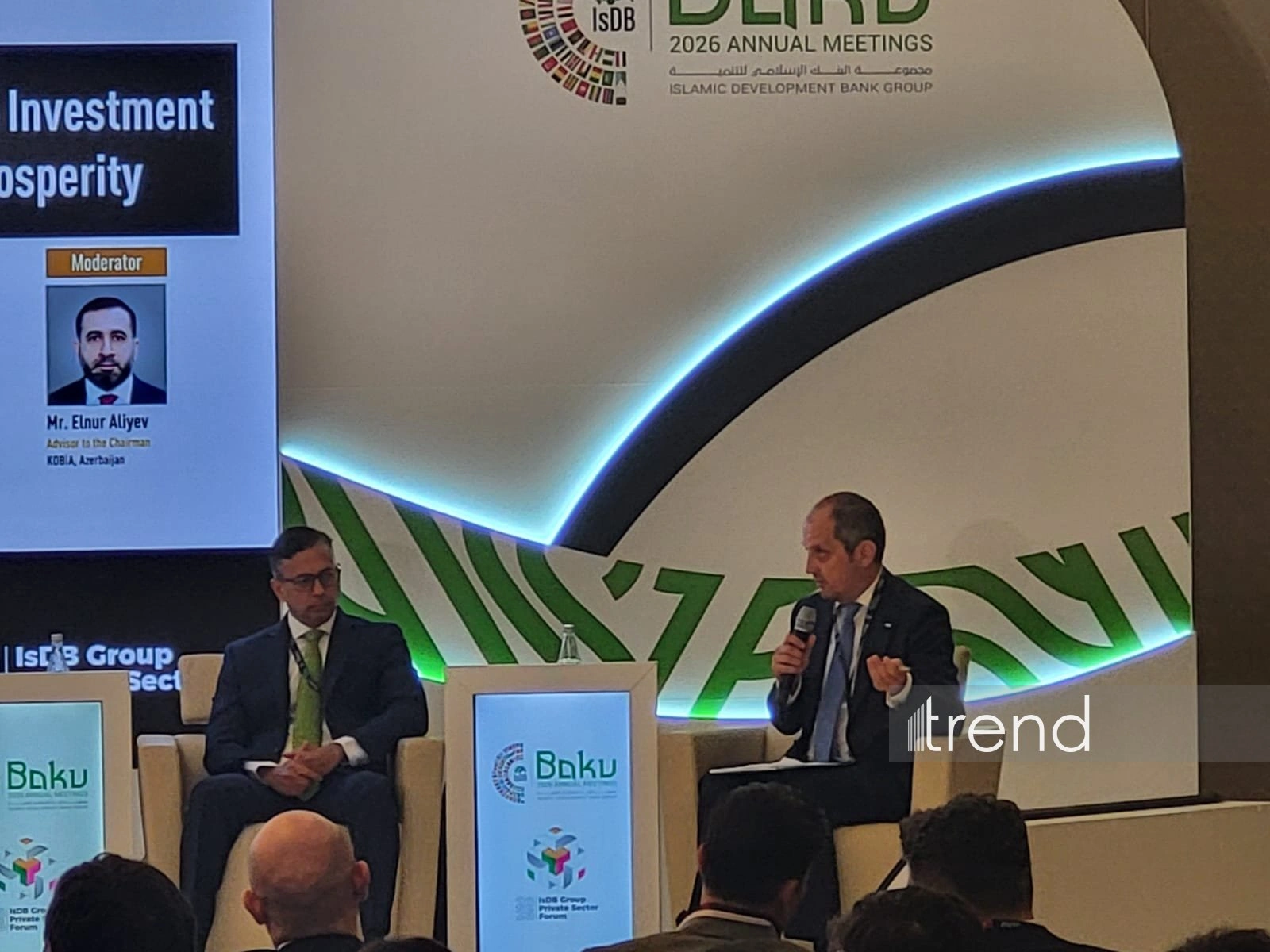
Risk Group (SRG), John Lentaigne, said during a panel session at
the 14th Islamic Development Bank (IsDB) Group Private Sector
Forum, Trend's
correspondent reports from the event.
"When ICIEC works together with private insurers, it really
works. ICIEC is excellent at mobilizing private reinsurers, who are
not driven by development objectives on their own," he said.
According to Lentaigne, the team he leads covers approximately
$25 billion in insured assets, the majority of which are in the
emerging markets of Africa, the Middle East, Asia, and Central
Asia.
"The combination of ICIEC guarantees, private reinsurance, and
bank financing often provides a cost of capital significantly lower
than alternative sources, including capital markets," he noted.
At the same time, the expert emphasized that geopolitical risks
remain the main constraint on the insurance market.
"The war in the Middle East has hit insurers hard. Companies
insuring war risks are facing a loss ratio of around 400% this
year. This is why companies in the Persian Gulf are complaining
about the cost of insurance," Lentaigne stated.
According to him, in addition to military conflicts, climate
risks and sovereign default risks have a significant impact.
"ICIEC can mitigate some of these risks, but there comes a point
when private insurers simply lose interest in the market. This
currently applies to several countries in the Sahel, as well as
Syria, Sudan, and Libya," he said.
The expert also highlighted the growing role of blended finance
mechanisms.
"ICIEC acts as the transaction's anchor institution, providing
credibility through its credit rating, preferred lender status, and
high underwriting standards. This is what gives private reinsurers
confidence," he noted.
According to him, the combination of ICIEC guarantees, resources
from multilateral development banks, and private reinsurance has
the potential to "unlock billions of dollars of capital," while
simultaneously extending the maturity of financing and reducing its
cost.
"Another important innovation that ICIEC is actively developing
is the ability to repackage such transactions and sell them to
institutional investors. Thanks to this, for example, Japanese
pension funds have the opportunity to invest in projects in Central
Asia and Africa, which would not be possible without ICIEC's
participation," Lentaigne said.
Summing up, he emphasized that the corporation has significantly
strengthened its position in recent years.
"When ICIEC operates at its peak, it is a truly outstanding
institution, capable of attracting vast amounts of private
capital," Lentaigne concluded.