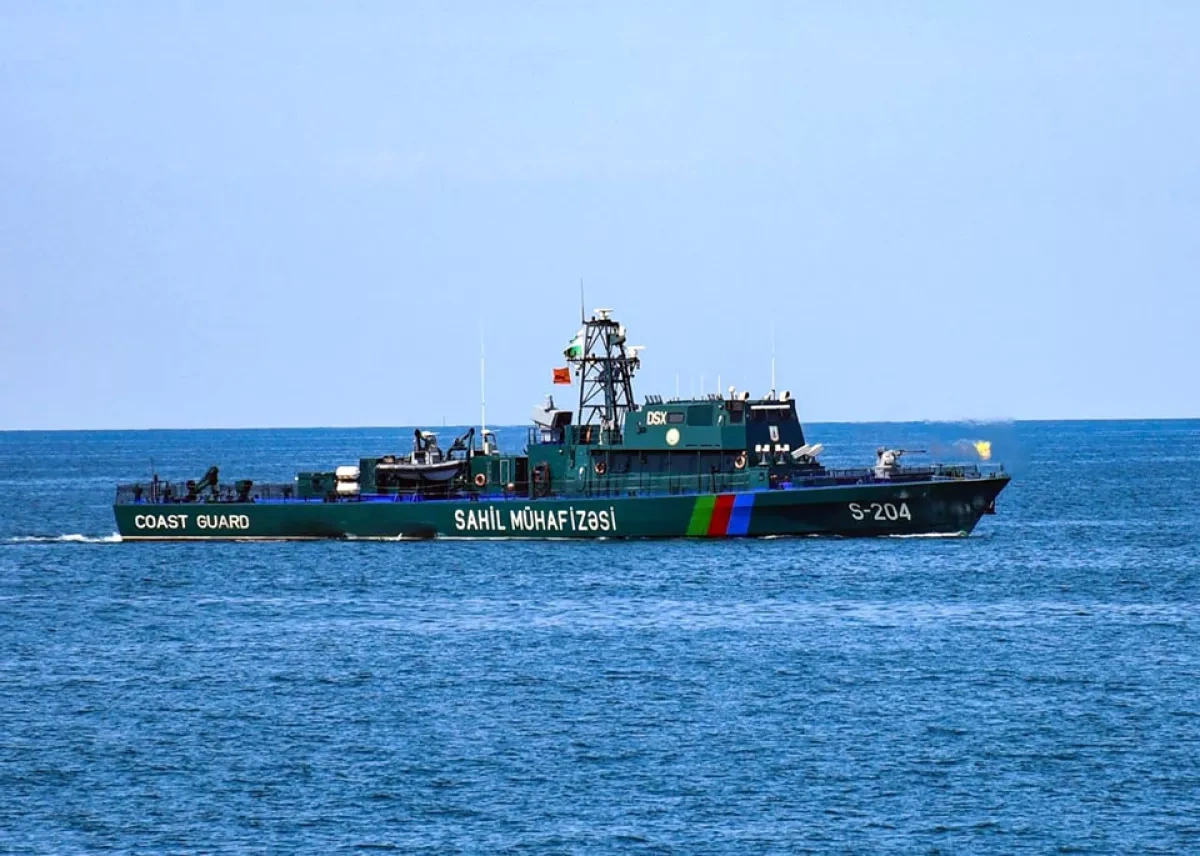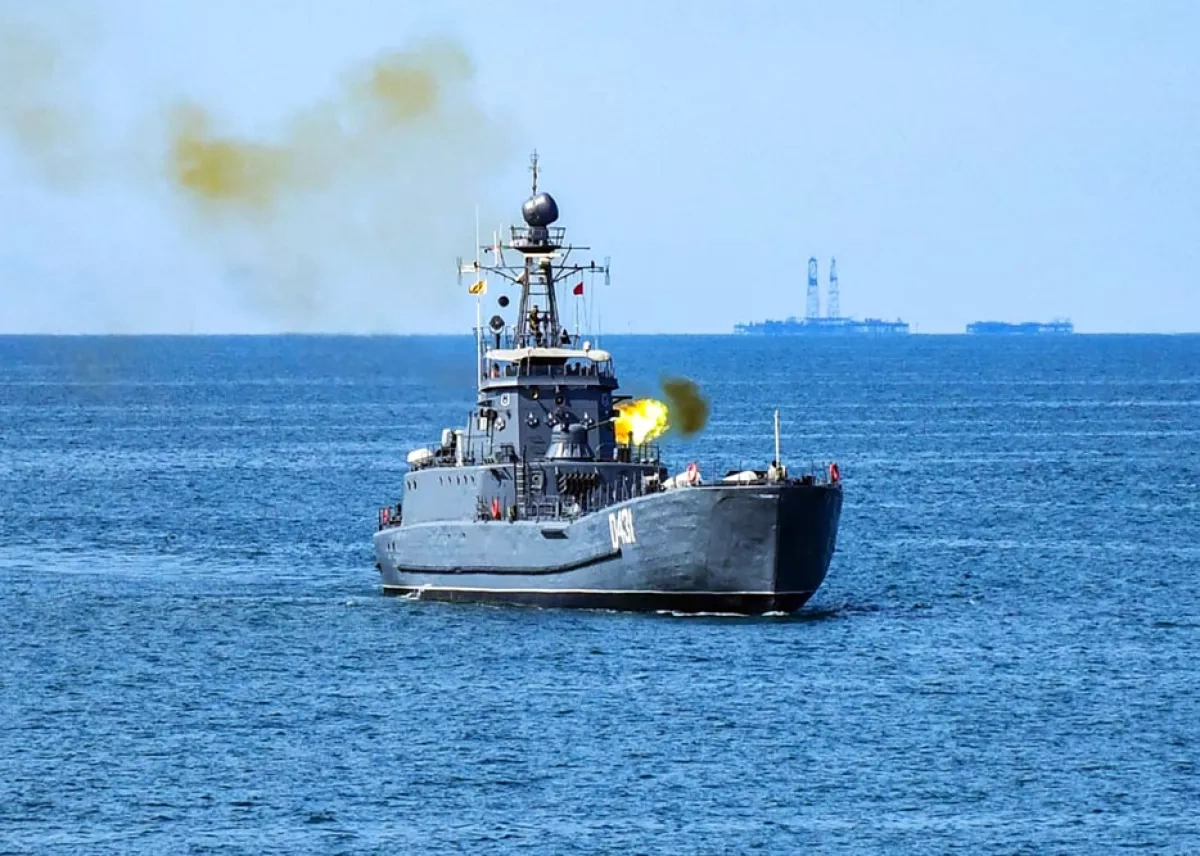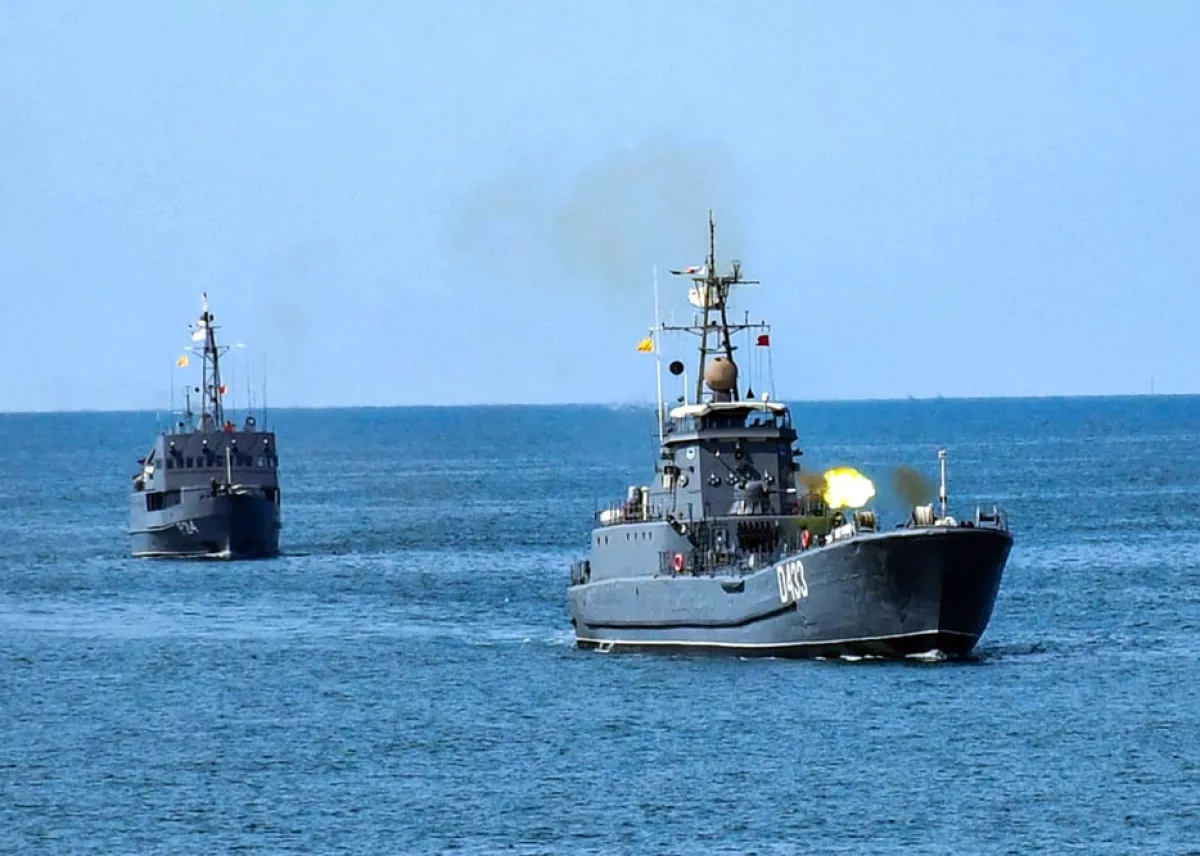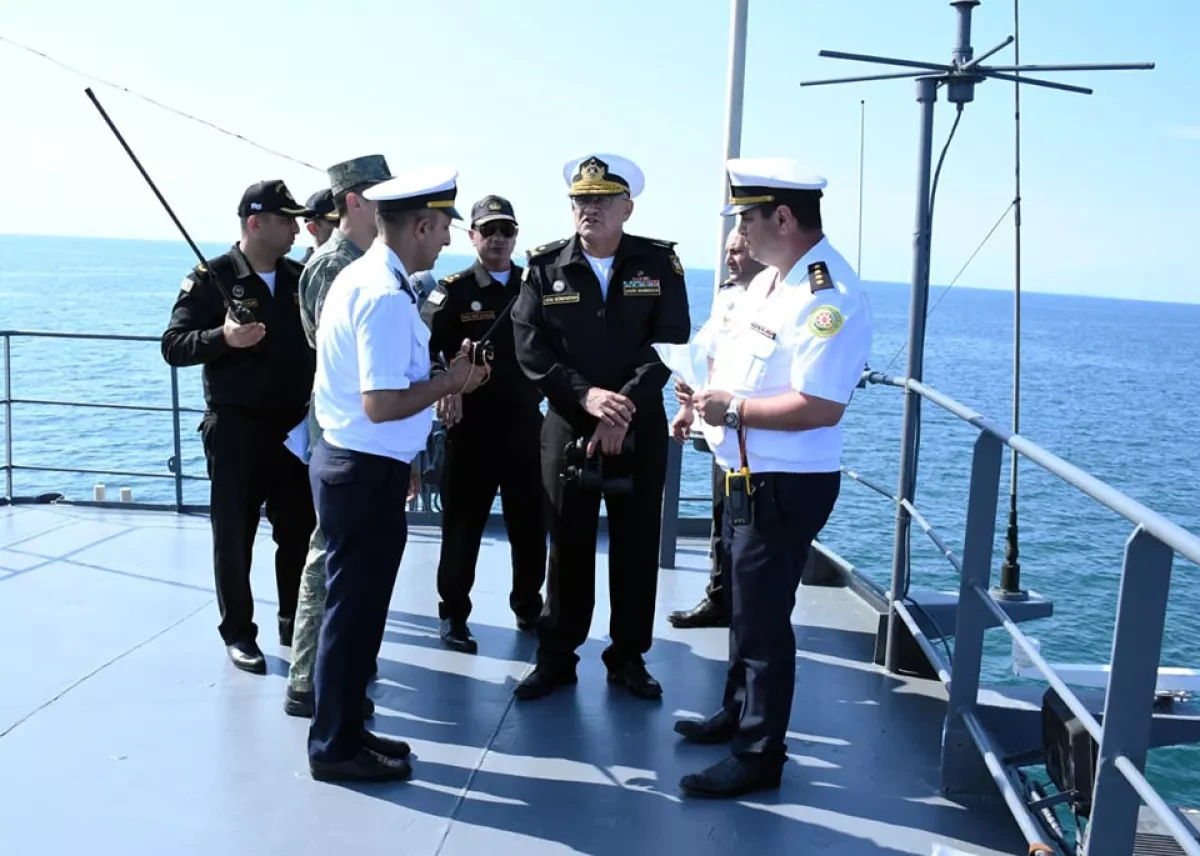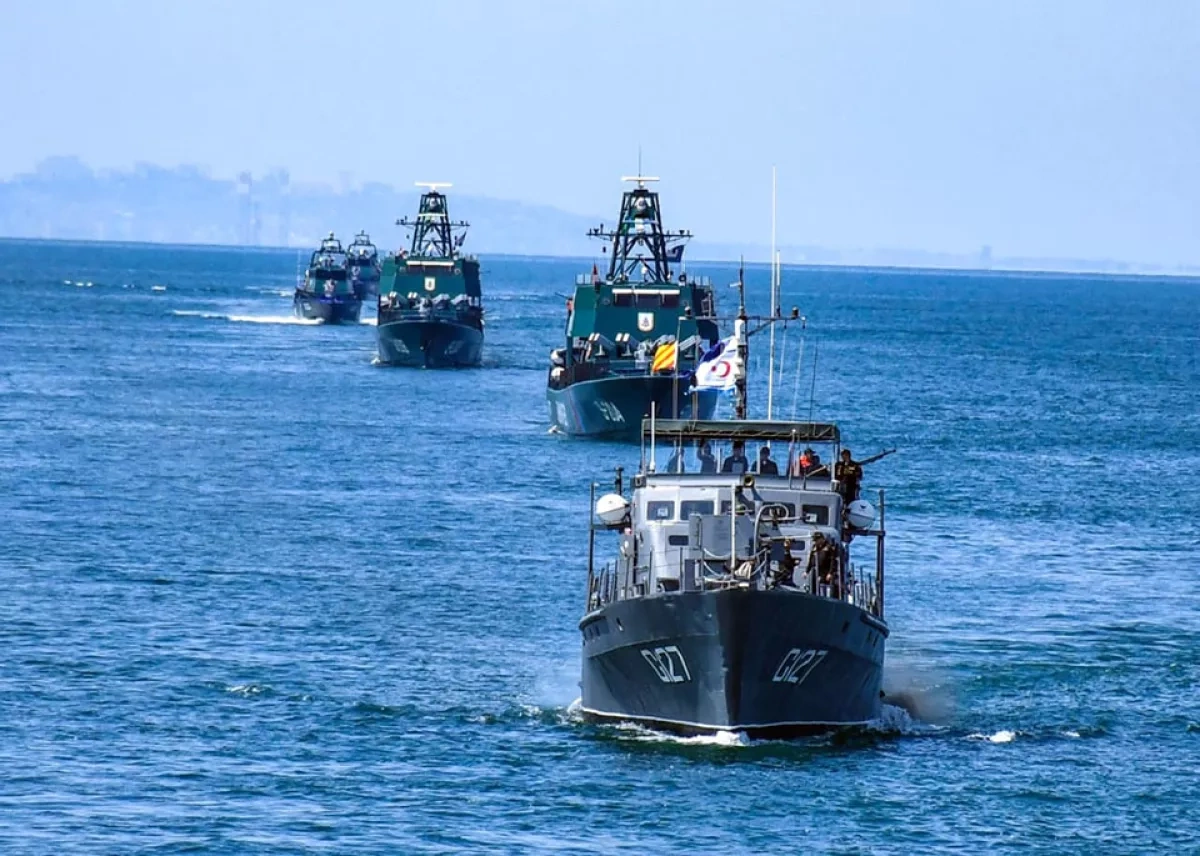
Azerbaijan’s Navy has held a live-fire tactical exercise in line with the 2026 training plan titled Conducting Defensive Operations in Response to Threats against Critical Energy, Maritime, and Coastal Infrastructure.
The drills were carried out with the participation of the Air Force, the State Border Service Coast Guard, and the Ministry of Emergency Situations, Caliber.Az reports, citing the Defence Ministry.
The exercise involved Navy combat, combat support, and logistics vessels, as well as naval special forces and marine infantry units, and was conducted in multiple stages.
Its main objective was to enhance commanders’ operational decision-making skills and improve command-and-staff coordination in high-intensity scenarios, as well as to assess the readiness of ships to perform combat missions both independently and as part of tactical formations.
According to the plan, participating units were placed on alert, brought to full combat readiness, and deployed to designated operational zones.
During the exercise, naval and Coast Guard ship groups, supported by Air Force unmanned aerial vehicles, carried out training tasks including patrol operations, countering sabotage and attack attempts, and the destruction or neutralisation of aerial, surface, and underwater threats, naval mines, and hostile basing sites.
In the next phase, naval special forces worked in coordination with Navy and Coast Guard units to protect critical maritime and coastal infrastructure, as well as shoreline areas. They also conducted operations against simulated reconnaissance and sabotage groups, preventing mock enemy attacks. With Air Force helicopter support, forces also carried out landings on designated targets and neutralised armed groups concealed in island and coastal areas.
With helicopter air support and naval artillery backing from Coast Guard and Navy vessels, special forces units conducted operations to intercept a hijacked vessel and rescue both the ship and the hostages on board.
Marine infantry units also carried out tactical operations to free hostages held in a settlement seized by simulated terrorist groups.
Further activities included firefighting on a vessel damaged by an explosion, rescue of casualties and individuals in the water, and neutralisation of mines attached to the hull. These tasks were performed jointly by the Navy Search and Rescue Service, Emergency Situations Ministry vessels, divers, rescue personnel, and firefighting helicopters.
During this phase, seriously wounded personnel were rapidly evacuated to a medical vessel, where medical assistance was provided using fast rescue boats.
At the conclusion of the exercise, a demonstration sail-past was held involving ships, boats, and special equipment from all participating agencies, including recently introduced unmanned surface vessels.
The main focus of the exercise was to strengthen joint operations among different branches of the armed forces in protecting critical energy infrastructure in the Caspian Sea, Azerbaijan’s territorial waters, and coastal areas, as well as to improve interoperability and ship handling under varied conditions.
The exercise concluded with participating units demonstrating a high level of professionalism and completing all assigned tasks.
By Bakhtiyar Abbasov