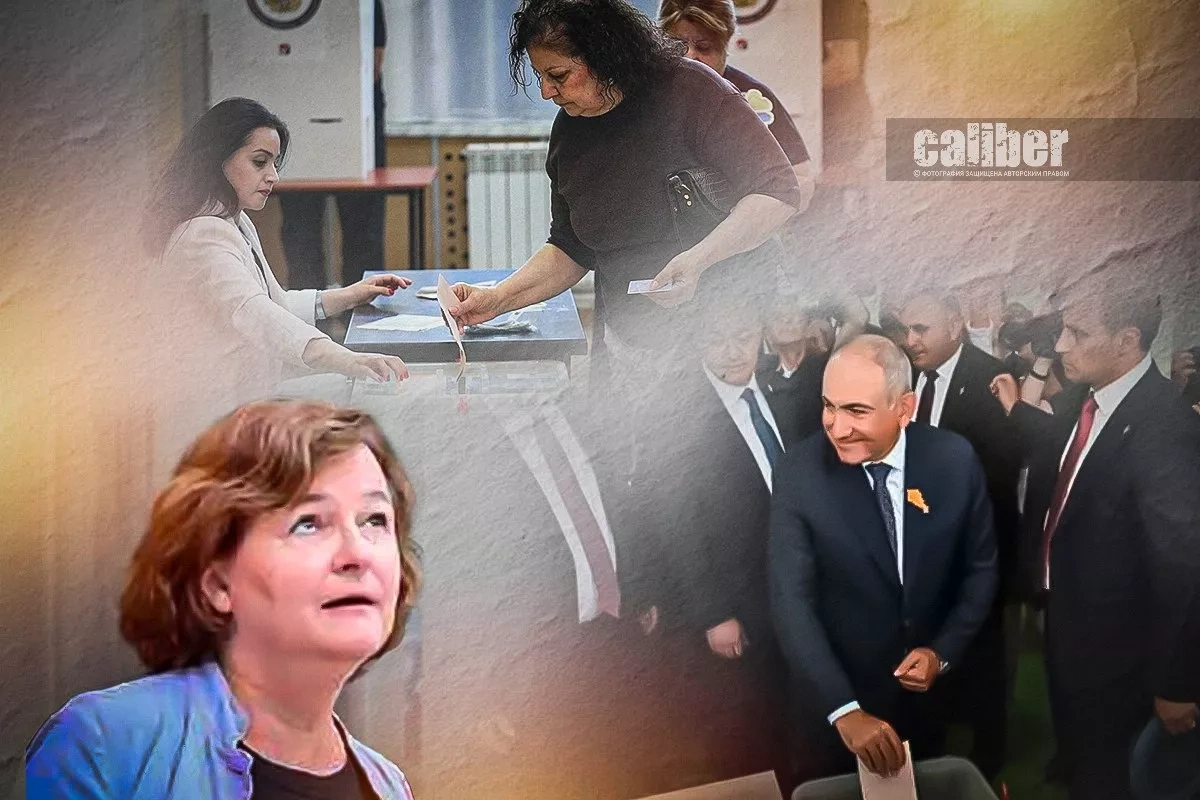
For Armenian journalist Narek Khachatryan, the result of the parliamentary elections held on June 7 was a summons he received the next morning for 25 days of military training exercises. Throughout the entire election campaign, he had systematically documented violations by the Civil Contract party, and on election day he published footage showing the organised transportation of servicemen to polling stations. It appears that the army reacted faster than the election commissions. Ballots were still being counted, while one of the most meticulous journalists had already been ordered to swap his camera for a barracks.
His editorial office, however, reminded that their employee had long completed compulsory military service, and described the use of military training exercises as a tool of pressure against those documenting violations as an extremely alarming signal. But military enlistment offices had already become involved in the electoral process even before voting day: citizens of Armenia arriving from Russia to participate in the vote were handed summons for military training directly at passport control — military police were stationed at the airport as if it were a mobilisation point.
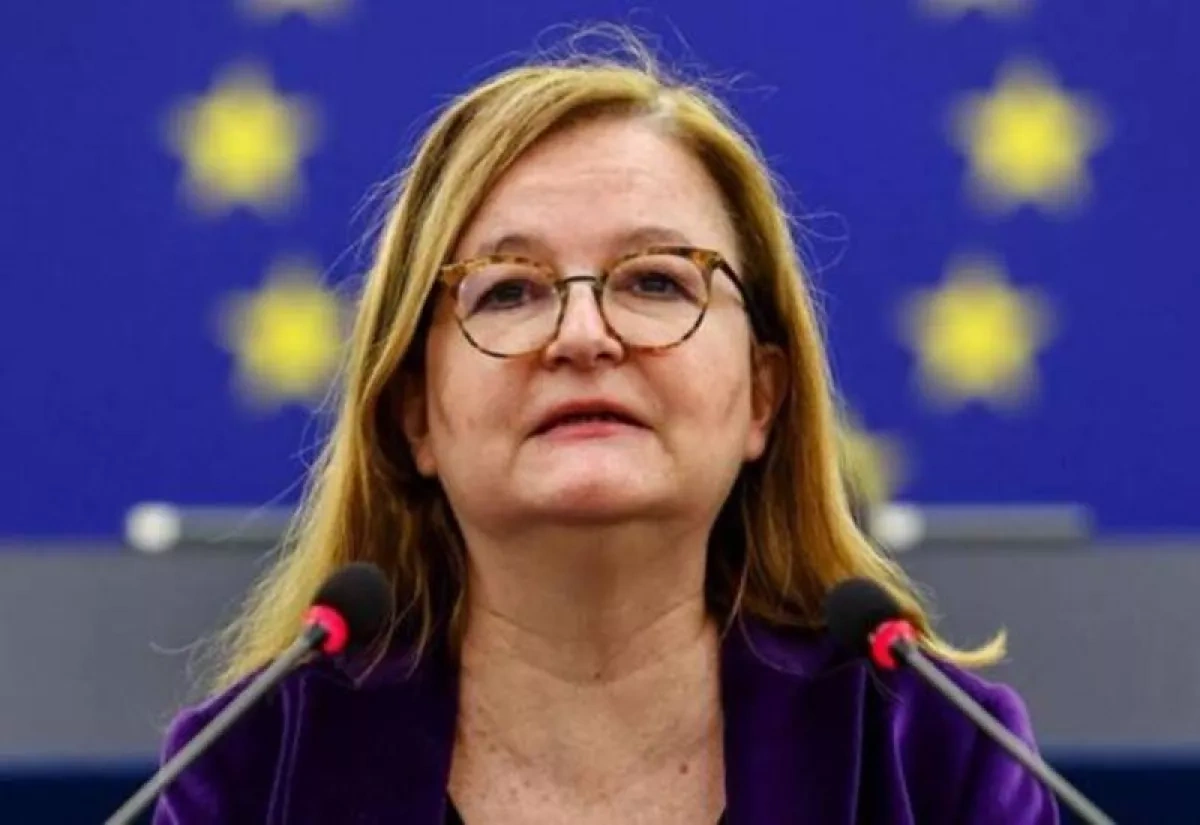
At roughly the same time that Khachatryan was examining his summons, in Yerevan the head of the European Parliament delegation, Nathalie Loiseau, was summarising the results of the observation mission. The elections, she said, were “very well organised,” and the high turnout demonstrated “citizens’ belief in democracy,” while the citizens themselves, “despite disinformation and external pressure,” freely exercised their right to vote.
Anyone familiar with this lady’s European career would not have been surprised: this verdict had been written long before the first polling station even opened. Back in April, on behalf of the Renew group, she had introduced a resolution in the European Parliament “on supporting democratic resilience in Armenia,” in which the country was proclaimed a “leading democracy in the region,” and the June elections were pre-emptively described as a “decisive moment of the Armenian people’s free and sovereign choice.”
An observer who, a month and a half before the vote, had already formalised its assessment in an official parliamentary document was hardly going to Yerevan as an impartial auditor — she was going there to endorse the results.
If one sets aside press releases and looks instead at the reports of Armenian state bodies themselves — not even opposition monitoring groups — the picture appears rather unusual.
By 10 p.m. on June 7, the Ministry of Internal Affairs had recorded 79 election-related offences and 18 arrests; out of 619 complaints received, 338 were still under review. Among the documented cases were 41 instances of double voting, 29 violations of ballot secrecy, and 6 cases of obstruction of the right to vote.
The Prosecutor General’s Office reported that between February and the evening of June 7 it had received 425 reports of clear criminal offences, initiated 186 criminal cases, and was prosecuting 300 individuals; of 13 requests for the arrest of candidates, courts approved 12.
The Anti-Corruption Committee reported 115 proceedings and 214 detainees.
The civil network “Independent Observer” recorded violations at approximately 800 of the 1,830 polling stations visited — around 44 per cent.
In Charentsavan, vote-buying schemes involving a total of 7.5 million drams were uncovered, while in Aragatsotn province, just before the polling stations closed, electricity reportedly went out in what was described as a curious coincidence.
The leader of the Strong Armenia party, Samvel Karapetyan, stated that 75 members of his team had been arrested over the past month, with more than 700 detentions overall; human rights defenders estimated that around 200 people were detained in just two days.
Any one of these figures, taken on its own, would normally warrant a strongly worded paragraph in an election observation report.
Yet the mission chose not to notice them. Or rather — it noticed them, but reinterpreted them.
The preliminary statement of international observers, signed by the OSCE, ODIHR, PACE, and the European Parliament delegation headed by Loiseau, recognises for voters “a genuine choice among political alternatives in a well-run process,” while declaring the only pressure worthy of extended condemnation to be external pressure — which, in the authors’ wording, was allegedly directed “in favour of opposition forces.”
Criminal prosecutions and arrests of opposition politicians are described in the same document as measures aimed “at protecting the constitutional order against the forcible seizure of power.”
Let us read that again: a wave of arrests ahead of the vote is presented, according to the final statement’s wording, not as a flaw in the electoral environment, but almost as one of its strengths.
An observational lens in which the jailing of the ruling party’s competitors strengthens democracy is no longer the methodology of the ODIHR. It is the methodology of very different institutions — and different eras.
A comparative body of material is close at hand, and it is damning.
When elections are held in other countries, the ODIHR report with its catalogue of objections is ready by morning, and the European Parliament does not even trouble itself with a pause of propriety. A significant part of the authorship of these documents belongs to the same Nathalie Loiseau — a politician who has called for “sanctions against Azerbaijan,” campaigned for a boycott of COP29 in Baku, pushed through a European Parliament resolution demanding personal sanctions against Azerbaijani officials and the freezing of an energy memorandum.
In relation to Baku and Tbilisi, the sensitivity threshold of this group is set to detect the slightest irregularity. In relation to Yerevan, the same actors failed to notice 44 per cent of polling stations with reported violations, 186 criminal cases, and a journalist sent to a barracks after filming the transport of military personnel.
It is necessary to record an important point here in order to leave no room for speculation. In general, there are no objections to the results of the Armenian elections. The preservation of Pashinyan’s mandate means the continuation of a course toward peace, toward the Washington agreements, and toward the unblocking of communications — a course which Azerbaijan considers rational, and which the revanchist alternative offered nothing but the restoration of “miatsum” under the Russian umbrella.
The Armenian electorate, whatever the circumstances surrounding its expression of will, has in strategic terms voted for peace, and this choice can only be welcomed in Baku.
The objection is not addressed to Yerevan, but to European structures — to the very industry of electoral certification which once again demonstrated that, in its vocabulary, “democracy” no longer refers to the quality of elections, but to the correctness of a foreign policy orientation.
A certificate of compliance is issued for the course, not for the procedures.
This, however, leads to a conclusion that would be worth considering in Yerevan as well, while applause is still being given to Madame Loiseau’s compliments.
A certificate issued for loyalty is withdrawn at the first deviation from the prescribed vector — the Georgian experience is a clear illustration. Yesterday’s “beacon of democracy” in the Eastern Partnership turned into the target of resolutions and sanction lists at the very moment Tbilisi allowed itself a degree of independence.
The applause of European observers does not cancel out either the 800 polling stations with reported violations or the summons lying on Narek Khachatryan’s desk — it only means that Europe has, for the time being, deemed it inconvenient to present all this to Yerevan.
The folder of materials does not disappear; it is simply placed in a drawer until the political circumstances change.
The Armenian leadership, having begun to genuinely believe in its status as a “leading democracy in the region,” would do well to remember: the EU does not award such titles — it leases them.