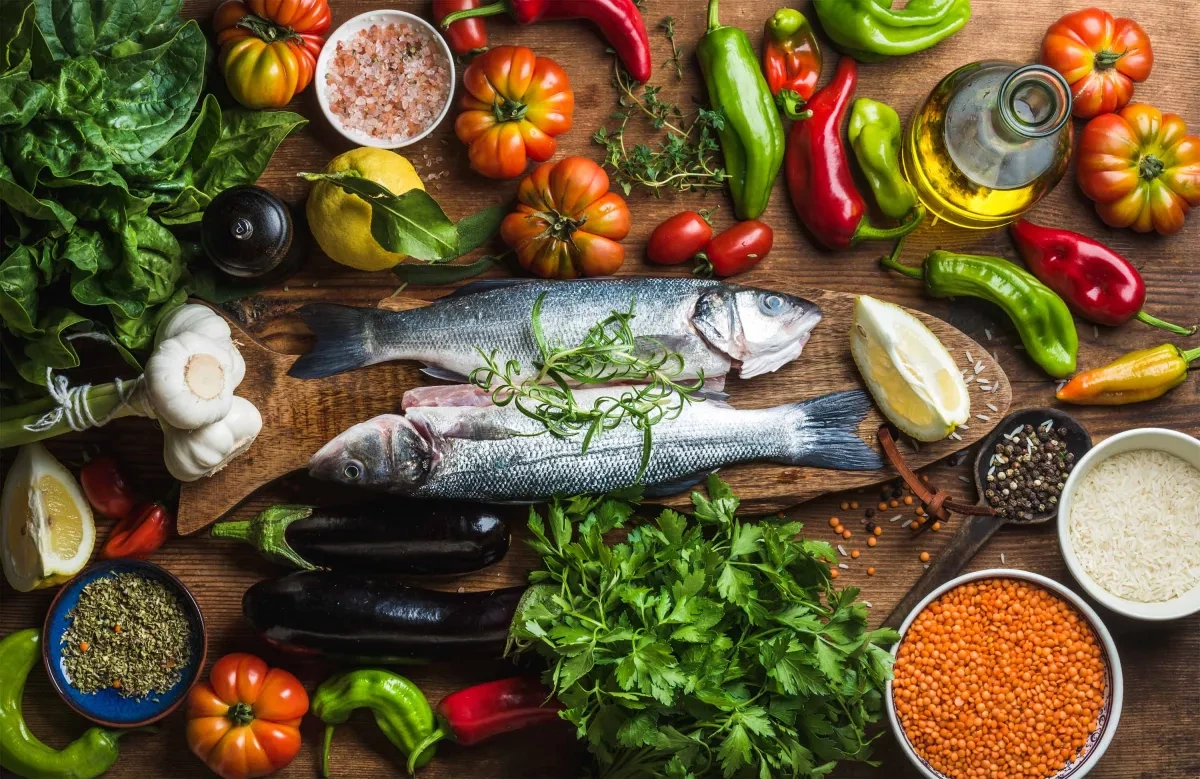
The so-called "Mediterranean diet" — rich in vegetables, legumes, olive oil, whole grains and fish — has long been regarded as the global benchmark for healthy eating patterns. Developed from the traditional eating habits of southern Italian communities in the 1950s, the diet gained global recognition after researchers linked it to remarkably low rates of heart disease. Today, however, the country that inspired the diet is tragically facing a growing obesity crisis, especially among children.
In parts of southern Italy, where the Mediterranean diet was once deeply embedded in everyday life, as many as 40% of children aged eight and nine are now overweight, as a piece by the BBC points out.
According to the World Health Organization (WHO), Italian children have even made it among the most overweight in Europe, with the town of Ponticelli, on the outskirts of Naples, having gained a reputation as one of the world's child obesity capitals.
The Mediterranean diet rose to prominence after US physiologist Ancel Keys and his wife, biochemist Margaret Keys, studied communities in southern Italy during the 1950s. However, Dr Valter Longo, director of the Longevity Institute at the University of Southern California, let the British outlet know that only around 10% of Italians still really follow the traditional diet.
Instead, Dr Longo describes the modern Italian diet as the "five Ps": pizza, pasta, potatoes, protein and pane — the Italian word for bread.
The shift is evident across the country, from supermarket shelves stocked with ultra-processed foods to pizzerias serving slices topped with chips, sausages and fried snacks.
Dr Roberto Berni Canani, a paediatrician and obesity specialist at Federico II University in Naples, witnesses the consequences firsthand.
"I've treated children who are just two or three years old and already weigh 25kg," he told the BBC.
According to Canani, many parents fail to recognise that their children are overweight.
"They come to see me because of other problems - a cough, stomach pain, diarrhoea. They don't realise their child's weight is what's causing it."
He says the issue is not a single unhealthy meal but a broader pattern of eating. Frequent consumption of calorie-dense snacks, sugary drinks, insufficient fruit and vegetables, and a lack of awareness about how these habits accumulate over time all contribute to the problem.
"This is a very good mother," he says. "A very good father. They simply don't recognise the importance of diet quality and body weight."
By the time many families seek medical help, unhealthy eating habits have already become firmly established, beginning at home and reinforced at school.
Change can start in schools
Encouraging children to become more physically active can also be challenging in Italy.
Many schools are housed in historic palazzi — buildings originally constructed as palaces — which were never designed to accommodate modern physical education facilities.
Educators told the BBC that some parents still view a "chubby" child as a sign of good health, making it harder to address the issue. Teachers believe schools can help shift attitudes by encouraging children to bring lessons about healthy eating back to their families.
"Sometimes it's easier to educate the parents through their children than the other way round," one teacher told the outlet.
At a secondary school in Naples, students are taking part in nutrition workshops organised by the Valter Longo Foundation as part of a regional programme to combat childhood obesity. Over the coming months, more than 17,000 students across 25 schools will participate, while families will also receive support to adopt healthier eating habits at home.
Italy tackles global problem with holistic response
The WHO describes obesity as an "escalating global epidemic." More than one billion people worldwide are now living with obesity, while childhood obesity has quadrupled since 1990.
In 2025, Italy became the first country to adopt a national law recognising obesity as a chronic, progressive and relapsing disease.
Rather than viewing obesity solely as the result of unhealthy lifestyle choices, the legislation acknowledges that it is influenced by a combination of biological, environmental and social factors.
The southern Campania region has become a testing ground for putting this approach into practice, introducing a range of initiatives that includes a controversial trial of a "fast-mimicking diet."
Researchers are recruiting 300 overweight adolescents who will follow a tightly controlled diet for five days every three months, consuming 1,100 calories on the first day and 770 calories on each of the following four days — a regimen designed to closely resemble fasting.
The aim is to trigger what researchers describe as a "metabolic reset."
"Fasting, or controlled deprivation of food, is linked to a longer and healthier lifespan," says Dr Longo, who has spent three decades studying the effects of fasting.
By Nazrin Sadigova