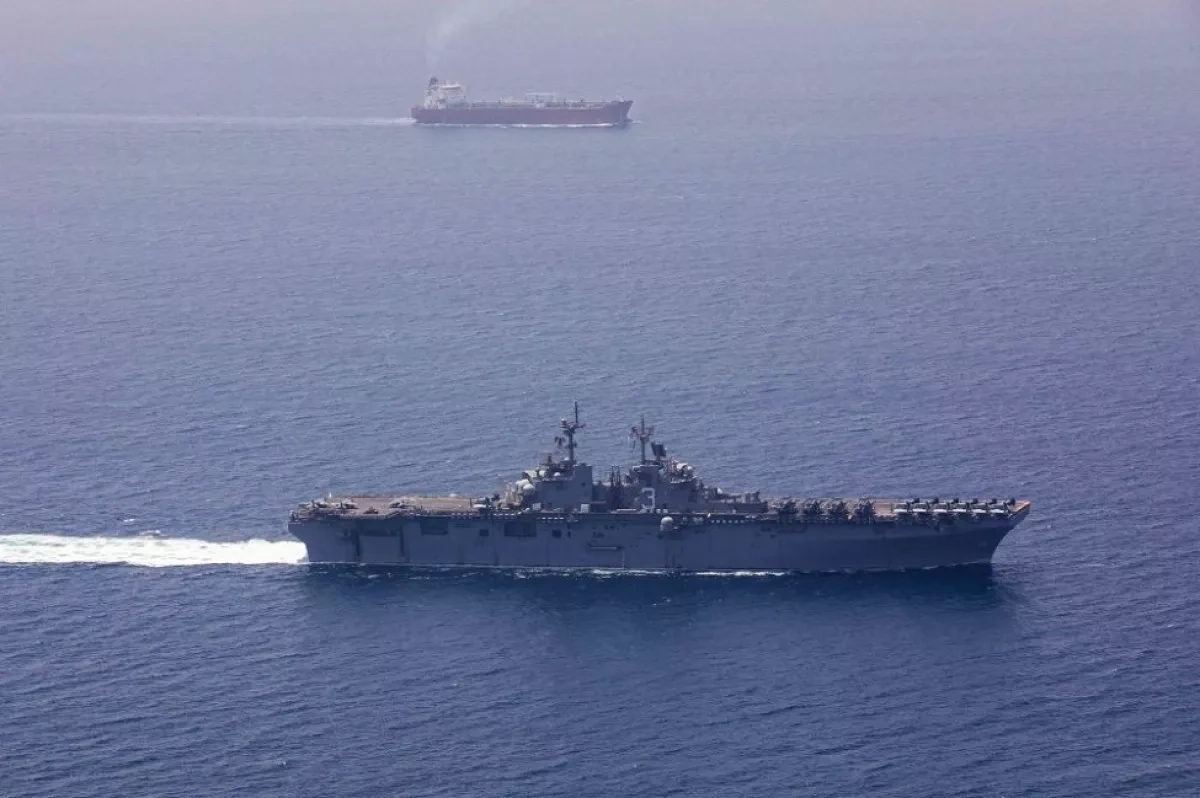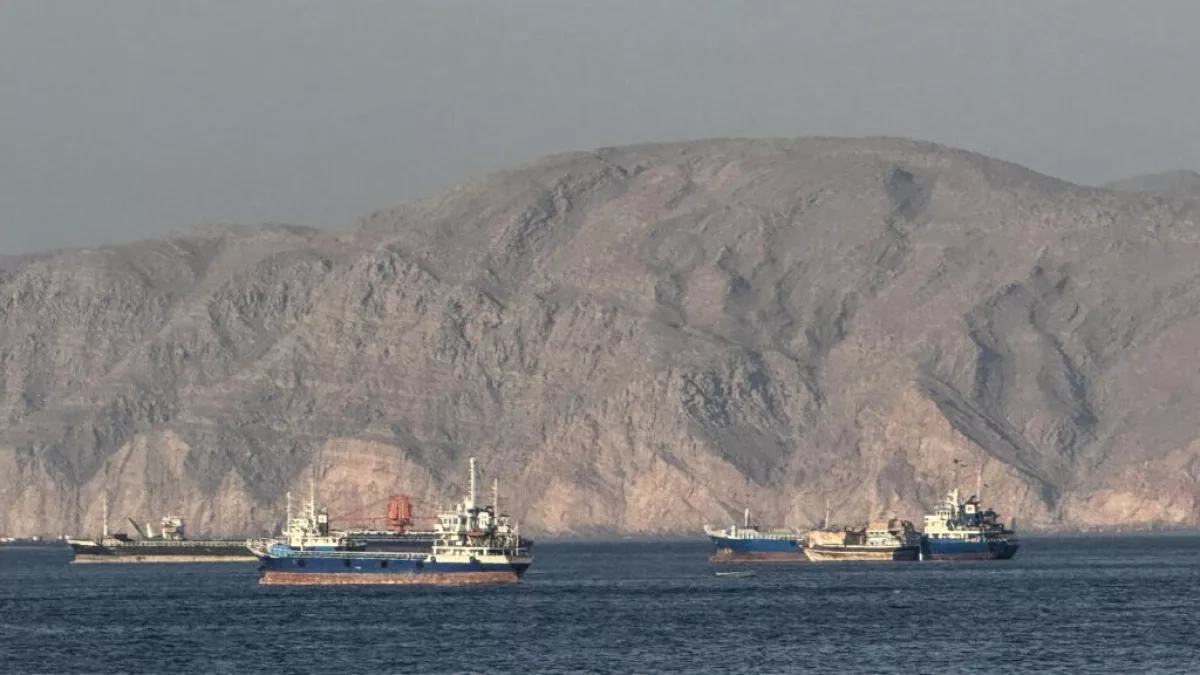
Since hostilities around Iran escalated earlier this year, efforts to revive old pipeline projects and promote new energy routes across West Asia have intensified. The goal is to reduce dependence on the strategically vital Strait of Hormuz, a narrow maritime passage through which a significant share of the world's oil and liquefied natural gas (LNG) supplies flow. However, closer analysis of geography, market dynamics, costs, capacity limitations and security risks suggests most proposed alternatives will not be able to serve as a true replacement for Hormuz.
"The only alternative to the Strait of Hormuz is the Strait of Hormuz," an Iraqi expert was quoted as saying by The Cradle, a West Asian news outlet which argues in its latest article that this statement captures the fundamental weakness of proposed bypass routes.
Even if oil exports were redirected away from Hormuz, the publication notes that many alternative routes would still face another major vulnerability: the Bab al-Mandab Strait. The strategic waterway connecting the Red Sea and the Gulf of Aden has also become a security concern, with Ansarallah-aligned forces (also known as Yemen's Houthi rebels) declaring maritime restrictions against Saudi Arabia and recently carrying out attacks on Saudi-linked vessels.
According to the report, expensive alternative routes will remain exposed unless broader security conditions in the Persian Gulf improve. Until the conflict involving Iran is resolved and a more inclusive regional security framework is established, missiles and drones could still threaten pipelines, ports and export terminals built to avoid Hormuz.
Geographic realities
One of the main challenges facing alternative routes is geography itself. The Strait of Hormuz remains the natural outlet for the Gulf's energy system. In 2024, oil flows through the waterway averaged around 20 million barrels per day (bpd), representing roughly one-fifth of global petroleum liquids consumption. The International Energy Agency (IEA) identifies Hormuz as one of the world's most important oil transit chokepoints.
However, most of the oil passing through the strait is not destined for Western markets. Around 80% of Hormuz oil flows are directed towards Asia, with China, India, Japan, South Korea and other Asian economies serving as the main buyers. The dependence is even more pronounced in the LNG market.
This market reality creates a challenge for many proposed alternatives, as several routes would move Gulf oil away from its primary customers. Pipelines connecting the Gulf with the Mediterranean, Red Sea or Levant may appear strategically attractive on a map, but they often make exports less efficient by forcing oil to travel west before being shipped back towards Asian markets.
The publication argues that investing billions of dollars in infrastructure to redirect oil away from its main destination is commercially inefficient.
"If Hormuz is open, the direct route remains cheaper and faster. If it is closed by war, the underlying problem is not a lack of pipelines but the collapse of regional security," it notes.
Ageing infrastructure limits potential
Another obstacle is the condition of existing alternative routes. The Kirkuk–Baniyas pipeline, which once transported Iraqi oil across Syria to the Mediterranean, is one example. Built in the early 1950s, the pipeline once held strategic importance but has remained largely inactive since suffering damage during the 2003 US-led invasion of Iraq.
Washington is currently supporting efforts to revive the route, with US companies expected to participate. However, the project would require extensive reconstruction and years of investment before it could provide significant export capacity.
Unresolved conflicts
Political disputes and unresolved regional conflicts also limit the viability of alternative energy corridors.
The article names the Iraq–Türkiye pipeline route as an example, which transports oil from Iraq's Kurdistan region to Türkiye's Mediterranean port of Ceyhan. It has repeatedly faced disruptions due to disputes between Baghdad, the Kurdistan Regional Government (KRG), Ankara and international oil companies.
"A 2023 arbitration ruling against Türkiye over unauthorized Kurdish exports led to a two-and-a-half-year shutdown. Flows resumed in September 2025, and exports have continued, but the route still depends on fragile agreements over contracts, payments, federal authority, and revenue sharing," the article recalls.
The Cradle argues that limited capacity and continued political uncertainty prevent such routes from becoming a structural replacement for a maritime passage that normally handles a substantial portion of global seaborne oil shipments.
Existing bypasses physically exposed to war
Saudi Arabia and the United Arab Emirates have developed some of the most credible alternatives to Hormuz, but even these systems have clear limitations.
Saudi Arabia's East–West Pipeline, also known as Petroline, transports crude from the country's eastern oil fields to Yanbu on the Red Sea coast. The UAE's Abu Dhabi Crude Oil Pipeline carries oil from Habshan to Fujairah on the Gulf of Oman, allowing exports to bypass Hormuz.
These pipelines provide important energy-security advantages for Saudi Arabia and the UAE. According to the analysis, though, they cannot replace the strait for the wider region. They offer limited assistance to Kuwait, Qatar, Bahrain, Iran and much of Iraq's oil exports. They also do not resolve LNG vulnerabilities, particularly Qatar's reliance on Hormuz for gas shipments.
The IEA estimates that only around 3.5 to 5.5 million bpd of additional pipeline capacity is available to bypass the strait. Furthermore, facilities at Yanbu and Fujairah remain vulnerable to attacks, as recent regional conflicts have demonstrated the risks facing ports, tankers and energy infrastructure.
"The more honest conclusion is that alternative pipelines may offer limited resilience for individual states, but they are no strategic replacement for Hormuz. They are costly, slow, politically fragile, geographically inefficient, and in some cases obsolete before construction begins.
The answer to the crisis is a security arrangement that keeps the Persian Gulf open, prevents attacks on shipping, and restores normal trade through the strait," the outlet concludes.
By Nazrin Sadigova