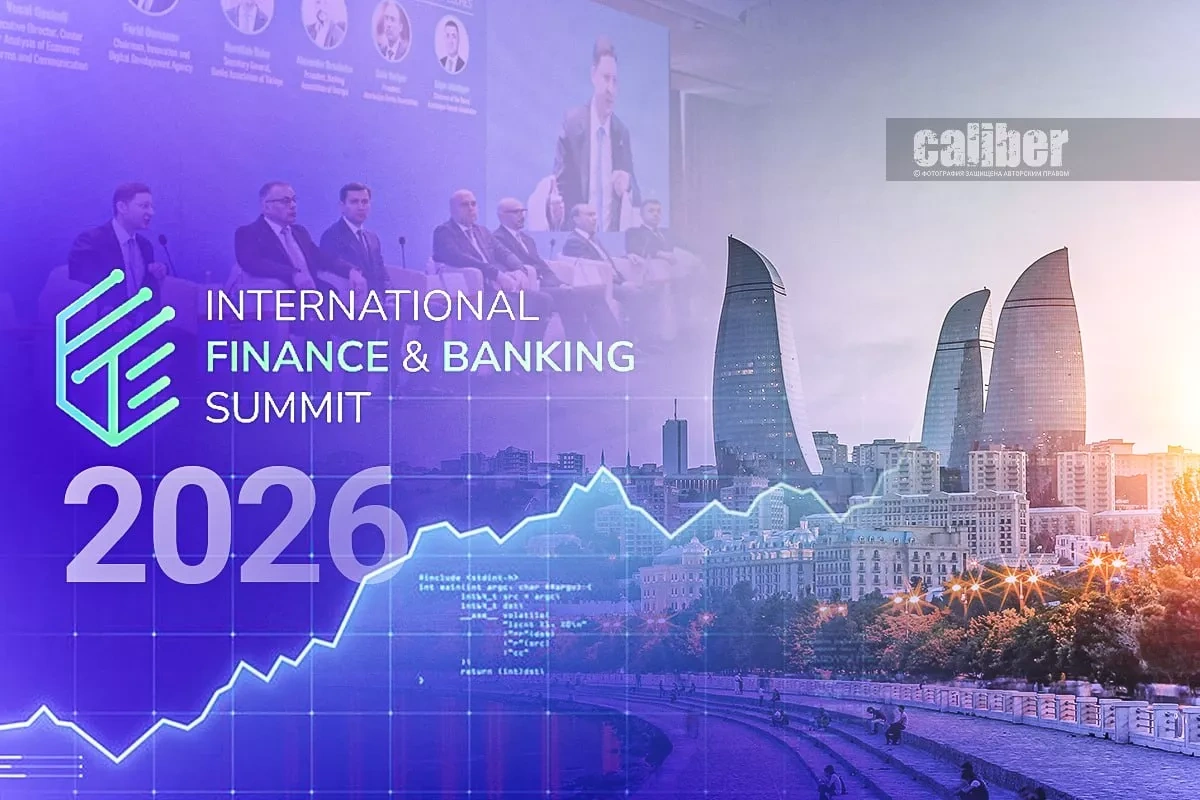
Digital transformation of the banking sector, the expansion of artificial intelligence (AI) tools and cybersecurity capabilities, the development of alternative banking, and new opportunities in payment systems have been identified as key directions of transformation in Azerbaijan’s financial sector. Similar trends prevail in the member states of the Organisation of Turkic States (OTS), which are striving for mutual cooperation of financial markets and collaboration in the field of digital technologies. The discussion of promising innovations in the financial sector is also the focus of the “International Finance and Banking Summit 2026: Global Financial Integration of Turkic States,” currently taking place in Baku.
In the foreseeable future, the pace of development and success of credit and other financial institutions worldwide will depend on their ability to reform toward the digitalisation of banking services and their deeper convergence with new electronic payment system tools. This trend became noticeable in Azerbaijan with the launch of the “State Programme on the Expansion of Digital Payments in Azerbaijan for 2018–2020” and subsequent regulatory decisions in this direction. The large-scale reforms of the payment system, implemented over the past six years, have accelerated the introduction of IT technologies and new software solutions in the banking sector, processing structures, and the activities of other service providers.
It is noteworthy that similar processes are also observed in the banking and financial systems of Türkiye and the Central Asian countries, which are aiming for closer cooperation within the framework of the Organisation of Turkic States (OTS). In recent years, Turkic states have intensified efforts to establish supranational financial institutions and to coordinate the regulatory policies of their central banks. In particular, since 2024, the Council of Central (National) Banks of OTS member states has been operating, coordinating macroeconomic policy and the development of advanced financial technologies.
In turn, joint initiatives in the credit sector are overseen by the Council of Banks Associations of Turkic States (CBATS), while the Turkic Investment Fund (TIF), whose capital exceeds $600 million, has also been operating for several years.
An important integrative instrument in this regard is the annual banking and finance summit held in Baku: this high-level platform also contributes to accelerating the integration of credit systems of Turkic-speaking states into the regional financial space. This year’s event in Baku is being held with the support of CBATS, the Central Bank of Azerbaijan (CBA), the banking associations of Kazakhstan, Kyrgyzstan, Uzbekistan and Türkiye, the Association of Financiers of Kazakhstan, as well as a number of partner organisations, including Visa Inc.
As noted by Vusal Gasimli, Executive Director of the Center for Analysis of Economic Reforms and Communication of Azerbaijan (CAERC), who is participating in the summit, “Turkic states possess significant untapped potential in the financial and banking sector, which could become a key driver of economic integration in the region. The banking assets of OTS countries have reached nearly $1.2 trillion, accounting for 0.8% of the global total.”
At the same time, the volume of savings in Turkic countries last year amounted to $670 billion (2.3% of the global figure), and according to the head of CAERC, the gap between savings and assets is linked to several factors: capital outflows abroad, insufficient development of domestic financial markets, and the concentration of funds in sovereign wealth funds, including those in Azerbaijan and Kazakhstan. The task, therefore, is to retain more capital within the region and channel it toward the development of Turkic world countries.
Meanwhile, the most mature and developed banking sector is that of Türkiye: its assets exceed $1 trillion, the asset-to-GDP ratio reaches 95%, capital adequacy stands above 16%, and the share of non-performing loans is around 2.6%. In Kazakhstan, banking assets have reached $75 billion, and the sector is actively developing through the adoption of digital technologies. In Azerbaijan, banking assets have approached $35 billion, while the level of non-performing loans remains one of the lowest in the region at around 2%. The development dynamics of the banking sector have also accelerated in Uzbekistan, where trends toward the digital transformation of the industry are similarly being observed.
Digitalisation of the banking sector is also most successfully advancing in Türkiye. According to Nurullah Bakır, Secretary General of the Turkish Banking Association, the number of active digital banking users in the Turkish market has more than doubled, rising from 51 million customers in 2019 to over 129 million at present. The use of mobile banking over the reporting period has increased by approximately 200%, while electronic payment systems have also shown steady growth. In particular, the volume of electronic payment transactions in Türkiye has nearly reached a level equivalent to 20 times the country’s GDP.
In turn, Zakir Nuriyev, Chairman of the Public Association “Association of Banks of Azerbaijan” (ABA), who is participating in the summit, believes that “the acceleration of digital transformation, the introduction of new technologies into the ecosystem of payment systems, the expansion of instant payment systems, as well as digital banking and other innovative financial solutions, are creating new opportunities for financial integration among Turkic states.”
In terms of digitalisation of the banking and operational environment, Azerbaijan has made significant progress. The main objective in recent years has been to ensure the mass adoption of FinTech tools in the country. This is a highly ambitious goal, as the global FinTech market is projected to reach $700 billion by 2030.
Based on FinTech solutions, it is also planned to develop an Open Banking platform and implement a roadmap for introducing open banking mechanisms across all credit institutions in the country. This includes blockchain-based decentralised finance systems (DeFi), embedded finance, regulatory technologies (RegTech), artificial intelligence, and green technologies (GreenTech), which are expected to be gradually integrated into the platform-based model of Azerbaijan’s banking sector.
“Today, the FinTech sector is not an alternative to financial services, but an integral part of the financial market and one of its main driving forces. Open Banking, instant payment systems, digital identification solutions, mechanisms for stimulating innovation, and regulatory sandboxes are creating new opportunities for the development of the financial sector,” said Edgar Abdullayev, Chairman of the Board of the Azerbaijan Fintech Association (AzFina), during the summit.
It is noteworthy that Azerbaijan is expanding its partnership in this area with OTS countries, and within the framework of the forum in Baku, a memorandum of understanding was signed between AzFina and the Central Asian Fintech Association (CAFA).
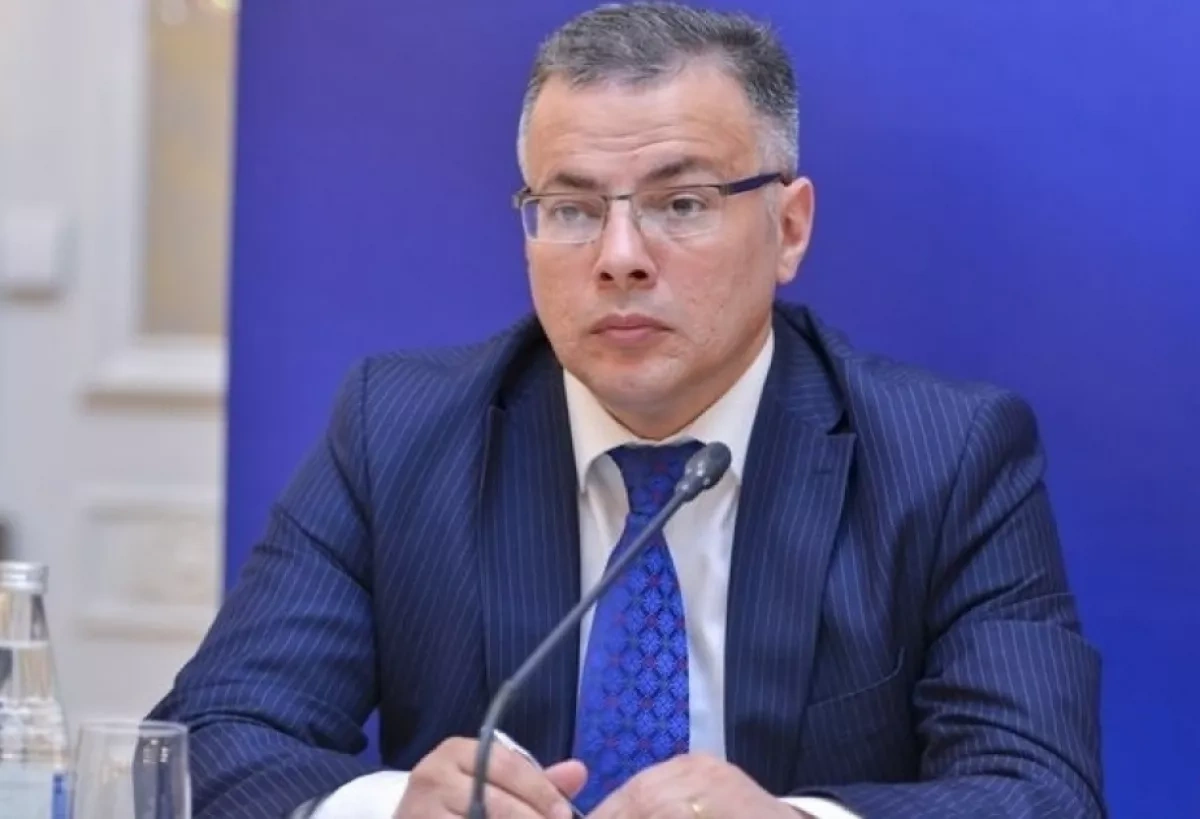
In turn, Vusal Khalilov, Deputy Chairman of the Central Bank of Azerbaijan (CBA), noted that “the financial sector, being one of the most digitalised areas in our country, incorporates these directions into its strategies and initiatives. We believe that digitalisation and artificial intelligence will be widely implemented in all relevant organisations in the future.” He also emphasised that the regulator is taking consistent steps to expand the use of AI in its activities.
According to research by the international payment system Visa, the future of the payments industry will depend on tokenisation, credential security, passkeys technology, and investments in artificial intelligence infrastructure. Over the next five years, AI agents will assist users not only in selecting goods and services but also in placing orders and completing payments. “Click-to-pay” and “invisible payment” systems are set to become one of the key trends in the financial sector, covering the e-commerce space.
“As observations show, customers’ payment behaviour is already changing, and I believe that in five years people will not remember their bank card numbers or other payment credentials,” said Zakir Khanmammadov, Head of the Payment Systems Office at Kapital Bank. “The widespread adoption of tokenised payments and QR codes has already reduced the need for physical bank cards, and in the near future, the payment process will become invisible to the user and carried out automatically in the background.”
The bank representative also noted that, when making a purchase, payments will be completed automatically using AI or a digital agent, making these processes more intuitive and more focused on user needs.
Artificial intelligence technologies, blockchain, and distributed ledger-based payment systems are set to become one of the key directions in the development of the financial and banking sectors in the country, contributing to a significant reduction in fraud cases and other forms of cybercrime.
As the Deputy Chairman of the Central Bank of Azerbaijan (CBA) stated, work related to the activities of FinCERT and the Anti-Fraud Centre is being consistently expanded in Azerbaijan: “The Central Bank’s FinCERT has successfully passed international accreditation and has been accepted by FIRST as a full member. It is expected that new risk management regulations will be introduced to the market by the end of this year.”