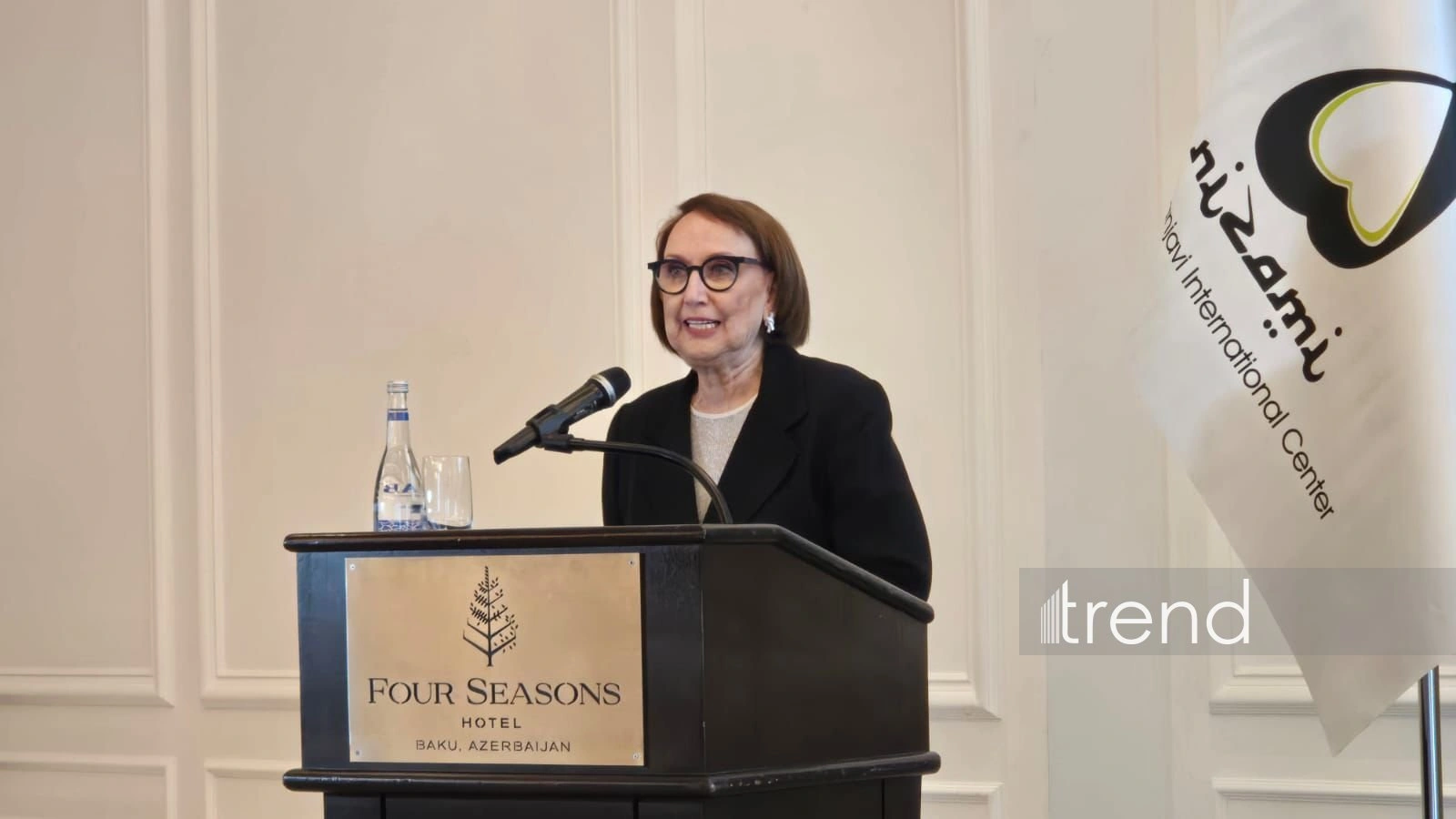
BAKU, Azerbaijan, May 22. The world stands at a
critical turning point, and the multilateral system must adapt to
modern realities, Rebeca Grynspan, Secretary-General of United
Nations Trade and Development (UNCTAD), said during an event
dedicated to the presentation of the Declaration of the 14th Global
Baku Forum and the 12th edition of the GPA Magazine, Trend reports.
According to her, conflicts across the globe are on the rise,
trust is eroding, and the window of opportunity to rebuild faith in
the multilateral system is rapidly narrowing.
"To achieve this, however, we must defend the principles of the
UN Charter. We must also ensure that the UN changes and remains fit
for the challenges of 2026, given that it was established back in
1945," Grynspan stated.
She pointed out that at the time of the UN's founding in 1945,
its Charter was signed by 51 nations, whereas today the
organization comprises 193 member states.
"This means that 142 countries were not present in 1945. Many
of them were not even independent states at that time.
Consequently, there is a clear demand for broader representation
and for the voices of countries that had no seat at the table in
1945 to be heard," she said.
Grynspan also emphasized that institutional shifts are required
because capabilities and resources in the modern world are no
longer exclusively concentrated within the UN framework as they
once were.
She underlined the vital role played by regional organizations
and emerging actors, including entities like the Nizami Ganjavi
International Center, which successfully foster dialogue and
generate actionable solutions.
"The UN must learn not to concentrate everything internally,
but rather to support those who are also offering solutions for
world peace," she declared.
According to her, the UN needs to cultivate partnerships across
diverse dimensions and levels, encompassing local, national, and
regional actors.
Grynspan stressed that without robust multilateralism in a
multipolar world, the risks of fragmentation, conflict, and
diminished global prosperity will heavily intensify.
"Multipolarity without multilateralism will inevitably lead to
fragmentation," she noted.
She concluded by stating that the contemporary world finds
itself at a crossroads defined by both negative and positive
trends, where the ultimate outcome hinges heavily on the choices
and decisions made by the international community.