BAKU, Azerbaijan, May 22. A comprehensive
rethinking of the entire value chain in housing finance is urgently
required, according to the Baku Call to Action, the official final
document of the 13th session of the World Urban Forum (WUF13) in
Baku, Trend
reports.
"Housing finance systems remain fragmented, uncoordinated and
inaccessible, with limited public investment, unequal access to
credit and mechanisms that fail to reach low-income households and
communities. We call for the reimagining of housing finance value
chain to prioritize inclusion and scale by strengthening municipal
finance with a focus on fiscal autonomy and revenue generation
strategies," the document states.
The signatories urge development banks and the private sector to
prioritize expanding access to credit and establishing predictable,
long-term financial frameworks tied to the territory and accessible
to those who need them most.
"We call on development banks and the private sector to
prioritize access to credit and establish predictable, long-term
financing frameworks that are territorially grounded and accessible
to those most in need. We encourage the private sector to partner
with national and local governments, central banks, financial
institutions and organized community savings to pioneer new ways to
calculate and manage risk, target subsidies, expand access to
credit and blend finance. We encourage Parliamentarians and
national treasury to diversify government subsidies to cater to
diversity of housing approaches, drawing in private and
community-led savings," the Baku Call to Action reads.
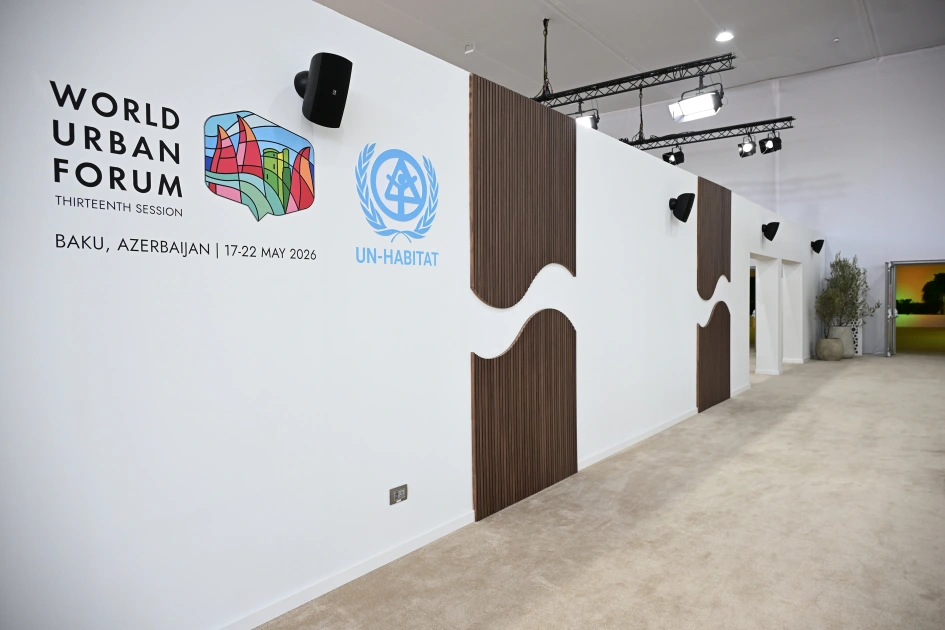
The thirteenth session of the World Urban Forum (WUF13) was held
in Baku from May 17 to May 22.
Convened by UN-Habitat and co-organized with the Government of
the Republic of Azerbaijan, WUF13 was held under the theme “Housing
the world: Safe and resilient cities and communities”.
The Forum hosted 579 sessions throughout the week, while the
Urban Expo brought together 260 exhibitors, innovators and solution
providers. WUF13 featured 11 heads of state, 9 high-level guests,
88 ministers and 76 deputy ministers, and 130 mayors, alongside
representatives of international organizations, financial
institutions, academia, civil society and grassroots
organizations.