BAKU, Azerbaijan, May 22. The Baku Call to Action, which serves as the final
document of the 13th session of the World Urban Forum (WUF13) in
Baku, supports intersectional approaches to housing policy,
Trend reports.
"Housing systems continue to overlook the local contexts and the
intersection of gender, ethnicity, culture, age, disability, legal
status and citizenship that foster exclusion and unequal access to
land and housing. We call for intergenerational, and intersectional
approaches to housing that place people at the centre of policy and
delivery, recognizing diverse groups as co-creators. Civil society
and grassroots movements must lead together with government,
private sector and professionals embedding and protecting diversity
in housing policies," the document states.
In addition, the Baku Call to Action notes that in many
contexts, housing continues to be treated as a commodity rather
than a right, with evictions, demolitions, conflicts, and
population displacement undermining people's dignity, security, and
livelihoods.
"We call for the full adoption and enforcement of a human rights
approach to housing, including safeguards against forced evictions,
stronger tenure and tenant protections, as well as access to
justice. With support from international organizations, national
and local governments must embed this call into legal, policy, land
use planning and institutional frameworks that recognize and
protect the social and environmental function of housing. We call
for institutionalizing community-led and participatory approaches
within regional, national and local housing systems," the document
says.
As noted, families, individuals, and internally displaced
persons often find themselves in insecure or inadequate housing,
exposing them to further risk of displacement, insecurity, and
exclusion.
"We call for integrated housing approaches that link
humanitarian response, recovery and long-term development,
advancing climateresilient and people-centred urban recovery in
fragile and post-conflict settings and facilitating their access to
development and climate finance. National and local governments,
humanitarian and development actors, and international institutions
must protect housing and essential civilian infrastructure,
strengthen safeguards against displacement and destruction, and
uphold mechanisms that ensure these protections are effectively
enforced. There are significant global precedents for post-conflict
reconstruction including from host government of Azerbaijan. We
urge a coordinated approach to prioritise reconstruction and
recovery efforts and ultimately the return of internally displaced
people (IDPs) to their homes. Free and prior informed consent
should be guaranteed by all national governments," the document
reads.
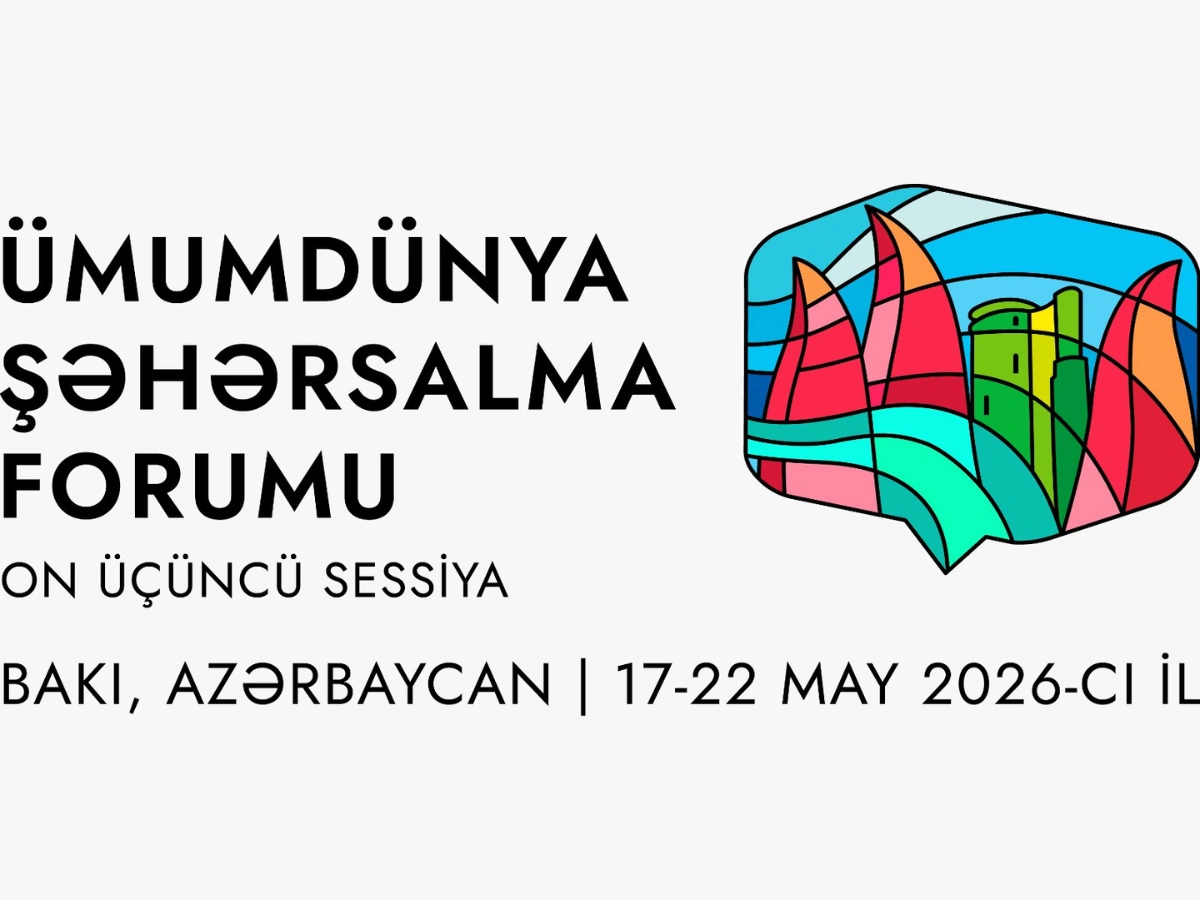
The thirteenth session of the World Urban Forum (WUF13) was held
in Baku from May 17 to May 22.
Convened by UN-Habitat and co-organized with the Government of
the Republic of Azerbaijan, WUF13 was held under the theme “Housing
the world: Safe and resilient cities and communities”.
The Forum hosted 579 sessions throughout the week, while the
Urban Expo brought together 260 exhibitors, innovators and solution
providers. WUF13 featured 11 heads of state, 9 high-level guests,
88 ministers and 76 deputy ministers, and 130 mayors, alongside
representatives of international organizations, financial
institutions, academia, civil society and grassroots
organizations.