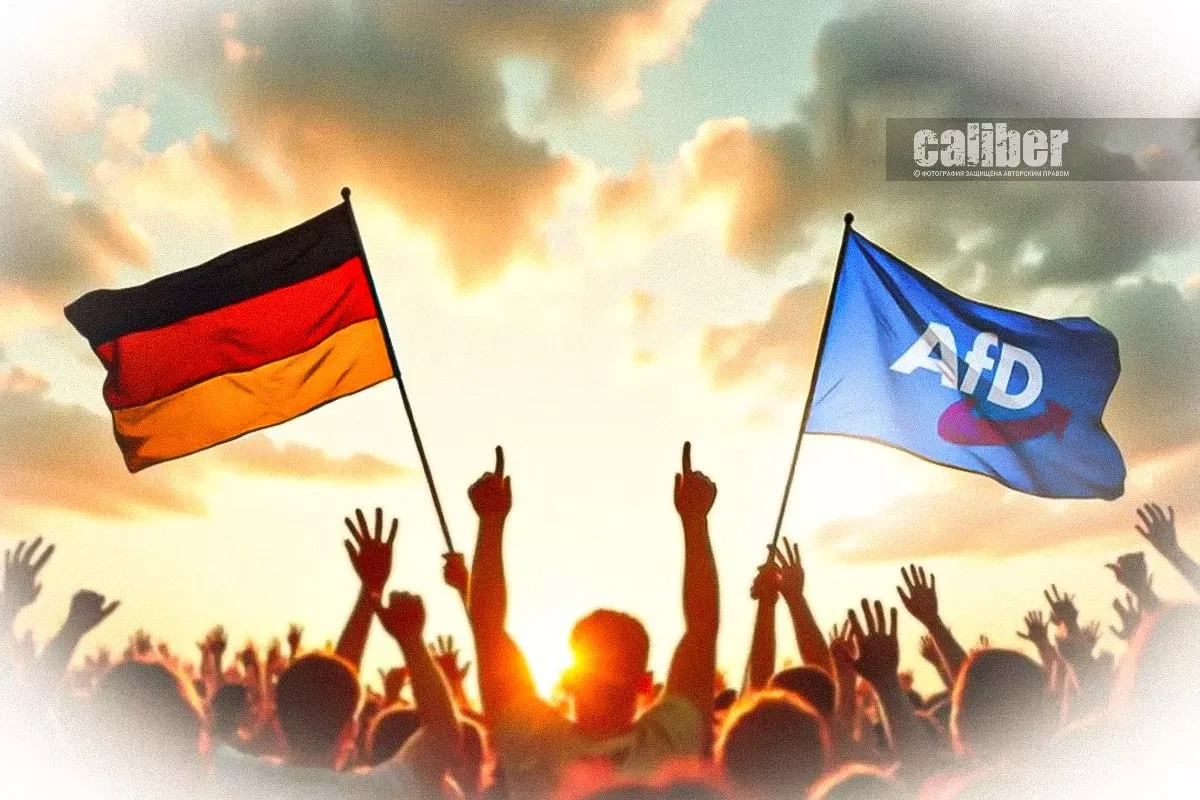
Interior ministers of several German federal states have expressed concern over the rising popularity of the right-wing party Alternative for Germany (AfD) and have called for precautionary measures.
The Interior Ministers of Brandenburg, Hesse, and Thuringia made the relevant statements in an interview with the newspaper Handelsblatt.
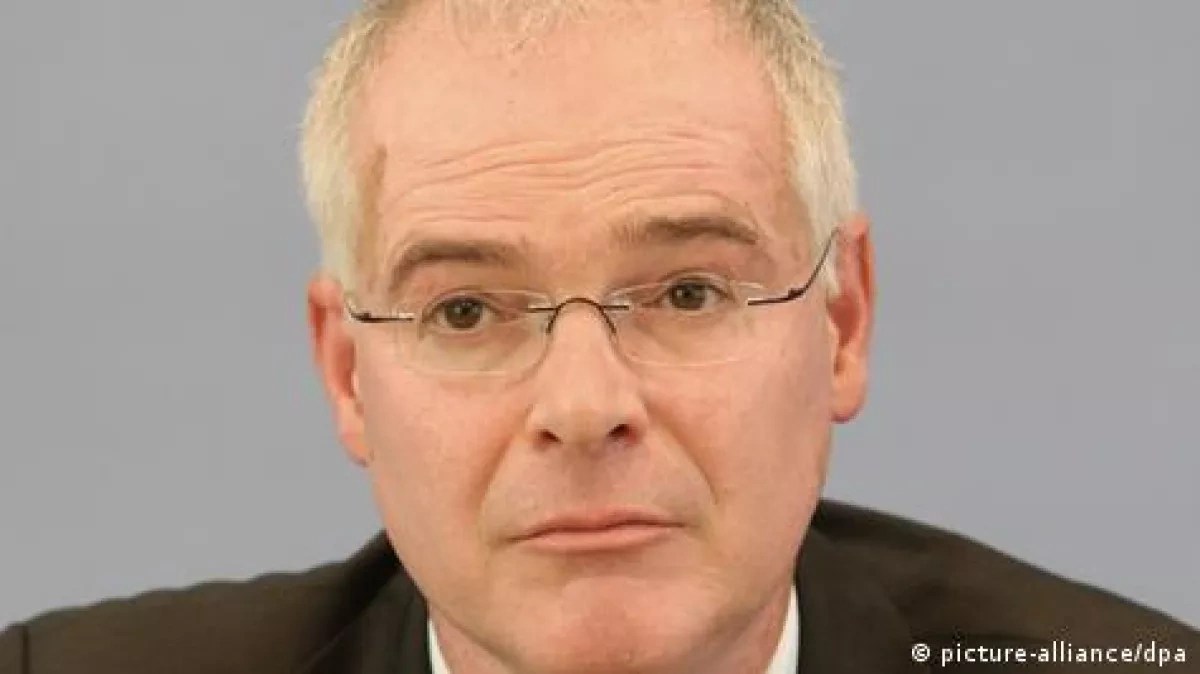
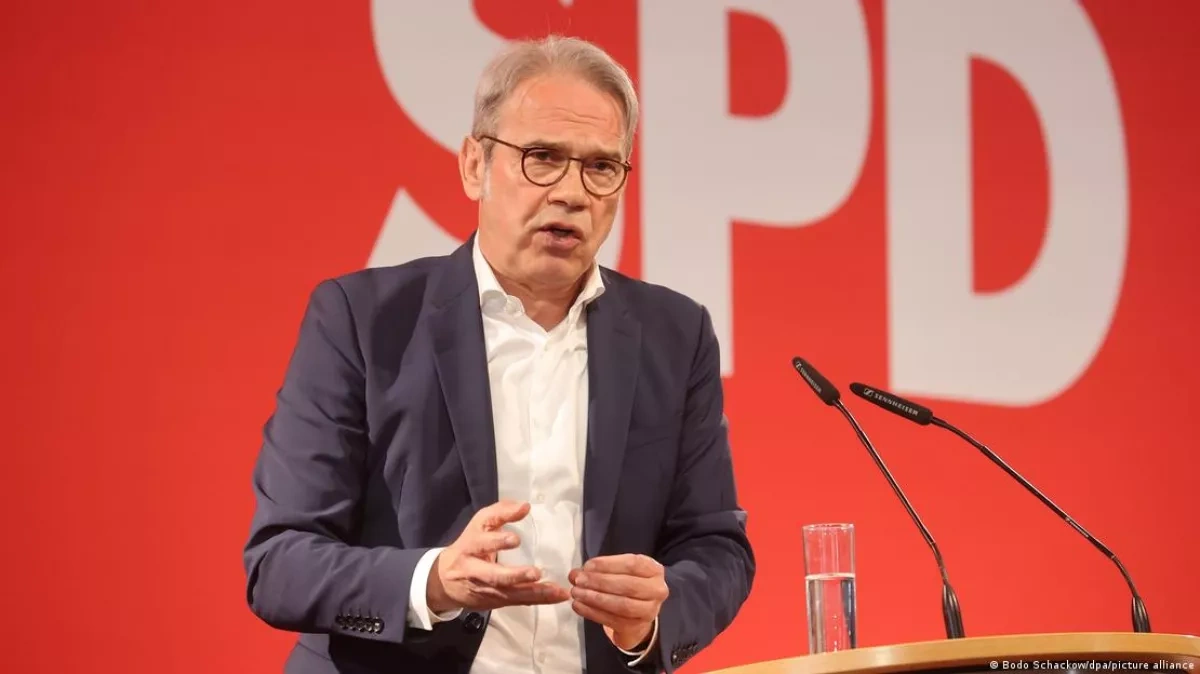
“We urgently need to discuss what risks a potential rise to power of the AfD in Saxony-Anhalt would pose to Germany’s security system and how we can counter this. Due to its numerous contacts with authoritarian states and ties to right-wing extremist organisations, the AfD represents a threat to the external and internal security of the Federal Republic,” said Thuringia’s Interior Minister Georg Maier, a member of the governing Social Democratic Party of Germany (SPD).
He supported his position by referring to remarks made by Ulrich Siegmund, the far-right party’s leading candidate in the upcoming elections in Saxony-Anhalt, who said that, if elected, 150–200 appointments in the state administration would need to be replaced.
According to Maier, individuals in such positions are “obliged to demonstrate unconditional loyalty to the constitution,” but AfD officials in Saxony-Anhalt—where the party’s regional branch has been classified as a confirmed right-wing extremist organisation—do not meet this requirement. The minister argued that ignoring this fact on the part of the AfD would be “tantamount to a coup d’état.”
Brandenburg Interior Minister Jan Redmann, representing the Christian Democratic Union (CDU), supported the position of Georg Maier. He was joined by Hesse’s Interior Minister Roman Poseck, who called for the preparation of an action plan “for the worst-case scenario” and for discussing the situation involving the AfD at the conference of interior ministers in Hamburg on June 17–19.
Meanwhile, the AfD continues to strengthen its position: according to an Infratest dimap poll from May 7, ahead of the elections to the state parliament in Saxony-Anhalt, the party is supported by 41 per cent of voters. The CDU has 26 per cent, while the SPD has only 7 per cent.
What are the implications of right-wing forces coming to power in various federal states of Germany?
Well-known foreign experts shared their views on this issue with Caliber.Az.
Andreas Heinemann-Grüder, a consultant to the German Federal Foreign Office, German political scientist, and professor at the University of Bonn, noted that the reasons for the AfD’s growing popularity are domestic in nature.
“This is the result of rising costs for social and healthcare services, clientelism, bureaucratisation, migration policy, and declining competitiveness. However, the AfD cannot be countered through bans—only through decisive reforms. The AfD could become an ally of Russia within the EU, but if voters choose this party, the election results must be accepted. Otherwise, it would mean we are trying to save democracy by undemocratic means, which would amount to self-destruction,” the professor said.
In his view, the AfD is not a fascist party, but a right-wing party with slogans that were still CDU slogans 25 years ago.
“The Social Democrats have lost their working-class voters. The Christian Democrats have lost their conservative voters. Both parties need to analyse the reasons for this rather than simply blaming the AfD.
This is, above all, not a clash of cultures, but a matter of political economy. The era of complacency is over—especially for politicians, party officials, and those who exploit social systems. The AfD is a symptom, not the cause. Unfortunately, our political class has been thinking about itself for far too long and ignoring real problems. In this sense, the AfD is acting as a catalyst for ongoing processes,” Heinemann-Grüder concluded.
Analyst, publisher, and editor-in-chief of Neue Zeiten magazine and the Neue Zeiten TV YouTube channel (Germany), Alexander Cherkassky, said that at present, the parties of the governing coalition are in a deep crisis related to a lack of progress in reforms as well as migration-related issues.
“At the same time, we are seeing the success of the competing AfD party, whose ratings are steadily and consistently rising. The AfD itself operates within the constitutional framework, is represented in the Bundestag, and, in my view, does not include extremist positions in its program. It is a typical right-wing party.
Another matter is that some politicians of this party allow statements that may be controversial. In my view, this is typical political competition and a completely normal phenomenon. I do not think that if the AfD becomes a governing party, it would lead to any unconstitutional actions by the authorities. Similar parties are currently in power in Austria and Italy,” the expert noted.
Regarding external interests, he said that there are indeed individual statements by some AfD politicians in this direction.
“There are signs of sym
The cause of the problems of the current governing coalition is that the parties within it follow different ideologies. There are bourgeois conservatives and social democrats. At the same time, the creation of a CDU–AfD coalition is prevented by the political ‘firewall’ (or sanitary cordon—a strategy in which mainstream political parties agree to refuse any form of cooperation with radical, extremist, or populist movements). In Germany, there is an informal refusal by all parties to cooperate with the AfD,” Cherkassky concluded.