BAKU, Azerbaijan, May 22. The fundamental right
to secure, adequate housing functions as an unyielding pillar
underwriting human dignity, public health, physical safety, and
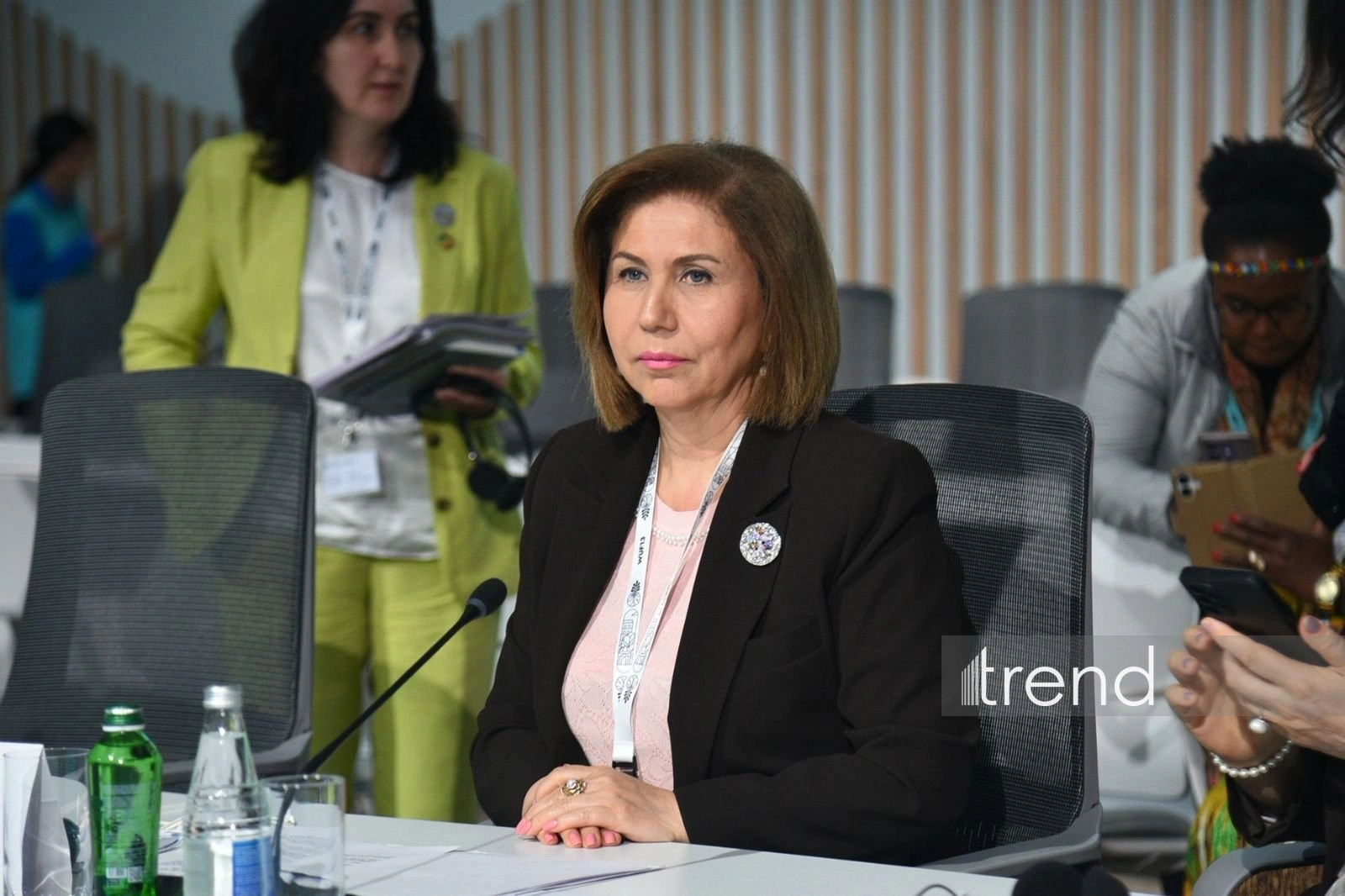
comprehensive social integration, Bahar Muradova, Chairperson of
the State Committee for Family, Women and Children Affairs of
Azerbaijan, said, Trend reports.
The government official made the remark during the "Women's
Roundtable" session, held within the framework of the 13th session
of the World Urban Forum (WUF13) in Baku.
Muradova noted that female-headed households, displaced women,
elderly citizens, women with disabilities, and those employed
within the informal economic sector navigate significantly higher
tiers of systemic socioeconomic vulnerability.
"In acute cases of gender-based violence, the absolute lack of
safe, adequate housing forces women into an exceptionally harsh
dilemma: either remain trapped within an abusive domestic
environment or face the immediate, destabilizing risks of systemic
poverty and homelessness," she pointed out.
According to her, the strategic discussions taking place at the
roundtable mirror the global policy priorities of the Beijing+30
Platform for Action and the New Urban Agenda, both of which mandate
the structural design of more inclusive, protective metropolitan
ecosystems.
The State Committee head emphasized that formal, gender-neutral
public policies frequently fail to yield equitable real-world
outcomes in daily practice. Consequently, municipal and national
planners must systematically integrate the distinct needs and lived
experiences of women into initial urban design solutions.
She highlighted the critical necessity of securing equal access
for women regarding land tenure, property rights, affordable credit
streams, social housing programs, financial inclusion mechanisms,
and targeted social protection nets.
According to Muradova, the government of Azerbaijan treats the
active advancement of gender equality as a central priority of its
national state policy matrix.
She reminded the delegation that the statutory law of the
Republic of Azerbaijan "On Guarantees of Gender Equality" has
formally established the provision of equal rights and strategic
opportunities for men and women as a baseline constitutional
obligation of the state for two decades.
Muradova concurrently reported that over the past six
consecutive years, the State Committee has compiled and presented
exhaustive annual data-driven reports to Parliament tracking the
real-time status of gender equality. Furthermore, the ratification
of the nation's new National Action Plan on Gender Equality aims to
secure a highly systematic, institutionalized execution of these
public policies.
At the municipal layer, specialized gender commissions and
monitoring units attached to local executive authorities are
working to mobilize community capacity to safeguard women and girls
against discrimination and violence.
Turning to the comprehensive post-conflict rehabilitation of the
liberated territories, Muradova stressed that Azerbaijan dedicates
targeted attention to building inclusive living environments,
secure public spaces, universally accessible social services, and
resilient community networks.
According to her, housing strategy must be analyzed through a
comprehensive, multi-dimensional prism, given that residential
security maintains deep, unbreakable structural links with climate
resilience, social safety nets, macroeconomic participation, and
gender equity.
"Centering the distinct requirements and voices of women
directly within executive decision-making loops consistently yields
substantially more sustainable and high-performing development
outcomes," Muradova stated.
The chairperson reiterated Azerbaijan's absolute readiness to
continuously anchor international cooperation tracks, facilitate
cross-border knowledge transfers, and drive forward a collaborative
global policy dialogue in this critical governance domain.
Meanwhile, today Baku is hosting the final day of WUF13.
On the first day of the forum, a ministerial meeting on the New
Urban Agenda, a ministerial roundtable, women’s and civil society
assemblies, business sessions, and discussions on urban well-being
took place. The forum also featured a flag-raising ceremony for the
UN and Azerbaijan.
The second day of the forum was marked by the first-ever
Leaders’ Summit. On this day, high-level discussions were held on
the global housing crisis, urbanization policy, and urban
sustainability. Also, as part of WUF13, the Mexico City pavilion
was inaugurated, presented as a key platform for expanding
cooperation with the Latin American region and preparing for
WUF14.
The third day of WUF13 was also marked by an extensive program
of events. Discussions on this day covered topics such as the
global housing crisis, the creation of safe and inclusive cities,
climate resilience, artificial intelligence and urban governance,
“green” urbanization, social equality, and sustainable
transportation.
One of the highlights of the third day was the signing of a
sister-city agreement between the Azerbaijani city of Shusha and
the Turkish city of Trabzon.
The fourth day of WUF13 featured an extensive program of events
dedicated to the themes of urbanization, climate change, inclusive
urban development, housing policy, and sustainable management.
On the fifth day of the forum, discussions continued on the
global housing crisis, the creation of safe and inclusive cities,
climate resilience, the use of artificial intelligence in urban
management, “green” urbanization, and social equality.
One of the key events of the Cities Forum of the United Nations
Special Program for the Economies of Central Asia (SPECA), held on
the fourth day, was the announcement of Almaty’s official accession
to the “Declaration of Intent on the Establishment of the SPECA
Forum on Smart Cities Resilient to Climate Change.”
Also, for the first time in WUF history, the “WUF13 NGO Forum:
Global Partnership and Decision-Making” was held at the initiative
of Azerbaijan.
The WUF13 Forum, dedicated to the theme “Housing the world: Safe
and resilient cities and communities", brought together
governments, international organizations, experts, and civil
society representatives to strengthen global cooperation in the
field of sustainable urban development. More than 40,000 people
from 182 countries registered to participate in the forum.