BAKU, Azerbaijan, May 21. The birth of another
generation in slums must be prevented, Executive Director of the
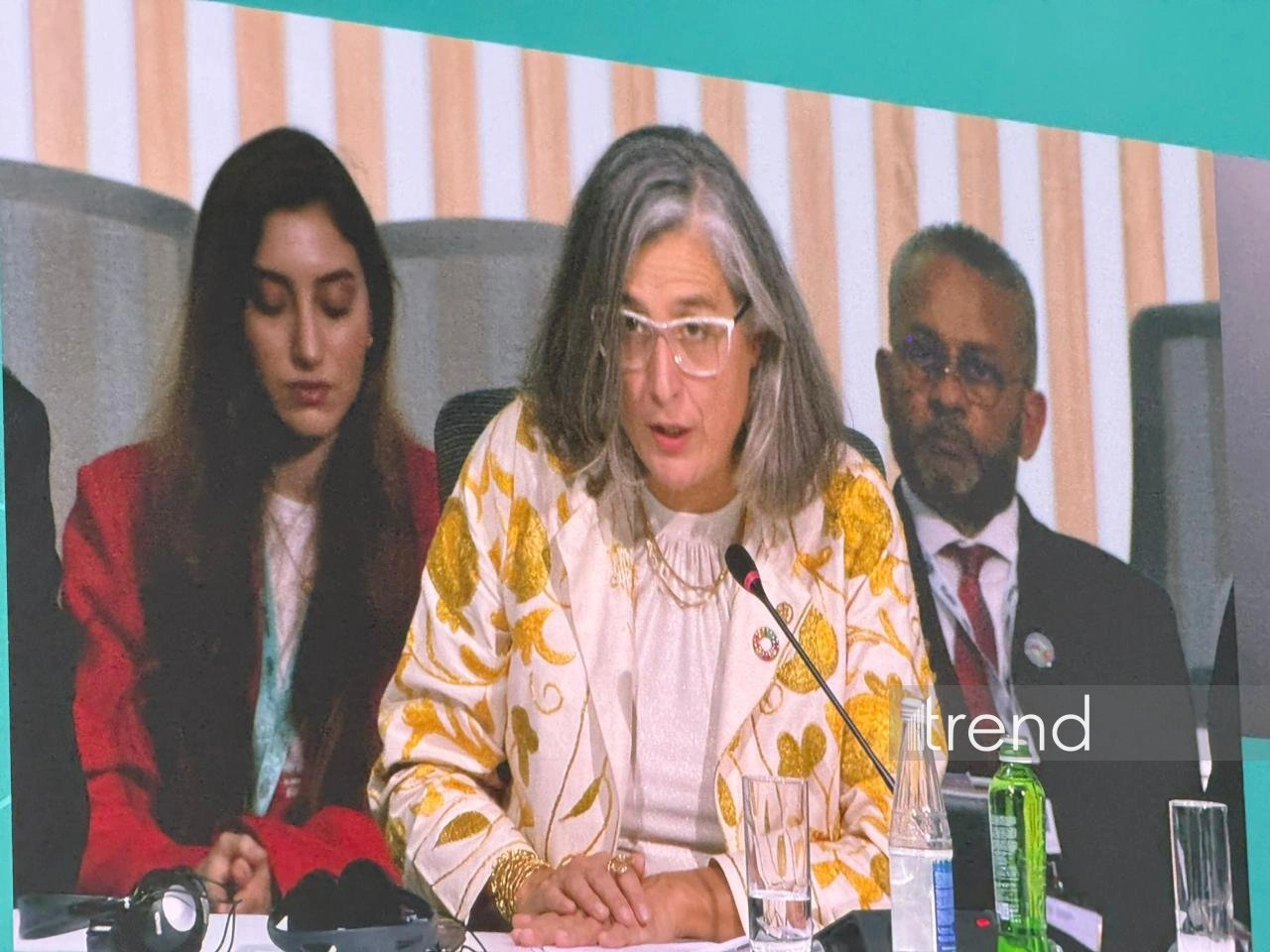
United Nations Human Settlements Program (UN-Habitat)
Anacláudia Rossbach said at a roundtable event titled
"Children and Youth" within the framework of the 13th session of
the World Urban Forum (WUF13) in Baku, Trend reports.
'We cannot and mustn't allow another generation to be born in
slums," the executive director explained.
She noted that this is one of the key challenges facing people
as we embark on UN-Habitat’s new strategic plan for 2026–2029,
review the achievements of the New Urban Agenda over the past 10
years, and assess how children and young people are being left
behind.
“A child living in a slum needs to go to school every day, but
there is no school nearby, or the school is too far away, and there
is no transportation. The child comes home from school and has to
do homework, but there is no safe and appropriate environment
because the living conditions are very difficult. It rains, and the
house is flooded, the electricity is cut off. Or, as happened
during COVID, a new pandemic occurs, and that child does not have
access to the internet or digital resources, so they cannot attend
classes,” Rossbach said.
According to the executive director, during my missions, I have
seen that it is not just men who are living on the streets
anymore.
"More and more women, children, and entire families are living
on the streets. They have almost no chance. How often do children
living in informal settlements or on the streets get sick? Do they
have access to a clinic, health service or more specialized medical
care nearby? Often not. How can that child continue their education
in such conditions?
Also, think of a young person who has just entered university or
started a new job. He's looking for a place to live in a new city
and realizes that he cannot pay the rent, and buying an apartment
is generally impossible. As a result, he can neither start a job
nor continue his education.
I just want us to see the lives of these people, to understand
what they feel and to feel how urgent and vital the issues we are
discussing here are," she emphasized.
Rossbach pointed out that WUF13 can help to raise these goals to
a higher level.
Today marks the fifth day of WUF13 in Baku.
The first day included a ministerial meeting dedicated to the
New Urban Agenda, a ministerial roundtable, assemblies for women
and civil society, business sessions, and discussions on urban
prosperity. An official ceremony marking the raising of the UN and
Azerbaijani flags also took place.
The second day stood out for the inaugural Leaders' Summit,
featuring high-level discussions on the global housing crisis,
urbanization policy, and urban resilience. Concurrently, the
opening of the Mexico City pavilion took place, serving as a
significant platform for expanding cooperation with the Latin
American region and preparing for WUF14.
The third day of WUF13 featured a comprehensive program of
events covering the global housing crisis, the formation of safe
and inclusive cities, climate resilience, artificial intelligence
and urban governance, green urbanization, social equity, and
sustainable transport.
One of the highlights of the third day was the signing of a
sister-city memorandum between the Azerbaijani city of Shusha and
the Turkish city of Trabzon.
The fourth day of WUF13 featured a broad program of events
dedicated to urbanization, climate change, inclusive urban
development, housing policy, and sustainable governance.
One of the important events of the UN Special Programme for the
Economies of Central Asia (SPECA) Cities Forum, held on the fourth
day, was the announcement of Almaty’s official accession to the
“Declaration of Intent on the Establishment of the SPECA Smart
Climate-Resilient Cities Forum.”
Also, for the first time in WUF history and at Azerbaijan’s
initiative, the “WUF13 NGO Forum: Global Partnership and
Decision-Making” was held.
WUF13, which has attracted more than 40,000 registered
participants from 182 countries, will continue until May 22. Held
under the theme “Housing the world: Safe and resilient cities and
communities,” the forum brings together governments, international
organizations, experts, and representatives of civil society to
strengthen global cooperation in the field of sustainable urban
development.