BAKU, Azerbaijan, May 21. Following targeted
structural interventions to optimize public transit networks across
the capital, the total length of dedicated bus lanes in Baku has
reached 114 kilometers, while annual passenger transit volume has
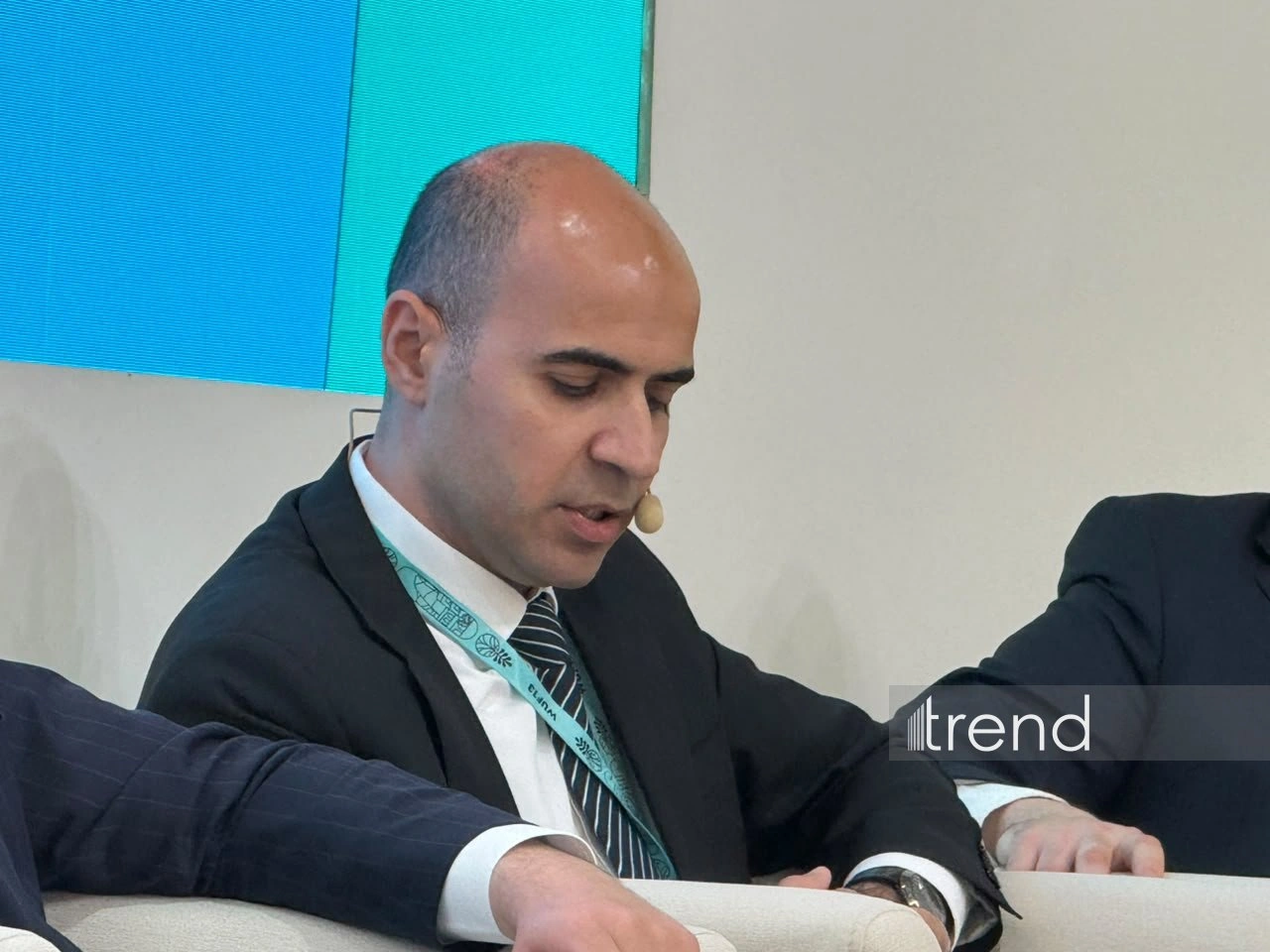
surpassed 500 million people, said Tarlan Safarov, Head of the Baku
Regional Department of the Azerbaijan Land Transport Agency (AYNA),
Trend reports.
He made the remark during a specialized session focused on the
Baku City Master Plan, held within the framework of the 13th
session of the World Urban Forum (WUF13) in Baku.
According to him, the transport agency has secured substantial
milestones in modernizing the capital's metropolitan surface
transit grid.
"Presently, 368 eco-friendly buses operate actively across urban
corridors, backed by the strategic installation of 114 kilometers
of dedicated bus priority lanes. Consequently, daily passenger
throughput has achieved a 32% expansion, with approximately 2,300
buses deployed to active operational routes every single day,"
Safarov reported.
"Accelerating active mobility across the capital stands as an
essential baseline directive for our agency. To date, we have
constructed 65 kilometers of specialized bicycle lanes, intending
to rapidly scale this grid to 100 kilometers over the short-term
horizon. Concurrently, transport engineers have deployed more than
1,000 dedicated parking stations tailored for bicycles and diverse
micro-mobility assets," the AYNA official emphasized.
According to the regional chief, these synchronized
infrastructure upgrades have successfully altered commuting
patterns, allowing micro-mobility options to capture roughly 20% of
short-distance journeys within the central urban core.
"Data networks have recorded more than 4 million individual
micro-mobility trips, while the aggregate user base has climbed
past 540,000 unique riders. These performance metrics clearly
demonstrate that the public is fully prepared to adopt sustainable
transport solutions provided the necessary baseline infrastructure
enters active service. To expand pedestrian comfort and safety
standards, a comprehensive pedestrian-oriented spatial
reconstruction was completed on Islam Safarli Street, with
analogous modernization projects scheduled for deployment across
additional urban quarters," Safarov concluded.
Today marks the fifth day of WUF13 in Baku.
The first day included a ministerial meeting dedicated to the
New Urban Agenda, a ministerial roundtable, assemblies for women
and civil society, business sessions, and discussions on urban
prosperity. An official ceremony marking the raising of the UN and
Azerbaijani flags also took place.
The second day stood out for the inaugural Leaders' Summit,
featuring high-level discussions on the global housing crisis,
urbanization policy, and urban resilience. Concurrently, the
opening of the Mexico City pavilion took place, serving as a
significant platform for expanding cooperation with the Latin
American region and preparing for WUF14.
The third day of WUF13 featured a comprehensive program of
events covering the global housing crisis, the formation of safe
and inclusive cities, climate resilience, artificial intelligence
and urban governance, green urbanization, social equity, and
sustainable transport.
One of the highlights of the third day was the signing of a
sister-city memorandum between the Azerbaijani city of Shusha and
the Turkish city of Trabzon.
The fourth day of WUF13 featured a broad program of events
dedicated to urbanization, climate change, inclusive urban
development, housing policy, and sustainable governance.
One of the important events of the UN Special Programme for the
Economies of Central Asia (SPECA) Cities Forum, held on the fourth
day, was the announcement of Almaty’s official accession to the
“Declaration of Intent on the Establishment of the SPECA Smart
Climate-Resilient Cities Forum.”
Also, for the first time in WUF history and at Azerbaijan’s
initiative, the “WUF13 NGO Forum: Global Partnership and
Decision-Making” was held.
WUF13, which has attracted more than 40,000 registered
participants from 182 countries, will continue until May 22. Held
under the theme “Housing the world: Safe and resilient cities and
communities,” the forum brings together governments, international
organizations, experts, and representatives of civil society to
strengthen global cooperation in the field of sustainable urban
development.