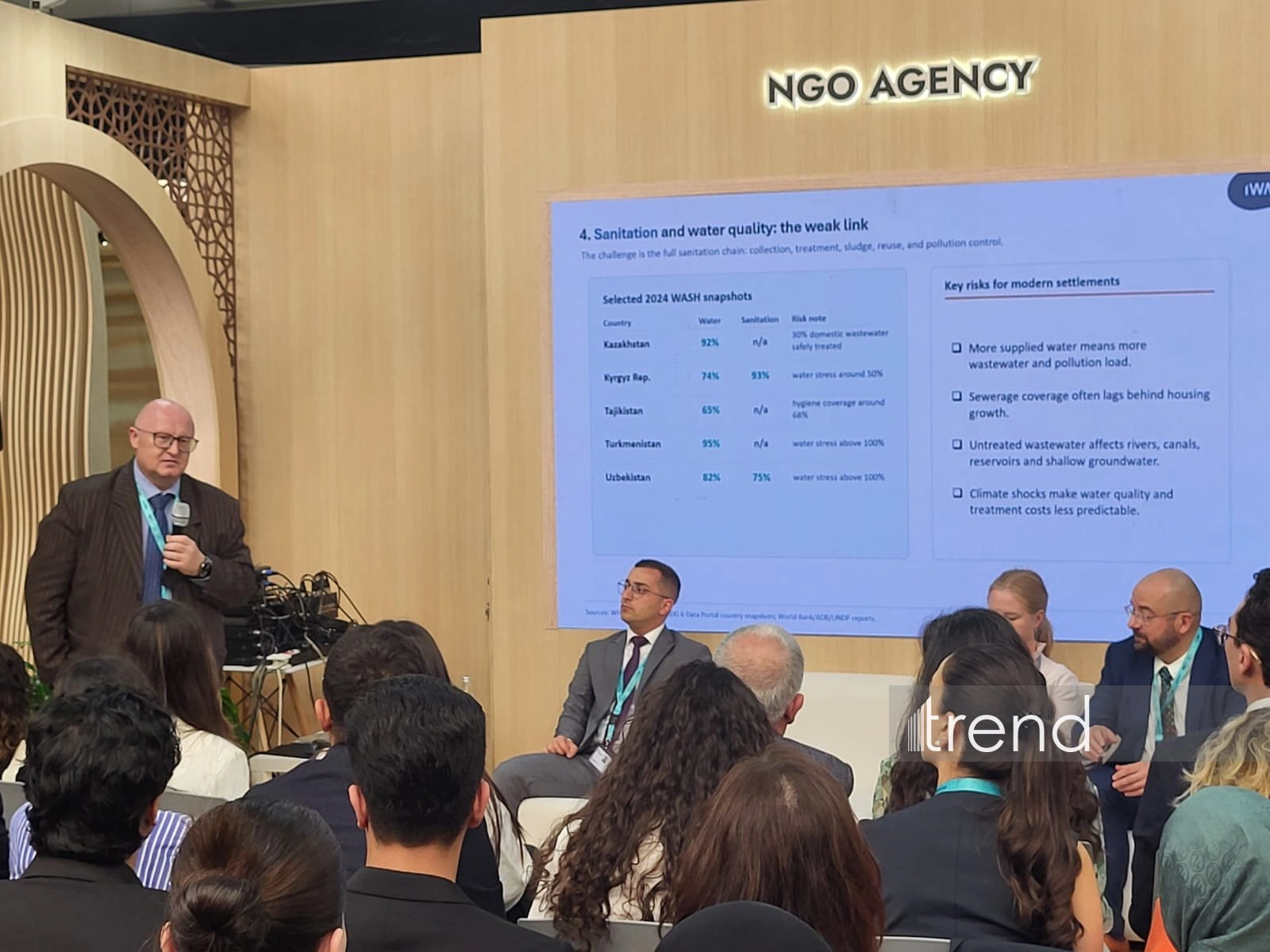
BAKU, Azerbaijan, May 18. Urbanization and
growing pressure on water resources are becoming one of the key
challenges for Central Asia, Alexander Nikolayenko, representative
of the International Water Resources Management project in
Uzbekistan, said during an event organized by the Azerbaijan NGO
Agency within the framework of WUF13, Trend reports.
According to him, the “Bluepeace Central Asia” project covers
all five Central Asian countries: Kazakhstan, Kyrgyzstan,
Tajikistan, Turkmenistan and Uzbekistan.
Nikolayenko noted that over the past 20 years the urban
population in Central Asia has increased by more than 14 million
people, while cities continue to grow by around 650,000 residents
annually.
“Today, around 80 million people live in Central Asia, with
nearly half of the population residing in urban areas,” he
said.
He stressed that the region’s largest cities, including Tashkent
and Almaty, are facing increasing pressure on water supply systems
amid rapid urbanization.
According to Nikolayenko, around 90% of water resources in
Central Asia are used for agriculture, while municipal consumption
accounts for about 4%.
“Despite the relatively small share, urban water supply and
drinking water quality are becoming one of the biggest problems for
large cities in the region,” he said.
He added that Central Asian countries are implementing national
and intergovernmental programs aimed at модернизации drinking water
infrastructure and attracting investments into water treatment and
supply systems.
Speaking about Kazakhstan, Nikolayenko said the country
allocates several billion US dollars annually for urban water
infrastructure projects, with additional financing coming from the
World Bank and private financial institutions.
He also noted that investments in urban water infrastructure are
increasingly viewed as commercially attractive due to growing
demand in major cities.