Formally, the era of decolonisation has long since ended. At least, that is what the United Nations Declaration on the Granting of Independence to Colonial Countries and Peoples, adopted in 1960, proclaimed. Within a few years, the world map began to change: many former colonies acquired flags, anthems, seats in international organisations, and legally recognised sovereignty. It seemed that the imperial era had faded into history together with Dutch protectorates, French overseas territories, and colonial administrations.
Yet colonialism rarely disappears the moment a flag above an administrative building is replaced. In many cases, only its forms change.
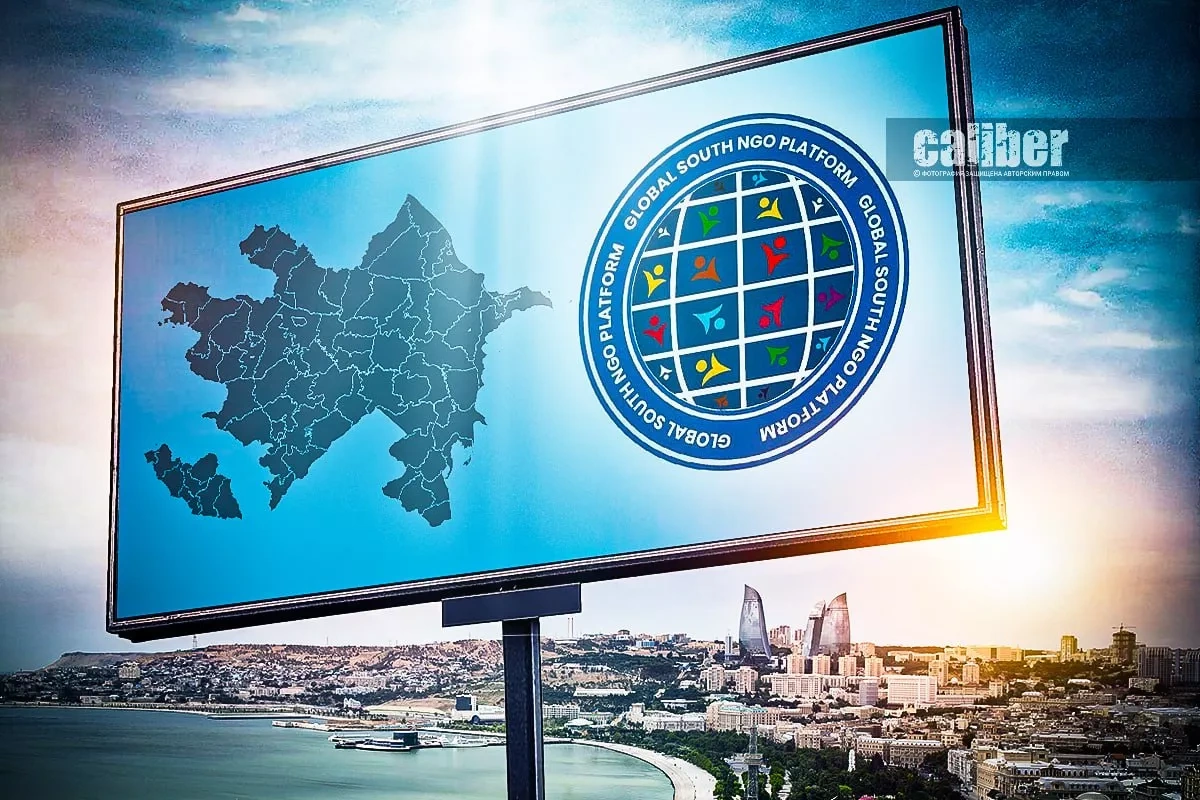
Today, on May 14, the First General Assembly of the Global South NGO Platform opened as part of Baku Urban Planning Week, focusing precisely on what is often portrayed as a chapter already closed in world history: colonialism and the asymmetry of the global order. Representatives from 114 countries across Latin America, Africa, Asia, and the Pacific region arrived in Azerbaijan’s capital to take part in the event. This figure alone serves as a rebuttal to the claim that the process of decolonisation has been completed. As more and more nations unite around the issue of decolonisation, it becomes increasingly clear that what is outdated is not the agenda itself, but the attempt to present it as a long-settled matter.
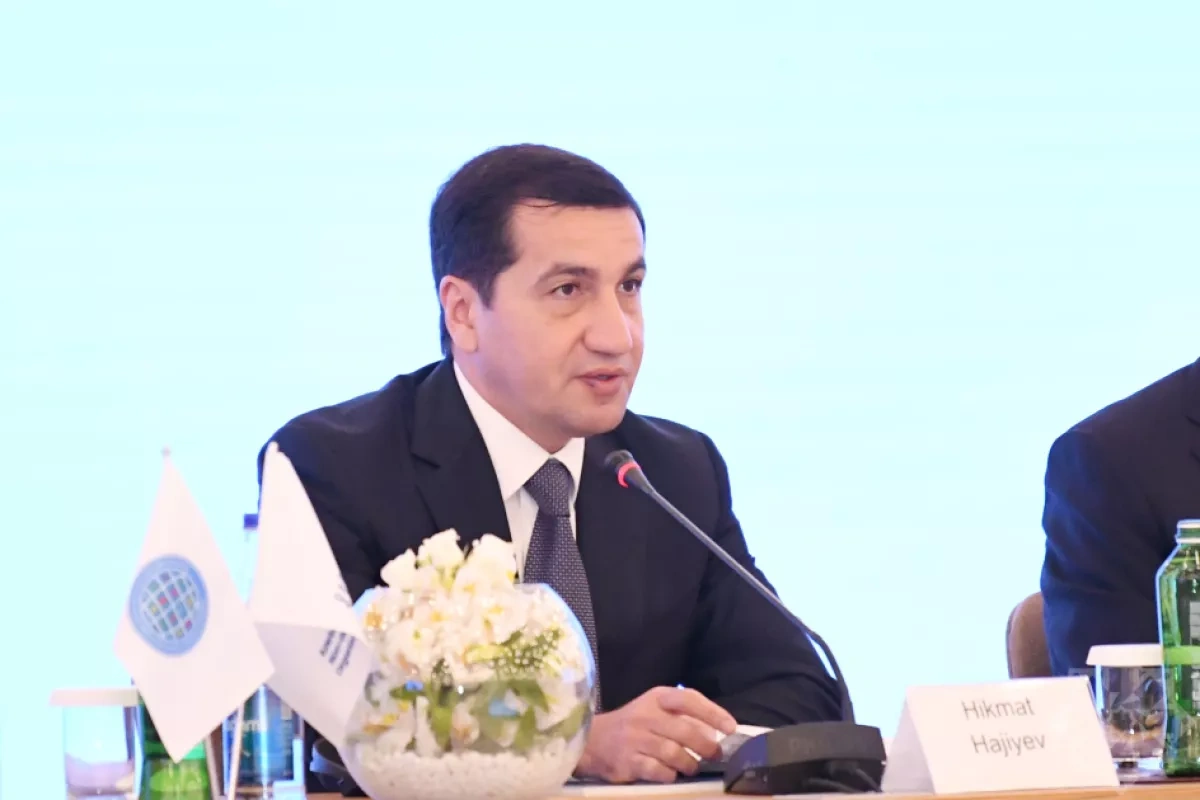
In his address at the opening of the assembly, Assistant to the President of Azerbaijan and Head of the Foreign Policy Affairs Department of the Presidential Administration, Hikmet Hajiyev articulated this more concisely and more sharply than is customary in diplomatic protocol. According to him, the countries of the Global South have historically suffered greatly from colonialism and neocolonialism, and the issue itself remains highly relevant to this day.
“This is a scar on the face of humanity. But has it truly been left in the past? Unfortunately, these practices continue even today, taking on new forms and manifestations on the global stage,” he stressed.
Hajiyev’s formula deserves to be unpacked. A scar — because it healed unevenly, and because it remains visible to this day. New forms — because the old architecture of domination, though rhetorically exposed, has structurally survived.
This structure rests on several pillars. The first is international law as it is applied today: binding for small states, yet open to interpretation when it comes to former colonial powers. UN Security Council resolutions, sanctions regimes, and doctrines of territorial integrity tend to function in one direction only. When small countries are involved, the law is absolute. When major powers are concerned, it becomes a matter of interpretation, negotiation, and flexible application.
The second pillar is the UN Security Council itself. Among its permanent members, there is not a single state representing Africa, Latin America, or Southeast Asia. A continent of one and a half billion people does not hold a single permanent seat. The right of veto remains in the hands of the same five countries that possessed it at a time when half of today’s states did not even exist on the map.
The third pillar is the financial and monetary system built around the Bretton Woods institutions, which keeps the periphery trapped in chronic debt and dependent on conditions it had no role in formulating.
The fourth pillar is the interventionist practice of the past three decades: Tripoli, Baghdad, Belgrade, Kyiv — geopolitical reshaping carried out under the banner of a “rules-based order” founded on force. It is precisely this order that rewrites the rules whenever it suits the imperial powers. As long as the rules are written in one place while others are merely expected to obey them elsewhere, what exists is not law, but its imitation.
The most vivid illustration remains France’s policy in the South Caucasus. French President Emmanuel Macron’s recent visit to Yerevan amounted to an extensive declaration whose substance becomes clear even from a brief list of its components: defence agreements, arms supplies, the deployment of instructors, credit lines, and humanitarian cover framed in the language of European values and human rights. Structurally, this resembles a classic colonial arrangement: the metropole provides military and political backing and, in return, gains a strategic foothold, a foreign-policy orbit shaped by dependency, and a country where its voice gradually carries more weight than that of the local authorities themselves.
What the Fifth Republic is rapidly losing in the Sahel — after Mali, Burkina Faso, and Niger, its military and political presence on the continent has visibly diminished — it is now attempting to compensate for on more distant frontiers. In this context, Armenia has become a convenient platform: a small country surrounded by neighbours with whom it has difficult relations, and one to which the illusion of protection can readily be offered.
It is precisely here that a turning point emerges — one that often escapes superficial analysis, even though it lies at the very core of what is taking place. Armenia is a state that for centuries has built its national consciousness around the narrative of victimhood at the hands of larger powers. This myth is embedded in the foundation of its self-identification and political imagination. And now, that same country is voluntarily assuming the role of a colony, because the metropole arrived under an ideologically convenient banner. A “victim” that never truly learned to become a subject of history remains one still — only the name of the power to which it submits has changed.
Within this picture, Azerbaijan occupies a distinct place of its own. At the end of the twentieth century, the country went through the imperial redrawing of the region, endured its consequences in the form of the occupation of part of its territory, and later dismantled that imposed reality itself — without intermediaries and without external patrons.
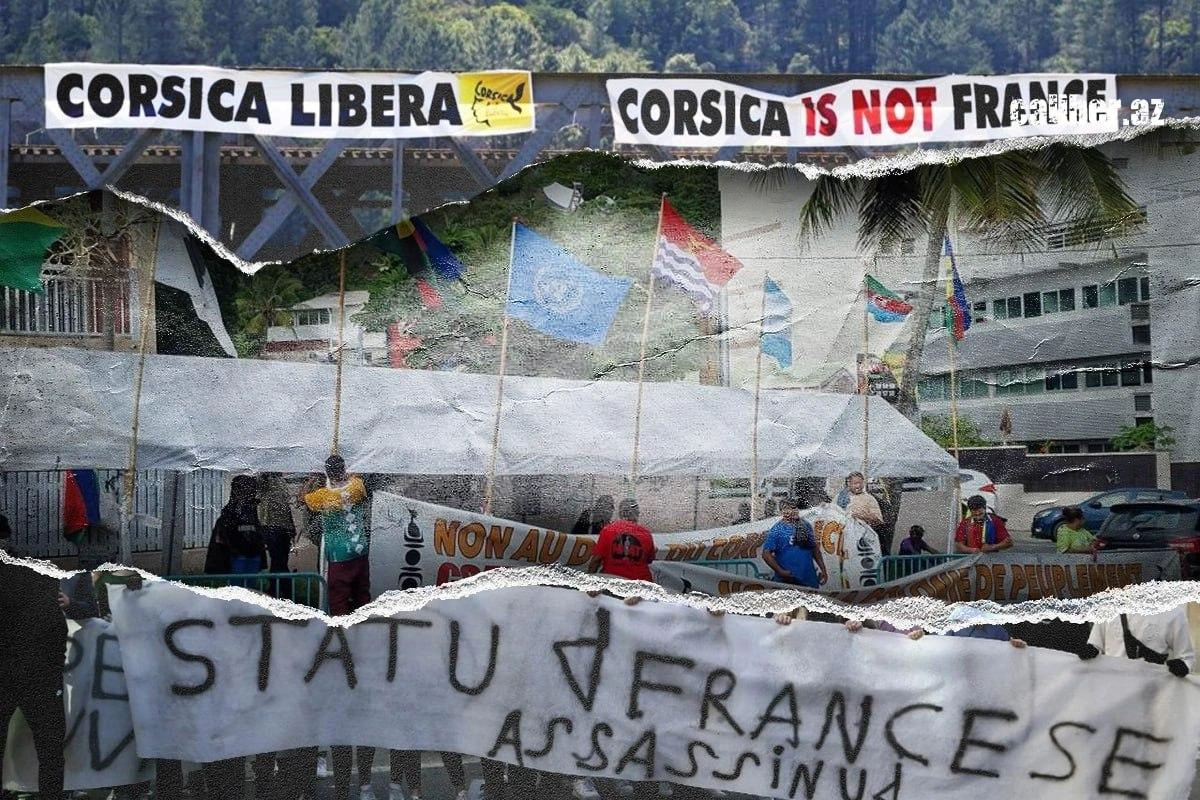
From 2019 to 2022, Azerbaijan chaired the Non-Aligned Movement, and the struggle against neocolonialism was declared a priority of its chairmanship not merely for the sake of diplomatic formality. On this basis, an Initiative Group was established in Baku in 2023, maintaining continuous dialogue with representatives of French overseas territories — New Caledonia, French Polynesia, Martinique, Guadeloupe — as well as Corsica.
The solidarity conferences held in Baku bring together delegates from these regions on a platform that France itself prefers not to provide them, and the very regularity of these meetings has become an increasingly irritating factor for French diplomacy. France’s reaction — from summoning the Azerbaijani ambassador to public accusations of “interference” — is revealing precisely because of its nervousness: a metropole accustomed to deciding which issues are international and which are merely domestic has found itself confronted with the fact that its “internal” affairs are now being discussed beyond its borders and without its permission. In the post-Soviet space, it is difficult to find another state that has pursued this line so consistently and spoken in the language of the Global South not as a pupil, but as an equal.
This explains Hikmet Hajiyev’s call for fair representation of the Global South within the UN Security Council. According to him, given the growing potential of the Global South and the fact that 80 per cent of the world’s population lives in these countries, the states of the region can no longer remain passive observers in the formation of a new world order. The countries of the Global South, he argued, must actively participate in all such processes and initiatives. The current structure of international institutions — particularly the UN Security Council — no longer reflects the realities of the modern world. As part of any reform of the Security Council, the voice of the Global South and its fair representation must be ensured.
As long as five states retain the power to block any decision of an eighty-year-old institution, while entire continents remain without permanent representation, any discussion of a “rules-based international order” remains largely conditional. And here a stark formulation is required — one without which the argument loses its focus: in its current form, international law has turned into a mechanism through which metropoles define obligations that they themselves are not bound to bear. This is not an interpretation but a description of how the system functions.
The structural mismatch between proclaimed universality and selective enforcement is precisely the scar Hajiyev referred to. Only this scar is not on the face of humanity, but on the face of the institution it created in the name of universal justice.