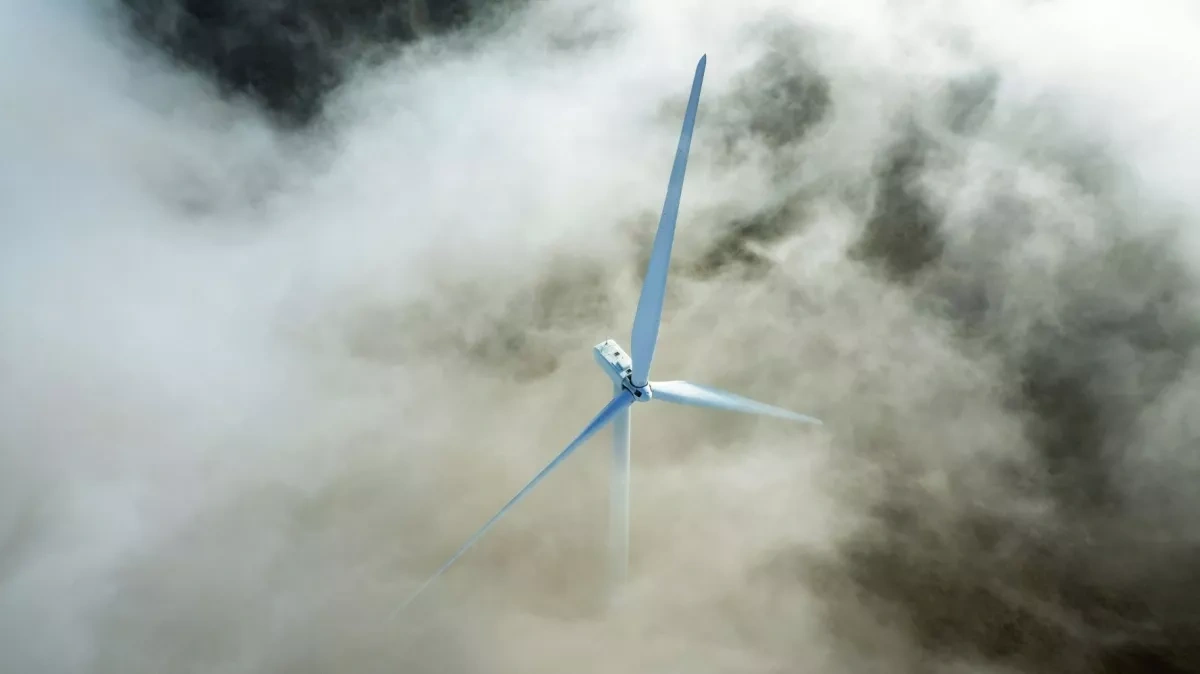
Social media campaigns claiming wind power is causing cancer and poisoning drinking water are surging across Europe and threatening to sway public opinion on the adoption of clean energy projects, particularly in Sweden and France.
Scepticism toward wind energy was once largely confined to the United States, but several European countries have recently become hotspots for anti-wind disinformation, according to a new report commissioned by Europe’s wind industry lobby.
WindEurope, the Brussels-based association representing the sector across more than 50 countries, warns that false and misleading claims about renewables are delaying projects the EU considers critical for energy security.
“If mis- and disinformation stand in the way, I think we have a serious problem,” WindEurope spokesperson Christoph Zipf told the POLITICO publication. “It’s not about the wind industry per se. It’s about making sure that we have energy that is not stuck in the Strait of Hormuz, but actually produced here in Europe.”
The report, produced by the UK-based research firm CASM Technology, found that a broad ecosystem of activists, politicians, fringe media outlets and online communities is spreading claims that wind turbines cause blackouts, kill wildlife, trigger cancer and contaminate drinking water.
It also found that Swedish accounts produced the highest volume of anti-wind content, followed by France, Norway, Finland, the United Kingdom and Germany. Although researchers noted that Sweden’s ranking was partly influenced by sampling and data-access limitations, they said the Nordic region nevertheless emerged as a major hub for anti-wind activity.
“For me, one of the big, interesting areas … was the disinformation targeting not just companies, but specific projects. And not just a state, but an industry,” CASM founder Carl Miller told the outlet. “What’s interesting is how geographically specific the narratives are,” he added. “In some countries they’ll just talk about economic viability. In others, ecological impacts. In others, elites.”
In Sweden, Finland and the UK, anti-wind narratives focused heavily on electricity prices, grid instability and blackouts, generating particularly high engagement online. In Norway and Italy, narratives are centred more on environmental destruction.
According to the lobby group's report, more than 500 accounts across six social media platforms circulated tens of thousands of anti-wind posts over the past two years.
American influence
Claims about the alleged dangers of wind turbines entered mainstream political discourse in the United States with the rise of Donald Trump, who has railed against what he calls “big ugly windmills” since his first term in office. After years of describing wind energy as the “scam of the century” and a power source for “stupid people,” his administration, during his second term, blocked new projects and allocated billions of dollars in federal funding to cancel developments already underway across the US
The report’s findings come at a pivotal moment for Europe and global energy markets. The war involving Iran has underscored once again how vulnerable countries remain to fossil fuel shocks and supply disruptions, reinforcing the EU’s push for electrification and renewable energy to reduce dependence on imported fossil fuels.
Staying on course
While the current US administration is moving to scale back support for wind energy projects, most other countries are continuing to expand their renewable energy ambitions. Azerbaijan, for example, has set ambitious climate targets that include large-scale solar developments, the expansion of onshore and offshore wind farms, and investment in green hydrogen production. Latest figures also show that the country’s wind power generation surged an impressive 50-fold in the first quarter of 2026 compared with the same period a year earlier.
At the same time, heads of state and energy ministers from nine North Sea countries reaffirmed earlier this year their commitment to accelerating offshore wind expansion and deepening cooperation on offshore energy development.
By Nazrin Sadigova