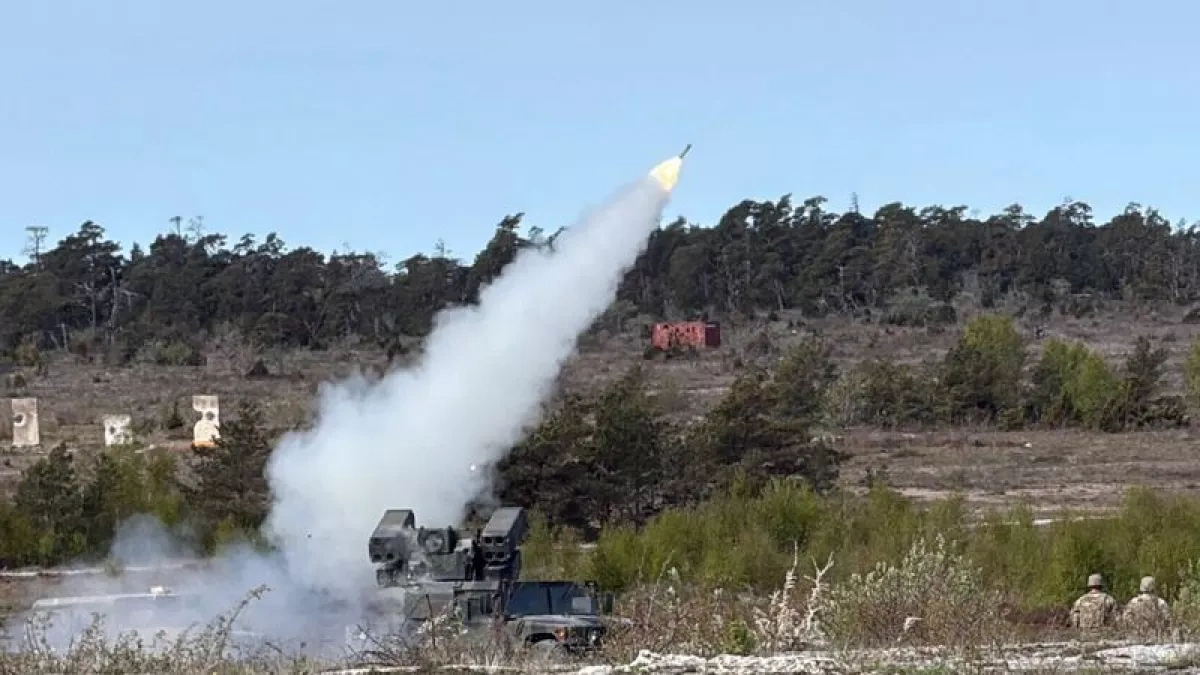
NATO has concluded a large-scale military exercise near Sweden’s strategically significant island of Gotland, with commanders emphasising the drills as critical to strengthening defences along the Alliance’s eastern flank amid concerns over Russia’s military posture.
The exercise, known as Aurora 26, brought together approximately 18,000 troops from 12 NATO member states and Ukraine. Conducted across land, sea and air domains, the drills were designed to simulate the defence of the Baltic region and counter a range of hybrid threats and hostile activities, as per German media.
Off Sweden’s coast, Gotland is viewed by security experts as a potential flashpoint in any confrontation with Russia. Swedish Chief of the Defence Staff Michael Claesson underscored the island’s strategic value as the exercise concluded.
"If you control Gotland, you pretty much control the central part of the Baltic Sea from the Polish coast to the archipelago between Sweden and Finland," Claesson told dpa.
The drills began in late April and officially ended on Wednesday, with thousands of participating troops expected to depart in the coming days.
The exercise unfolded against a backdrop of heightened regional tension. Earlier in the week, the presence of a Russian naval vessel near Fehmarn, a small island off Germany’s north-east coast, raised additional concerns among NATO members.
Claesson warned that Western countries may underestimate Moscow’s willingness to take risks.
"What we sometimes misinterpret in the West is the level of strategic risk-taking from the Russian side," he said.
"If there is one thing the Russians know, it is that all the Western countries now are investing heavily in their defence. So why would they wait, when there are still weaknesses that could be exposed?" he added.
A key component of the drills involved the integration of battlefield lessons from Ukraine, particularly in drone warfare. Ukrainian operators trained NATO forces on the effective use of unmanned systems.
"Drones are today one of the most important deadly weapons on the battlefield," said a 24-year-old Ukrainian drone operator with the call sign “Tarik.” "We are teaching the Swedes how they can make better use of them. There is a lot of potential for improvement at the moment."
Swedish, Ukrainian and US troops trained side by side on Gotland, demonstrating operational cooperation despite broader political tensions within the Alliance.
Claesson noted that any adjustment in US military presence has implications for NATO dynamics but described a greater European role in defence as a natural evolution rather than a sign of US disengagement.
His remarks come as US President Donald Trump has questioned aspects of US participation in NATO amid disagreements over allied support for US military actions in Iran. Trump has also announced plans to withdraw around 5,000 US troops from Germany.
By Tamilla Hasanova