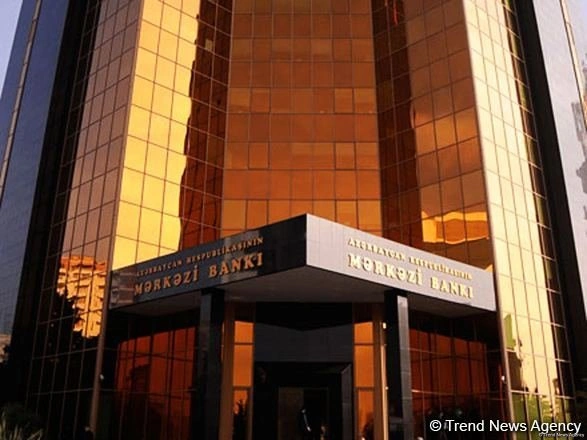
BAKU, Azerbaijan, May 14. Actions of the
Central Bank of Azerbaijan (CBA) in the field of sustainable
finance within the framework of the strategic goals set for 2026
target strengthening sustainability in the financial sector,
effectively managing climate risks, and promoting green financial
flows, the sustainable financial report of the Central Bank of
Azerbaijan (CBA) says, Trend reports.
The CBA's goals for the implementation of the Sustainable
Finance Roadmap are as follows:
1. Capacity building in sustainable finance: In this direction,
it's envisaged to develop and implement specialized training
programs in order to increase knowledge and skills in the field of
sustainable finance in the banking sector. The trainings will be
organized within the framework of cooperation with international
organizations and will provide an opportunity to learn and apply
advanced global practices. Besides, through the expansion of
membership and cooperation with international organizations, the
institutional capacity of the banking sector will be strengthened,
and the application of modern approaches and standards in the
country will be promoted. In this context, it's aimed to
systematically develop the knowledge base of financial institutions
on sustainable finance through seminars, workshops, and
methodological support mechanisms.
2. Formation of an ecosystem for sustainable financial flows:
Comprehensive measures will be taken to form an appropriate
ecosystem to promote sustainable financial flows. This includes the
preparation of a legislative framework in accordance with
international standards for the development of the green bond
market, the definition of emission and reporting requirements, as
well as the application of incentive mechanisms.
Moreover, in order to strengthen the sustainability of the
insurance sector, an Action Plan on Sustainable Insurance will be
developed, and the implementation of climate risk management and
Environment, Social, and Governance (ESG) criteria will be
promoted. These measures will serve to increase sustainable
investments and the sustainable development of the financial
sector.
3. Integration of climate change and ESG factors into risk
management: In order to strengthen the integration of ESG risks in
the banking sector in 2026, an ESG guideline will be developed in
accordance with the ESG Risk Radar Tool project framework, and the
integration of Risk Radar results into credit decisions will be
determined. At the same time, awareness-raising activities will be
held for banks, and credit analysis questions for the construction
sector will be completed within the framework of the pilot project.
After the final report on the Risk Radar Tool is prepared, measures
will be taken to integrate the tool into prudential policy.
In addition, stress tests on transition risks are planned to be
carried out in order to comprehensively assess the resilience of
the financial system to climate risks. In the initial stage, a
top-down approach will be applied to systematically analyze the
transmission channels of transition risks arising from factors such
as climate policies, carbon pricing, and technological
transformation to the banking sector through macroeconomic
indicators.
Within this framework, scenarios will be formulated for key
macroeconomic variables (economic growth, inflation, interest
rates, etc.), and the impact of these scenarios (Annex 1) on the
financial stability indicators of the banking sector will be
assessed. Specifically, the impact of transition risks on banks'
asset quality, the dynamics of non-performing loans, the
sensitivity of loan portfolios by sector, and their possible impact
on capital adequacy will be measured through quantitative
models.
In addition, based on the results obtained, the sensitivity of
the banking sector to climate risks will be determined, potential
systemic risks will be assessed, and, if necessary, substantiated
proposals will be prepared to improve prudential policy
instruments.
4. Ensuring transparency and market discipline in financial
markets: Within this framework, an annual report on sustainable
finance will be prepared, and a unified methodology will be
developed for the disclosure of sustainability indicators. In
addition, an appropriate legal framework will be developed to
ensure the integration of greenhouse gas emissions data into the
Central Credit Registry, which will allow financial institutions to
boost the efficiency of sustainable investment and lending
decisions.
These actions will serve to more systematically implement
sustainable development principles in the financial sector and more
effectively manage climate risks from the perspective of financial
stability.
Stay up-to-date with more news on Trend News
Agency's WhatsApp
channel